
close
Choose Your Site
Global
Social Media
Views: 0 Author: Site Editor Publish Time: 2026-08-22 Origin: Site


Inconsistent adhesive application creates a major operational bottleneck in high-speed manufacturing environments. When basic dispensers fail to apply exact amounts of glue, operators face rising product failures, excessive material waste, and unplanned line downtime. Basic dispensing equipment usually relies on manual timing or standalone timers. This isolates the gluing step from the rest of the factory flow. Moving to a Programmable Logic Controller (PLC) architecture changes this dynamic. It shifts gluing from an isolated task to a fully synchronized, data-driven step in your production line. Evaluating this upgrade requires looking past basic hardware features. Manufacturers must understand system interoperability and the exact specifications required for their specific assembly lines. By centralizing control, engineering teams gain full visibility over adhesive consumption and application accuracy. You can monitor performance dynamically. This ensures every product meets rigorous quality standards before reaching the end of the line.
Precision Control: PLC integration enables closed-loop feedback, ensuring exact adhesive volume at variable line speeds.
Data & Diagnostics: Real-time HMI monitoring reduces troubleshooting time and tracks adhesive consumption for accurate cost-per-unit metrics.
Scalability: From standard modular units to a custom PLC hot melt glue machine, system architecture must match your specific I/O protocol requirements (e.g., EtherCAT, Profinet).
Vendor Vetting: Choosing the right PLC hot melt glue machine supplier hinges on their ability to prove software compatibility and provide localized integration support.
Legacy gluing systems hide significant operational costs inside everyday production runs. When operators use basic timers, they cannot automatically compensate for conveyor speed changes. A momentary slow-down causes the guns to deposit massive glue puddles. These puddles waste expensive adhesive materials. They also squeeze out past product edges. This creates severe aesthetic defects and structural failures. Upgrading to a PLC hot melt glue machine eliminates this guesswork. It brings strict mathematical control to fluid dispensing.
The return on investment (ROI) drivers for this transition become apparent quickly. Adhesive savings rank highest among these drivers. Precise timing algorithms cut adhesive usage significantly. They completely eliminate "tailing." Tailing happens when glue drags across a substrate after the valve attempts to close. By shutting valves with millisecond precision, you stop excess application instantly.
Labor and uptime improvements also drive strong ROI. Manual calibration takes hours of maintenance time every week. Operators tweak analog dials endlessly to find acceptable parameters. A PLC architecture removes this burden. You can load pre-programmed recipes directly from a touchscreen interface. This cuts changeover times between different product runs from hours to seconds.
However, engineering teams must maintain realistic expectations. High-volume operations see fast financial returns. Yet, the initial capital expenditure remains higher than buying standalone manual systems. Your factory also needs properly trained maintenance staff. Technicians must understand basic logic controllers to troubleshoot effectively. You are essentially trading manual labor costs for higher initial technical capability.
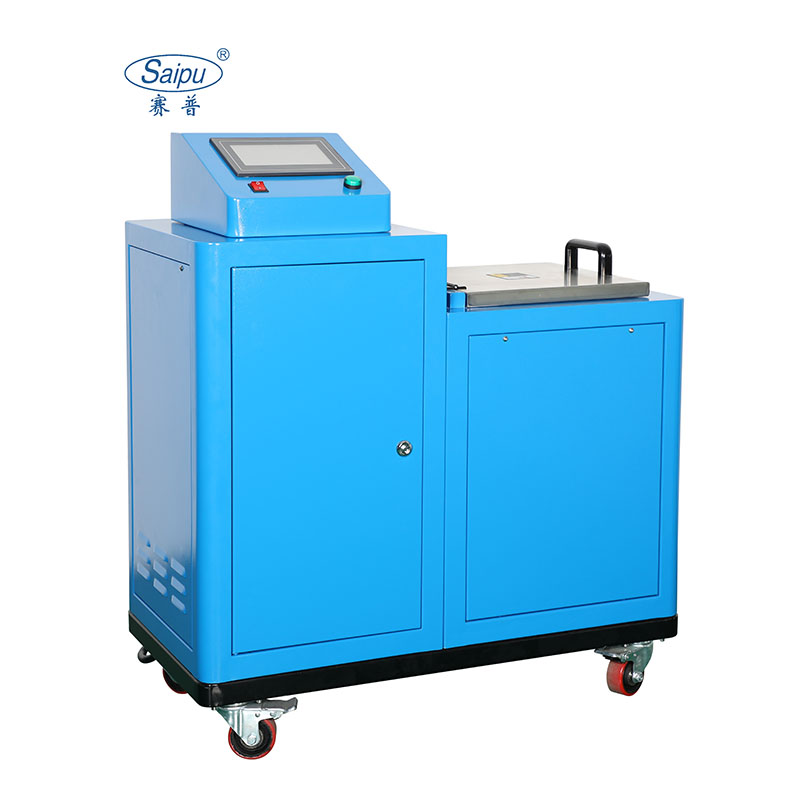
Modern fluid dispensing requires deep integration. Standalone units simply cannot keep up. To understand how an automated gluing PLC hot melt glue machine transforms your line, we must examine its three core operational nodes.
Line Speed Synchronization: Basic timers assume a conveyor moves at one constant speed. Real factories do not operate this way. Belts speed up during startup and slow down during bottlenecks. A PLC system uses external encoder inputs. The encoder sends continuous pulse signals indicating the exact belt speed. The controller reads these pulses. It immediately adjusts pump rotation and valve open-times. This guarantees an identical adhesive weight per product regardless of line speed fluctuations.
PID Temperature Control: Hot melt adhesives degrade rapidly if overheated. Charred adhesive blocks fine applicator nozzles and destroys gear pumps. Proportional-Integral-Derivative (PID) controllers prevent these dangerous temperature swings. Closed-loop sensors monitor independent heating zones constantly. The melt tank, heated hoses, and applicator heads all maintain precise thermal targets. If a hose experiences a sudden temperature drop, the PID controller gently ramps up power to stabilize it.
Fault Detection & Handshaking: Handshaking involves continuous safety communication between machine nodes. The gluing unit talks continuously to the master line controller. If a downstream packaging machine jams, the master PLC signals the gluing system. The adhesive pump stops instantly. This prevents massive messes on stationary products. The system also actively monitors internal states. It alerts operators on the main console when the tank runs low on solid adhesive.
Hardware looks similar from the outside. The true differences lie in the internal technical parameters. Carefully matching your PLC hot melt glue machine specifications against factory realities prevents catastrophic production bottlenecks.
You must align tank capacity and melt rates directly to your actual line consumption. If your line consumes ten kilograms per hour, a five-kilogram melt rate causes immediate starvation. Operators will attempt to fix this by adding large amounts of cold adhesive. This triggers thermal shock. The tank temperature plummets, causing the adhesive to thicken. Thick glue forces the pumps to work harder and ruins application accuracy.
Seamless communication remains absolutely essential for factory integration. You must verify protocol matching before finalizing any design. Modern industrial networks include EtherNet/IP, PROFINET, Modbus TCP, and EtherCAT. Some legacy facilities try relying on cheap analog gateways to connect new equipment. You should avoid this practice. Analog gateways introduce severe signal delays. These delays ruin the high-speed synchronization needed for accurate bead placement.
Pump selection dictates long-term reliability. Viscosity levels and continuous flow requirements drive this choice. You must evaluate the mechanical action pushing the fluid to the guns.
Pump Mechanism Comparison Chart
Feature | Gear Pumps | Piston Pumps |
|---|---|---|
Flow Characteristics | Continuous, pulse-free flow. | Intermittent flow, potential for slight pulsing. |
Best For | High-speed, continuous bead applications. | Intermittent dot applications or spray patterns. |
Viscosity Handling | Excellent for medium to high-viscosity adhesives. | Better suited for low to medium-viscosity fluids. |
Maintenance | Requires careful filtration to prevent gear wear. | Generally easier to rebuild in the field. |
Factory layouts evolve constantly. You might add a second product lane next year. You might decide to apply three glue lines instead of two. Your central controller needs spare input and output ports right now. Buying expansion modules later costs significantly more if the base unit lacks built-in capacity. Always specify at least twenty percent more I/O capacity than you currently require.
Deciding between an off-the-shelf system and an engineered solution requires assessing your specific product geometry. Standard units handle basic tasks easily. Think about sealing simple cardboard cartons or forming standard trays. The conveyor speed stays relatively constant. The glue guns point straight down. Everything remains highly predictable. Standard units deploy quickly and cost less upfront.
However, specialized manufacturing demands more rigorous engineering. You must invest in a custom PLC hot melt glue machine when encountering specific environmental or physical triggers.
Non-Standard Viscosities: Polyurethane (PUR) hot melts react actively to moisture in the air. They require completely sealed, nitrogen-blanketed melting environments to prevent premature curing inside the tank.
Robotic Integration: Multi-axis robotic arms need ultra-fast actuation valves. Standard hoses drag and snag on robotic joints. Custom setups require specialized dynamic hosing and lightweight applicator heads.
Constrained Footprints: Tight factory floors force unique chassis designs. You may need custom mounting brackets or split-system architectures to fit the equipment around existing machinery.
Custom engineering carries notable implementation risks. Custom builds demand much longer lead times. Factory acceptance testing (FAT) becomes mandatory before the equipment ships. You must verify every software handshake during FAT. Furthermore, custom units might lack the standardized spare parts documentation found in off-the-shelf counterparts. You must demand comprehensive manuals tailored to your exact build.
Excellent hardware fails without proper software integration. Many rollout failures stem directly from software handshake issues. An Allen-Bradley controller processes data differently than a Siemens unit. If your vendor fails to map the data registers perfectly, the systems cannot talk. Inadequate operator training presents another massive risk. Operators might know how to run the mechanical line perfectly. Yet, they might struggle to navigate complex HMI screens. Furthermore, engineers often miscalculate thermal expansion. Long heated hoses alter internal pressure dynamically, which ruins continuous flow rates if unaccounted for.
How do you audit a prospective PLC hot melt glue machine supplier? You must demand transparent technical evidence.
First, look for documented API and communication mapping charts. They must prove they have integrated with your specific master line controller previously. Second, check their local field service presence. Remote phone support cannot fix a severed encoder cable or a jammed gear pump on a Tuesday night. Third, demand application trials. A reputable vendor will happily run your actual product substrates through their lab. They will test your specific adhesive to prove their equipment handles the viscosity.
Watch out for critical red flags. If a vendor obscures or hides the brand of their underlying PLC hardware, walk away. Proprietary "black box" controllers lock you out of your own equipment. They force you to buy expensive proprietary parts forever. You should also reject any supplier refusing to guarantee specific cycle time accuracies in a written contract. Promises mean nothing without mathematical guarantees.
Adopting a PLC-driven approach fundamentally changes your manufacturing capabilities. You are integrating gluing into the central nervous system of your factory. This centralization replaces guesswork with data. It transforms messy manual tasks into clean, repeatable engineering processes. The initial complexity yields massive long-term stability.
Your engineering teams should begin by auditing their current line protocols. Calculate your existing adhesive waste to build a strong business case. Bring your substrate samples to prospective vendors for rigorous lab testing. Finally, demand detailed integration diagrams and data mapping charts from shortlisted vendors before issuing any purchase orders. Strict vetting ensures your new equipment performs precisely as intended.
A: Integration times depend heavily on protocol compatibility. Standard plug-and-play Ethernet systems matching your master line controller can be fully integrated in just a few days. However, complex systems requiring custom I/O mapping or multi-axis robotic handshaking may require several weeks of intense programming and factory acceptance testing.
A: Yes, it can work with almost any brand, provided the supplier offers the correct communication modules or network gateways. However, prioritizing native compatibility (for example, connecting a Siemens glue module to a Siemens master PLC) drastically reduces integration friction, prevents register mapping errors, and minimizes signal latency.
A: You can extract highly valuable operational data. This includes historical temperature logs, daily cycle counts, specific error fault codes, real-time adhesive consumption rates, and total pump running hours. Engineering teams utilize this precise data to build highly accurate predictive maintenance schedules and reduce overall material waste.


