
close
Choose Your Site
Global
Social Media
Views: 0 Author: Site Editor Publish Time: 2026-10-28 Origin: Site


Is unexpected downtime hurting your daily production? In modern manufacturing, time is undeniably money. Operators standing on the busy factory floor constantly face a high-stakes dilemma when an aging adhesive setup starts sputtering. Should you invest your precious maintenance budget into repairing a deteriorating unit, or is it time to bite the bullet and buy new?
This comprehensive guide explores the complete lifecycle of a Hot Melt Glue Machine. By diving into common troubleshooting scenarios and evaluating the hidden costs of production halts, you will learn exactly when to salvage your current equipment and when replacement is the only logical path forward.
Assess Component Health First: Many operational issues originate from specific, easily replaceable parts like heated hoses, applicator nozzles, or pneumatic pumps. These can often be repaired without replacing the entire adhesive system.
The 50 Percent Rule: Industry standards suggest that if the cost of repairing your equipment exceeds half the price of a new, upgraded system, replacement is the more economical choice.
Downtime is the Hidden Cost: Frequent, unpredictable breakdowns cost significantly more in lost production output and idle labor than the upfront investment required for a reliable modern system.
Upgrading Boosts Efficiency: Transitioning to advanced equipment—such as a PUR 55-gallon bulk melter—can drastically improve production speed and bonding quality, especially within the nonwoven and textile lamination industries.
Recent industry analyses highlight a massive paradigm shift in how modern facilities handle equipment lifecycles. Market trends show that top-tier manufacturers are rapidly abandoning reactive maintenance models. Instead, the industry is heavily investing in predictive, IoT-integrated adhesive technologies. Facilities clinging to older, purely mechanical setups are finding themselves outpaced by competitors who leverage smart systems to foresee and prevent downtime entirely.
Specifically within the nonwoven and textile lamination sectors, there is a massive transition from traditional EVA to Polyurethane Reactive adhesives. This chemical shift demands highly specialized, airtight delivery systems. Legacy open-tank melters simply cannot handle the complex chemical cross-linking of PUR without causing premature curing and catastrophic machine failure. Upgrading is no longer just a luxury; it is a strict competitive necessity.
To make an informed decision about your equipment's future, you must first understand its underlying mechanics. Recognizing the specific roles of individual parts helps maintenance teams diagnose whether a sudden malfunction requires a simple component swap or a total system overhaul.
Acting as the primary storage and heating unit, the melt tank safely raises the temperature of solid adhesives—like EVA or pressure-sensitive blocks—until they reach a precise liquid state. Over years of rigorous use, these tanks suffer from severe thermal degradation. If operators consistently set temperatures too high to compensate for slow melting, the adhesive inevitably burns. This creates a stubborn carbon buildup known as char. While minor charring can be flushed out during routine maintenance, severe degradation permanently destroys the tank's internal Teflon coating and heating elements.
Pumps are universally recognized as the beating heart of any adhesive delivery setup. Depending on your specific application, machines typically rely on either pneumatic piston pumps for intermittent bursts or gear pumps for continuous, highly precise volume control. The pump draws molten liquid from the reservoir and pressurizes it for steady delivery. When a pump begins to fail, operators will immediately notice erratic pressure drops. This directly causes weak, inconsistent bonding on the lamination line.
Heated hoses are responsible for transporting pressurized, molten glue from the pump directly to the applicator nozzles. These components must maintain a strict thermal environment to prevent the liquid from solidifying mid-transit. Because automated lines force hoses to undergo continuous physical flexing and drastic thermal cycling, they remain the most frequently replaced consumables in the entire system. In addition, nozzles—which dictate the final spray or extrusion pattern—are highly susceptible to clogging from microscopic debris or degraded adhesive particles.
Not every operational hiccup necessitates a massive capital expenditure. In reality, many daily challenges on the factory floor can be swiftly resolved through basic troubleshooting and preventative care. This targeted maintenance saves your industrial hot melt gluing system from premature disposal.
One of the most frequent complaints on a packaging or textile lamination floor is inconsistent flow. This is often accompanied by annoying stringing—those thin, messy threads of glue trailing from the nozzle across your substrates. Fortunately, this rarely signals total machine failure. It typically stems from localized temperature fluctuations that alter the adhesive's viscosity. When the heat drops even slightly, the liquid becomes too thick and stringy. Adjusting your zone temperatures or thoroughly cleaning a partially obstructed nozzle with appropriate industrial solvents usually resolves the headache entirely.
A malfunctioning pump will halt a production line dead in its tracks, yet it does not automatically mean the machine is bound for the scrap heap. Symptoms of impending pump issues include sudden losses in dispensing pressure, erratic application volumes, or unsettling mechanical grinding noises echoing from the chassis. In pneumatic models, worn O-rings or degraded seals frequently cause air leaks. Technicians can easily remedy this with a standard rebuild kit. Gear pumps might suffer from worn teeth due to highly abrasive adhesives. In many scenarios, a specialist can professionally rebuild the pump, saving thousands of dollars.
Hoses endure immense physical stress during daily operations. If you run a gloved hand along the casing and feel distinct cold spots, it heavily indicates that the internal heating element has fractured. Other glaring warning signs include visible, sticky leaks at the connection fittings or a severe, brittle stiffening of the outer protective casing. Hose failure is strictly an isolated component issue. Swapping out a faulty hose is a standard, inexpensive maintenance procedure.
Making the call to overhaul or discard industrial equipment should never rely on gut intuition. Procurement teams must lean on standardized financial frameworks to determine the most cost-effective path forward.
Evaluation Factor | Favorable for Repair | Favorable for Replacement |
|---|---|---|
Equipment Age | Under 5 years old | Over 7-10 years old |
Repair Cost Ratio | Less than 30% of new machine price | Exceeds 50% of new machine price |
Downtime Frequency | Rare, isolated incidents | Weekly or daily unpredictable halts |
Technology Relevance | Meets current production speed needs | Obsolete parts, requires PUR upgrade |
Comparing the upfront sticker price of a new machine against a single repair invoice is fundamentally flawed. Decision-makers must evaluate the Total Cost of Ownership over a projected five-to-seven-year horizon. Older machines naturally suffer from degraded thermal insulation, worn pneumatic seals, and highly inconsistent pump pressure. This leads to hidden daily costs in scrapped materials. In contrast, modern systems operate with exceptional energy efficiency and precise adhesive dosing. By drastically cutting annual energy consumption and eliminating adhesive waste, a new unit often pays for itself within the first 18 to 24 months.
When empirical data points toward replacement, selecting the appropriate technology for your specific manufacturing niche is paramount. For high-volume, demanding applications like performance textiles and nonwoven laminations, transitioning away from traditional EVA systems is the most strategic move.
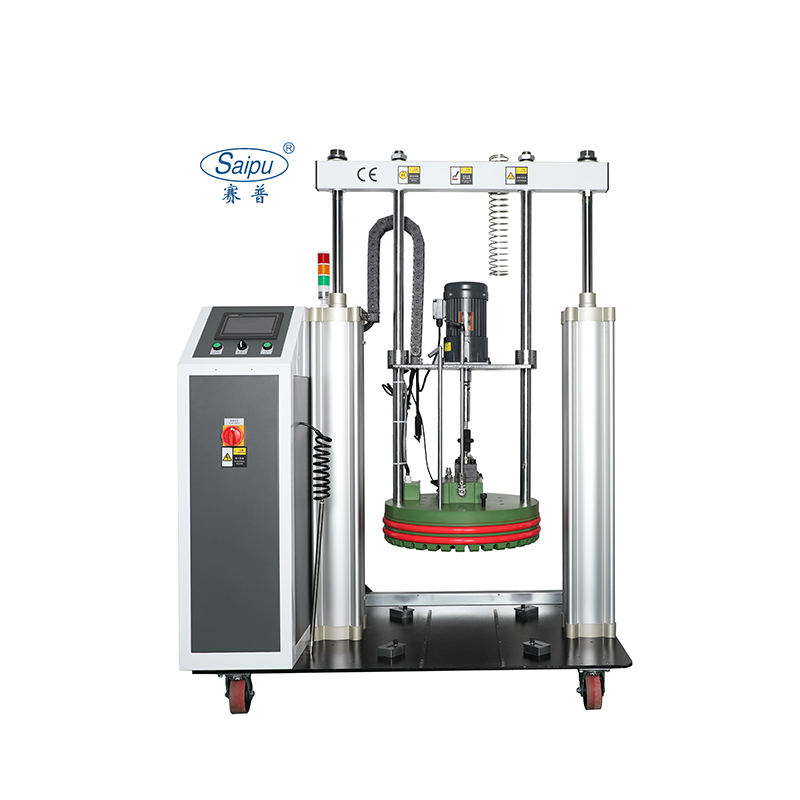
Polyurethane Reactive adhesives represent an industry-altering leap in bonding technology. This creates a permanent, thermoset bond offering unparalleled resistance to extreme temperatures and harsh washing cycles. However, because it reacts aggressively with moisture in the air, it strictly requires highly specialized equipment. Investing in a PUR 55 Gallon Hot Melt Glue Machine requires checking several critical engineering parameters:
Melt-on-Demand Platen: Look for a system featuring a Teflon-coated aluminum heating platen. This component lowers directly into the 200-liter drum, melting only the exact top layer of adhesive being pumped. This preserves the chemical integrity of the remaining glue.
Airtight Moisture Seals: The platen must feature robust, high-temperature O-ring seals. This completely isolates the reactive PUR adhesive from ambient moisture, preventing premature curing inside the drum.
Precision Gear Pumps: Ensure the unit is equipped with high-precision continuous gear pumps driven by AC frequency conversion motors. This guarantees mathematically exact output volumes that sync perfectly with variable lamination line speeds.
Intelligent PID Control: A modern PLC touch screen interface with PID temperature control algorithms is essential. It actively prevents adhesive overheating and subsequent charring across all heating zones.
The daunting prospect of ripping out core production equipment often causes intense anxiety regarding installation delays. Yet, with meticulous planning and the right vendor partnerships, the physical transition can be surprisingly seamless.
To avoid halting your active production schedules, the installation phase should be highly choreographed. First, conduct a rigorous Factory Acceptance Test with the supplier to verify the machine meets all performance specifications before it ever ships. Next, schedule the physical swap during a planned maintenance window, such as a weekend shift or a holiday plant shutdown. By proactively pre-wiring electrical drops and preparing the pneumatic air lines in advance, the actual physical integration and final cutover can often be completed in a matter of hours. Partnering with a reliable supplier ensures your new equipment integrates flawlessly with your existing parent machines.
While diligent routine maintenance and minor part swaps are an expected part of owning an industrial adhesive system, there inevitably comes a tipping point. Holding onto aging machinery severely drains your profitability.
Recognizing the glaring signs of total system failure early—such as severe tank charring, obsolete parts, and unpredictable pressure drops—can save your facility thousands of dollars in wasted materials and crippling downtime.
Take the time to critically evaluate your current production line setup today. Contact an industry specialist at Saipu Machine to explore advanced options, future-proof your manufacturing capabilities, and ultimately protect your bottom line by upgrading to a reliable automatic hot melt glue machine.
With strict adherence to preventative maintenance schedules, a high-quality industrial machine can operate effectively for 7 to 10 years. However, consumable components within the system, such as heated hoses, applicator nozzles, and inline filters, endure continuous thermal and mechanical stress. Consequently, these specific parts will require replacement much more frequently—often every 1 to 3 years—depending on the operating environment and daily adhesive volume.
Maintenance frequencies depend heavily on the specific type of adhesive used and your facility's daily production volume. As a general industry standard, a complete system flush and preventative maintenance inspection should be performed every 3 to 6 months. This critical routine removes degraded adhesive and prevents carbonized char buildup, which can severely clog gear pumps and applicator nozzles, leading to inconsistent application.
No. Standard EVA machines utilize open melt tanks that constantly expose the heated adhesive to ambient air. Because Polyurethane Reactive adhesives cure chemically when exposed to atmospheric moisture, placing them in a standard open tank will cause the adhesive to cross-link and solidify permanently. This will utterly destroy the tank and internal pump. PUR strictly requires specialized, airtight drum melters or sealed cartridge systems to prevent premature curing.
Visible smoke is a critical warning sign that the adhesive is undergoing severe thermal degradation. This typically occurs when the system's temperature is set significantly higher than the adhesive manufacturer's specifications, or when a faulty PID controller fails to regulate the heat properly. Smoking indicates that the glue is actively burning into hard carbon char. This scenario requires immediate shutdown, diagnostic testing, and repair to mitigate severe fire hazards.
Integration is remarkably straightforward when executed properly with the right vendor. Modern adhesive systems are engineered with versatile, open-architecture Programmable Logic Controllers and modular hardware components. This intelligent design allows them to easily sync with the parent machines in existing packaging, nonwoven, or textile lamination lines. By coordinating with a qualified supplier for proper signal mapping, the new system can seamlessly track line speeds and automate adhesive dispensing with minimal disruption.
Piston pumps are pneumatically driven and operate with an up-and-down stroking motion. They are highly effective for intermittent, burst-style adhesive application common in packaging. Gear pumps, on the other hand, use interlocking mechanical gears driven by an electric motor to push the adhesive forward. They provide a continuous, highly precise, and pulse-free flow of glue. This makes gear pumps the mandatory choice for wide-web lamination and high-speed continuous coating applications.
While a light layer of brown residue is normal over time, permanent damage is characterized by thick, black, rock-hard carbon deposits that cannot be removed with standard chemical flushing or gentle scraping. If the char has baked into the internal Teflon coating, causing it to flake off and expose bare metal, the tank is structurally compromised. Once the Teflon is gone, new adhesive will instantly burn against the bare metal walls, meaning the tank must be completely replaced.


