
close
Choose Your Site
Global
Social Media
Views: 0 Author: Site Editor Publish Time: 2026-10-28 Origin: Site


Assembly lines are running faster than ever, and product designs are pushing the very limits of material science. Consequently, the industrial demand for rock-solid, fail-proof bonding solutions has skyrocketed. For decades, standard Ethylene Vinyl Acetate hot melts and conventional water-based glues kept factory floors moving. But what happens when assembled products face extreme thermal shock, heavy moisture ingress, or harsh chemical washdowns? Those conventional glues hit their breaking point. The result is costly delamination and catastrophic product failure.
To solve these engineering bottlenecks, plant managers are aggressively shifting to Polyurethane hot melt adhesives. Known across the industry simply as PUR, this reactive chemistry is a massive operational upgrade. It perfectly bridges the gap between the rapid processing speeds of standard hot melts and the brute, uncompromising strength of structural epoxies. However, upgrading your assembly line is not just about swapping out a glue stick. This material cures via a strict chemical reaction with ambient moisture. Handling it safely and efficiently requires airtight dispensing equipment to prevent the glue from turning into a solid block of plastic inside your machinery.
Reactive Chemistry: PUR hot melts cross-link with moisture in the air or the substrate. This creates a permanent, irreversible structural bond.
Superior Performance: Once fully cured, they deliver extreme temperature resistance, flexibility, and weatherability that standard EVA glues simply cannot match.
Broad Applications: This is the go-to adhesive for waterproof woodworking edge banding, automotive interior trim, and delicate electronics assembly.
Equipment is Crucial: The liquid adhesive begins curing the second it touches ambient air. You absolutely must use specialized, sealed melting machinery.
ROI and Efficiency: Proper dispensing technology cuts material waste, accelerates production speed, and guarantees flawless product quality.
Looking at the broader manufacturing landscape, the global adhesives market is experiencing a massive pivot. A major driver of this trend is the booming electric vehicle sector and the worldwide push for sustainable construction materials. Manufacturers are actively phasing out heavy mechanical fasteners, like metal screws, bolts, and rivets. The goal is to slash overall product weight and significantly boost energy efficiency. Reactive adhesives offer the exact structural integrity needed for these modern, lightweight assemblies. We are seeing a distinct, industry-wide migration toward high-performance polyurethane solutions to meet these rigorous new engineering demands.
To understand why this adhesive dominates heavy industry, you have to look at its chemical behavior. It relies on a highly unique two-stage curing process. It starts its life as a workable thermoplastic and ultimately transforms into an indestructible thermosetting polymer.
Initially, the adhesive acts much like a standard hot melt. It remains solid at room temperature. When heated to its optimal application window—usually between 120 and 140 degrees Celsius—it melts into a viscous liquid. The glue is then extruded onto a substrate where it cools rapidly. This rapid cooling provides an instant grip, known on the factory floor as green strength. Achieving high green strength is vital for throughput. It locks parts together immediately, letting complex assemblies move down the line without the bottleneck of mechanical clamps or long drying times.
The real magic happens long after the glue cools. The formulation contains active isocyanate groups. These chemical groups actively pull microscopic moisture from the surrounding factory air and the bonded materials themselves. This triggers a chemical cross-linking process. Over the next 24 to 48 hours, a dense, three-dimensional polymer network forms. Once this moisture-curing phase finishes, the bond is permanent. You cannot remelt it, shatter it, or reverse it by applying intense heat.
Ethylene Vinyl Acetate, commonly referred to as EVA, is cheap, common, and works fine for basic cardboard packaging. But as quality standards rise, its structural flaws become glaringly obvious. Comparing the two chemistries shows exactly why modern facilities are upgrading.
EVA is a purely thermoplastic material. This means it retains its ability to remelt indefinitely. Imagine a dark wood cabinet sitting in direct sunlight, or a car dashboard baking in the summer heat. EVA softens quickly. The veneer peels away, and the dashboard warps. Conversely, in sub-zero freezing conditions, EVA turns brittle and shatters upon impact. Polyurethane is entirely different. Thanks to its thermosetting reaction, it refuses to remelt. It holds strong from negative 40 degrees to well over 120 degrees Celsius, offering unmatched weather resistance.
Standard glues dry hard and rigid. Reactive modern adhesives stay highly flexible. This elasticity is a lifesaver when bonding mixed materials, like marrying aluminum to dense plastic. As ambient temperatures shift, these dissimilar materials expand and contract at different rates. The polyurethane stretches and absorbs that physical stress instead of cracking under the pressure.
In high-end manufacturing, aesthetics drive perceived value. Polyurethane has a massive tensile strength advantage over traditional glues. You need significantly less adhesive to achieve a vastly stronger hold. Operators can lay down ultra-thin, nearly invisible bead lines. This drastically reduces the overall coating weight and creates flawless, seamless joints on luxury cabinets or consumer electronics.
Feature | Traditional EVA Hot Melt | Polyurethane PUR Hot Melt |
|---|---|---|
Chemical Type | Thermoplastic (Remeltable) | Reactive Thermosetting (Permanent) |
Curing Mechanism | Cooling only | Cooling plus Moisture Cross-linking |
Heat Resistance | Low to Moderate (Softens at 60°C) | Extremely High (Withstands 120°C+) |
Application Coat Weight | Thicker lines required | Thin, virtually invisible lines |
Standard glues constantly struggle with smooth, non-porous surfaces. In stark contrast, PUR grips notoriously difficult substrates with ease. Whether you are bonding treated metals, smooth glass, UV-coated wood, or composite plastics, this versatile chemistry grabs hold. Engineers can design innovative products using mixed materials without needing five different glue stations on the assembly line.
Think about a bathroom vanity exposed to hot steam, or factory equipment sprayed with aggressive chemical cleaners. Adhesive degradation is usually the first point of failure. The cross-linked polymer structure of cured polyurethane renders it highly impervious to water, industrial solvents, and lubricating oils. It thrives in high-humidity environments where water-based glues would just dissolve.
Furthermore, these modern formulations are engineered to be 100 percent solid. They contain zero solvents and emit incredibly low Volatile Organic Compounds. Eliminating toxic off-gassing protects your assembly team, improves indoor air quality, and keeps your plant fully compliant with strict environmental regulations.
This advanced bonding technology has trickled down into several major manufacturing sectors, completely redefining how products are assembled.
In high-volume woodworking, this is the undisputed gold standard for edge banding, intricate profile wrapping, and flat lamination. Kitchen cabinets face boiling water spills and radiant heat from nearby ovens. Standard edge banding fails under these stresses, causing the veneer to peel. Polyurethane seals the porous wood core, creating a watertight, heat-proof barrier that keeps furniture looking flawless for decades.
Cars endure brutal environmental extremes. A vehicle parked in the sun can easily see interior temperatures hit 85 degrees Celsius. Ordinary glue turns to liquid, causing headliners to sag and plastic panels to detach. Automakers rely heavily on PUR for interior trim attachment and complex seating assemblies. It maintains its grip under intense heat and absorbs constant road vibration without micro-fracturing.
Miniaturization requires absolute precision. Reactive hot melts are used to bond mobile phone screens and seal delicate battery packs. Because the liquid can be extruded in microscopic beads, it effectively blocks water and dust ingress. This helps devices pass strict waterproof ratings. Plus, the extreme heat resistance prevents the glue from degrading when internal processors run hot.
In the apparel industry, it is used to laminate breathable waterproof membranes onto rugged outdoor gear. The glue survives hundreds of harsh industrial washes while miraculously staying soft and flexible. In bookbinding, it provides a superior lay-flat solution. It prevents thick books from cracking down the spine when forced open, preserving the pages for years.
The chemical benefits are undeniable. But utilizing this adhesive requires a total shift in how you handle factory equipment. You absolutely cannot drop this glue into a standard open-tank melter.
Because the material aggressively seeks out moisture, exposing it to factory air is a costly mistake. If placed in an open heated vat, ambient humidity instantly triggers the cure. A thick, rubbery skin forms on top of the liquid. Within hours, the entire tank turns into a solid, impenetrable block of plastic. This ruins the expensive adhesive batch and permanently destroys the melting machine, causing massive downtime.
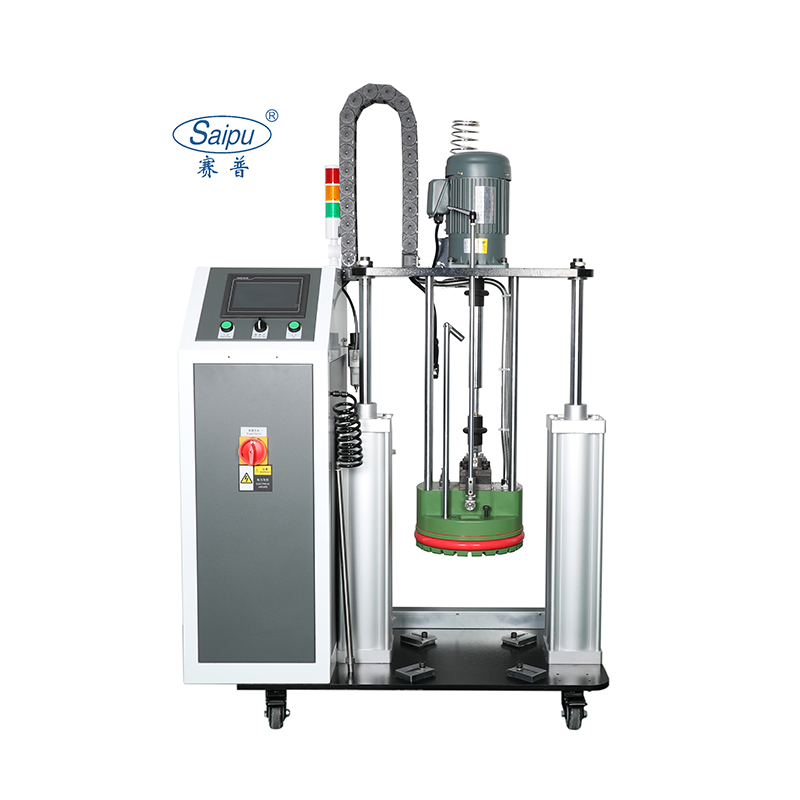
To run this material safely, you must integrate a PUR hot melt glue machine into your workflow. These systems are engineered from the ground up as airtight, sealed ecosystems. They isolate the glue from the exact moment the drum is loaded. High-end industrial systems utilize dry nitrogen blanketing or robust vacuum O-ring seals to actively displace oxygen and moisture.
Instead of heating a giant vat, industrial equipment uses advanced platen melting technology. A precision-heated, Teflon-coated metal platen presses directly onto the solid adhesive inside the foil-lined drum. The platen only melts the exact, ultra-thin layer of glue needed for that specific moment in production. The bulk of the adhesive underneath remains cool and fully protected from thermal degradation and premature curing.
Buying the right machinery dictates your line efficiency, safety, and product quality. Plant engineers must evaluate specific technical parameters before installation.
Match the machine size to your actual production volume. For high-speed, automated lines like continuous profile wrapping or robotic panel assembly, investing in a bulk 20 KG PUR Hot Melt Adhesive Drum dispensing system is mandatory. You must calculate your hourly adhesive consumption. The machine's melt rate must effortlessly keep pace with your robots without starving the application nozzles.
The internal pump moves the liquid from the melting platen to the nozzle. Gear pumps provide a highly precise, continuous, and pulseless flow. They are the undisputed standard for automated lines where exact coating weights and consistent bead sizes are critical. Piston pumps, in contrast, are better for intermittent manual hand-gun operations where sudden bursts of pressure are needed to push fluid through complex nozzles.
The delivery hoses must be heavily insulated with precise, multi-zone temperature control. If the hose temperature drops even slightly, the fluid viscosity spikes, causing erratic application. Additionally, airtight dispensing nozzles equipped with anti-drool mechanisms are required to stop ambient moisture from creeping backward into the heated manifold during brief line pauses.
To maximize the lifespan of your specialized PUR hot melt dispensing equipment, floor operators must follow strict maintenance protocols. This chemistry is highly unforgiving if mishandled.
At the end of a long shift, you cannot just turn off the power and walk away. Operators must apply a specialized moisture-barrier grease to the exposed nozzle tips to block air ingress. Alternatively, they must manually activate the automated sealing valves to lock the system down tight.
During drum changes, or before a long holiday weekend, the internal plumbing must be thoroughly purged. You must pump a specialized, non-reactive cleaning agent through the melter, heated hoses, and delicate nozzles. This heavy fluid physically pushes out all active polyurethane before it cross-links and causes severe blockages.
While the fully cured product is safe, the active melting process requires safety gear. Heated polyurethane can release trace isocyanate vapors. Ensure powerful overhead ventilation is running. Operators should always wear thermal protective gloves and safety glasses to prevent accidental burns from the pressurized liquid.
Polyurethane hot melts represent the absolute pinnacle of modern adhesive engineering. By moving away from failure-prone traditional glues, manufacturers can drastically improve product longevity, elevate aesthetics, and guarantee structural integrity in the harshest environments.
However, unlocking these massive chemical benefits requires the right industrial hardware. Applying this moisture-curing adhesive demands meticulously engineered, airtight machinery to prevent catastrophic equipment failure. We highly recommend evaluating your current assembly line to see how upgrading your adhesive technology can reduce material waste and boost your throughput. Explore our robust lineup of industrial PUR hot melt glue machines at Saipu Machine today, and ensure your production line is equipped to build products that truly stand the test of time.
No. The adhesive reacts aggressively with microscopic moisture in the air. Using it in a standard, open-tank machine will cause the glue to cure and harden solid inside the tank. This permanently destroys the equipment. You must use a specialized, airtight dispensing system specifically engineered for reactive adhesives.
The adhesive provides immediate green strength within seconds, allowing assembled parts to be handled right away. However, the complex chemical cross-linking typically takes 24 to 48 hours to complete. This timeframe can fluctuate slightly depending on ambient factory humidity and temperature.
Once it has fully cured and cross-linked, the material is a completely inert, non-toxic, and safe plastic. However, during the active melting and high-temperature dispensing process, it can release trace amounts of isocyanate vapors. Proper localized ventilation and strict adherence to safety guidelines are required to ensure operator safety.
Because it is highly sensitive to ambient moisture, unopened bulk adhesive typically has a strict shelf life of 6 to 12 months. It must be stored in a cool, dry, climate-controlled environment and remain completely sealed in its original foil-lined packaging to prevent premature curing.
You cannot clean these systems with standard industrial solvents or water. You must use a specifically formulated purge compound or non-reactive cleaner. During extended shutdowns, this thick purging material is pumped through the melter, hoses, and nozzles to physically push out the active adhesive before it hardens inside the plumbing.
Yes. Once the chemical cross-linking process is fully complete, the resulting thermosetting polymer is highly resistant to water, steam, and moisture ingress. This makes it the industry standard for bathroom cabinetry, outdoor apparel, and waterproof electronics.
Once fully cured, it cannot be melted down or easily dissolved by standard chemicals. Removal usually requires aggressive mechanical methods, such as sanding, grinding, or cutting the bond line. In some industrial cases, extremely harsh specialized solvents can soften it slightly, but mechanical removal is generally required.


