
close
Choose Your Site
Global
Social Media
Views: 0 Author: Site Editor Publish Time: 2026-08-29 Origin: Site


Upgrading to a polyurethane adhesive system fundamentally changes your production floor. These powerful adhesives require strict equipment handling. Their unique chemical properties demand absolute precision during application. Using standard hot melt equipment for moisture-curing adhesives creates massive problems. Exposing these reactive chemicals to ambient air causes premature cross-linking. This rapidly leads to clogged gear pumps and ruined heated hoses. You will face expensive production downtime as a direct result.
You must align your specific production materials with the correct mechanical components. The heating structures of your equipment must perfectly match your substrate needs. This careful alignment ensures a reliable, high-yield bonding process. We will explore how to thoroughly evaluate critical parts like platens, seals, and pumps. You will learn how to identify potential implementation risks before they halt your line. Read on to discover exactly what construction materials you should compare before making your final equipment investment.
Evaluating a PUR drum melter requires assessing both the consumable adhesive materials (PUR vs. EVA/POR) and the equipment construction materials (Teflon-coated platens, O-ring seals).
High-viscosity reactive adhesives demand specific pump mechanisms (typically precision gear pumps) to maintain accurate coat weights.
Standardizing your primary application helps determine if off-the-shelf machinery suffices or if a custom configuration is required.
Production bottlenecks often stem from mismatching your adhesive chemistry. Many factories place aggressive adhesives into the wrong heating environment. This mismatch ruins the adhesive and destroys the machinery. You must understand your consumable materials before evaluating the hardware. Different adhesives behave differently under heat and pressure.
Traditional EVA (Ethylene Vinyl Acetate) and metallocene adhesives rely on physical curing. They melt when heated and solidify when cooled. You can reheat them multiple times without damaging the chemical structure. They tolerate ambient air exposure perfectly well. Factories often process these forgiving glues in standard tank melters. You do not need airtight environments for standard EVA production.
PUR (Polyurethane) adhesives operate entirely differently. They require a specialized reactive adhesives PUR drum melter. Polyurethane cures chemically upon exposure to ambient moisture. Once the chemical cross-linking begins, you cannot reverse the process. Reheating cured PUR is impossible. Therefore, the processing environment must remain absolutely airtight. The equipment must protect the adhesive from the drum straight to the dispensing gun.
POR (Polyolefin Reactive) and specialty blends introduce additional complexity. They often require completely different temperature profiles. They typically feature much longer open times. Your melter configurations must allow for precise adjustments. Multi-zone temperature controls become essential here. You need accurate heating zones to prevent material degradation during slow production shifts.
We can summarize these consumable differences in a simple evaluation chart. Use this comparison to guide your baseline equipment requirements.
Adhesive Type | Curing Mechanism | Air Exposure Tolerance | Primary Equipment Required |
|---|---|---|---|
Standard EVA | Physical (Cooling) | High (Air safe) | Standard Tank Melter |
Polyurethane (PUR) | Chemical (Moisture) | Zero (Cross-links rapidly) | Airtight Drum Melter |
Polyolefin (POR) | Chemical (Moisture + Heat) | Very Low | Multi-Zone Drum Melter |
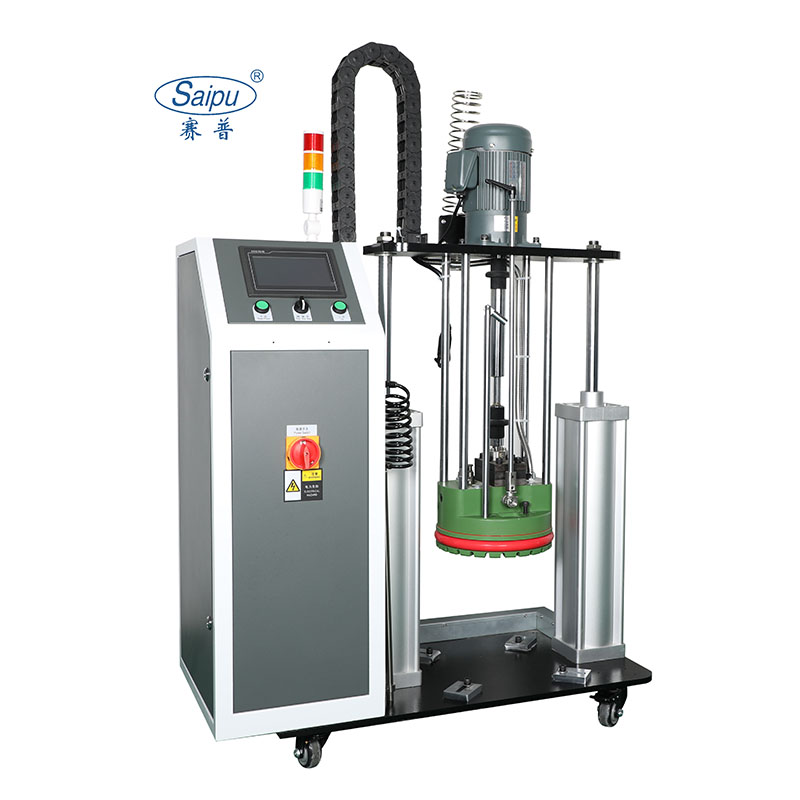
Your hardware must withstand harsh chemical realities. You must evaluate the physical construction of the machine. The internal components dictate your daily production success. Let us break down the essential features and their direct production outcomes.
Heating platen materials demand your immediate attention. Manufacturers must utilize high-grade PTFE (Teflon) coatings on the platens. Bare metal platens cause massive problems. Reactive glue aggressively sticks to untreated metal surfaces. The adhesive degrades and burns against bare aluminum. Teflon prevents this sticking. It minimizes necessary purge times during routine drum changes. It also ensures smooth platen removal.
Platen geometry heavily influences your melting speed. You must choose between finned platens and flat platens. Finned platens increase the melting surface area. They penetrate deeper into the solid adhesive block. This geometry suits high-demand lines requiring rapid melt rates. Flat platens serve a different purpose entirely. They suit low-viscosity materials perfectly. They also work best for low-volume applications where slow melting is preferred.
Sealing materials keep the ambient moisture out. You must rigorously evaluate the O-rings and platen seals. Standard rubber degrades quickly under high heat. It also fails against aggressive reactive chemicals. You should look for premium elastomers like Kalrez® or Viton®. They withstand extreme temperatures without degrading. They maintain the crucial airtight environment required for polyurethane.
Pump construction dictates your application accuracy. Precision gear pumps represent the industry standard for high-viscosity reactive adhesives. Piston pumps often fail to deliver consistent volume here. You must evaluate the machining tolerances of these gear pumps. Tight tolerances ensure consistent volumetric output. The pump must deliver exact coat weights regardless of the adhesive level remaining inside the drum.
We recommend following a structured evaluation process when reviewing equipment data.
Scrutinize the manufacturer data sheets carefully.
Compare the claimed melt rates against your actual factory temperatures.
Verify the PTFE coating thickness on the heating platens.
Confirm the exact elastomer brand used for the main O-rings.
Request detailed volumetric output charts for the gear pumps.
Reviewing PUR drum melter specifications requires healthy skepticism. Claimed melt rates measured in kilograms per hour often assume ideal laboratory temperatures. Buyers must adjust these expectations immediately. Cold factory floors in winter drastically reduce real-world melt rates. You must calculate your needs based on your worst-case ambient environment.
Scalability determines your long-term success. You must categorize your current and future production needs. Some factories thrive on standard machinery. Others require highly engineered, bespoke systems. Understanding these solution categories prevents costly over-engineering.
Off-the-shelf systems typically come in standard 20L or 200L capacities. They offer a lower initial capital expenditure. These standard configurations work best for predictable, single-line operations. Standard edge banding in furniture manufacturing fits this category well. Basic profile wrapping lines also run perfectly on standard machinery. You get reliable performance without paying for unnecessary complex features.
However, many industrial environments demand a custom PUR drum melter. You will need custom engineering for continuous high-speed production lines. Standard melt rates simply cannot keep up. Dual-pump requirements also force customization. Complex automated PLC robotic cells require deep software integration. Standard melters lack the communication protocols needed for advanced robotics.
You must know exactly when to request customization from your manufacturer. Consider tandem configurations for high-volume operations. Tandem systems auto-switch between two 200L drums seamlessly. This creates absolute zero downtime during drum changes. One drum melts while the other actively pumps. The PLC handles the crossover automatically.
Specialized hose management systems also require custom builds. Long robotic arms need flexible, heated hoses routed through tight spaces. You may also need direct integration into existing parent machine controls. Modern smart factories demand communication via Siemens or Allen-Bradley PLCs. Finally, unique facility constraints dictate custom designs. Unique electrical voltages or hazardous environment (ATEX) compliance requirements make off-the-shelf purchasing impossible.
Buying the equipment represents only the first step. Operating it daily introduces significant implementation realities. A reliable PUR drum melter relies entirely on strict moisture management. If moisture enters the system, the adhesive cures inside the hoses. You cannot flush cured polyurethane. You must replace the affected parts entirely.
Inert gas blanketing solves the ambient moisture problem. You must ensure your system includes reliable dry air or nitrogen injection systems. The machine injects this gas into the drum cavity. The gas displaces the ambient moist air. It forms a protective blanket over the remaining adhesive during operation. It also protects the exposed adhesive surface during drum changes. Do not buy a system lacking robust gas blanketing features.
Maintenance protocols heavily impact your daily operations. You must compare the ease of the purging process between different machines. Manufacturers design some systems better than others. Good engineering minimizes dead zones inside the manifold. Dead zones trap old adhesive. Trapped adhesive cures over time. Systems designed without dead zones reduce the volume of purge cleaner required. This dramatically lowers your daily operational costs.
Operator safety must remain your highest priority. Polyurethane adhesives release fumes during the heating phase. You must protect your workforce from these emissions. Look for systems featuring integrated exhaust hoods. The hoods capture and vent harmful vapors away from the operator. Automated platen blow-off valves also provide crucial safety. They relieve pressure safely during drum changes. They protect operators from dangerous high-pressure blowouts.
Selecting the right manufacturing partner requires rigorous trust and verification. Do not base your procurement solely on the lowest initial hardware cost. Cheap machines often fail spectacularly under continuous industrial loads. You must look for concrete evidence of post-installation reliability. The right partner supports your factory long after the initial sale.
You must establish strict evaluation criteria before signing purchase orders. Testing capabilities should top your list of demands. Will the manufacturer run your exact substrate in their lab? Will they test your specific adhesive brand before purchase? Do not accept generic testing videos. Demand customized trials proving the machine handles your specific chemistry.
Parts availability dictates your uptime. You must verify the domestic or regional stocking of critical wear parts. You will eventually need replacement seals. You will wear out gear pumps. Heated hoses inevitably fail over years of bending. Waiting weeks for international shipping kills your production schedule. Choosing a responsive PUR drum melter supplier guarantees local access to these crucial components.
Finally, demand comprehensive compliance and documentation. The supplier must provide up-to-date CE or UL certifications. They must supply detailed electrical schematics in your native language. Clear maintenance SOPs (Standard Operating Procedures) are non-negotiable. Your maintenance team needs these documents to keep the machine running safely.
Demand custom laboratory testing using your exact materials.
Verify regional warehouse stock for O-rings, pumps, and hoses.
Review the electrical schematics and CE/UL certificates beforehand.
Ensure the manuals contain step-by-step purging instructions.
Matching the right materials forms the absolute foundation of a successful bonding application. You must carefully pair the chemical adhesive with the appropriate physical melter components. A mismatch guarantees production failure. Polyurethane demands specific handling that traditional hot melts never required.
Prioritize airtight engineering above all else. Insist on Teflon-coated internals to prevent adhesive degradation. Demand precise multi-zone temperature controls over superficial digital features. The structural integrity of the gear pumps matters far more than a flashy touchscreen interface.
Begin your final evaluation today by auditing your current adhesive volume. Decide clearly between 20L and 200L capacities based on your daily shift consumption. Require prospective suppliers to demonstrate exactly how their specific machine specifications mitigate cross-linking risks. Holding your suppliers to these high standards ensures a seamless, profitable production upgrade.
A: Yes, most PUR melters can process EVA. However, the system must undergo thorough purging and cleaning before switching chemistries. Mixing EVA and PUR traces leads to severe cross-contamination. This contamination easily causes clogged hoses and permanently damages the precision gear pumps.
A: High-quality O-rings generally require replacement every 6 to 12 months. This timeframe depends heavily on the adhesive's abrasiveness and your daily operation frequency. You should treat seal replacement as mandatory preventative maintenance to avoid sudden pressure leaks.
A: Nitrogen successfully displaces ambient air inside the drum cavity. Ambient air contains moisture, which triggers the chemical cross-linking process in polyurethane. Nitrogen gas halts this reaction, preventing the adhesive from curing and solidifying inside the machine components.
A: You must calculate your hourly adhesive consumption accurately. If a 20L (5-gallon) drum requires changing more than twice per shift, you are losing valuable production time. Upgrading to a 200L (55-gallon) system will significantly reduce your labor demands and minimize machine downtime.


