
close
Choose Your Site
Global
Social Media
Views: 0 Author: Site Editor Publish Time: 2026-10-28 Origin: Site


Industrial manufacturing demands faster, cleaner, and more resilient assembly lines. Traditional fastening methods are rapidly becoming liabilities. Screws, rivets, and volatile solvent-based glues frequently cause slow production cycles. They introduce structural weaknesses. Worse, they trigger unpredictable supply chain disruptions. Navigating these modern challenges requires a robust, technologically advanced solution.
Integrating a high-performance hot melt glue machine into your facility resolves these bottlenecks. It fundamentally transforms how products are built. In this comprehensive guide, you will discover how upgrading to automated dispensing equipment boosts throughput. You will also see how it enhances product durability and slashes long-term operational costs.
Unmatched Efficiency: Hot melt adhesive systems provide rapid curing times, drastically reducing assembly line bottlenecks compared to traditional solvent-based glues.
Versatile Applications: From end-of-line packaging and intricate woodworking to automotive manufacturing and delicate electronics, hot melt technology adapts seamlessly to nearly any industrial material.
Automation is the Future: Modern dispensing equipment featuring Programmable Logic Controller systems offers precision application, significantly reducing human error and costly material waste.
Eco-Friendly and Safe: Because these adhesives are completely solid and free of Volatile Organic Compounds, they create safer factory environments and align perfectly with global sustainability initiatives.
High Return on Investment: Despite initial capital expenditures, the long-term reduction in maintenance, raw material waste, and labor makes upgrading to high-capacity equipment a highly profitable investment.
To truly understand how modern manufacturing achieves such high throughput, look at the core technology driving the assembly line. An industrial dispensing system melts solid thermoplastic adhesives. It then applies them with pinpoint accuracy onto various substrates. Standard commercial glue guns cannot handle this. Industrial systems are engineered for continuous, high-volume operation under brutal factory conditions.
A standard industrial dispensing setup consists of several critical components. They work in unison to maintain consistent temperature and fluid dynamics.
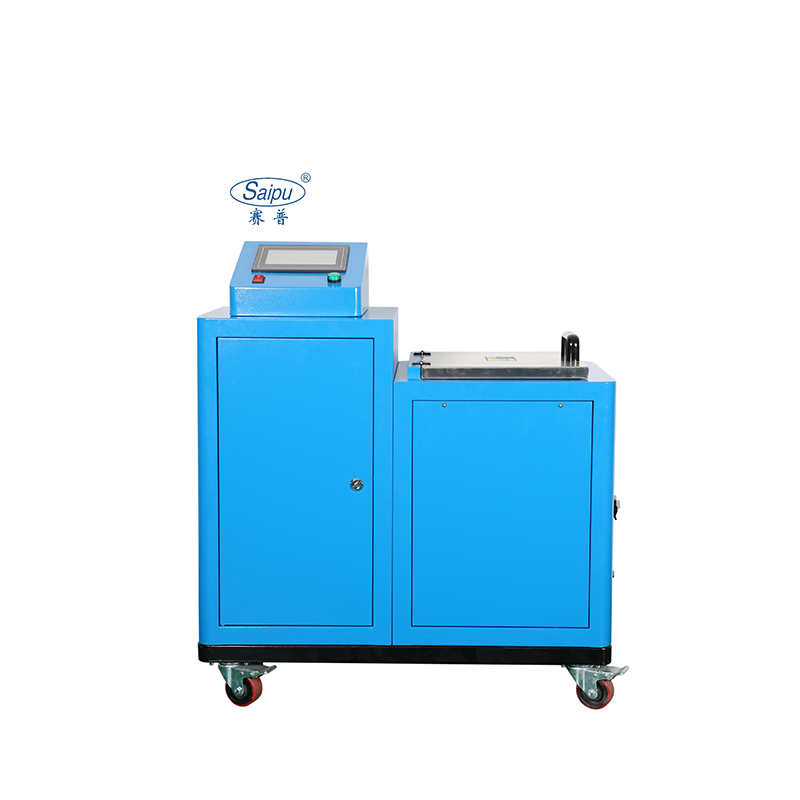
The Melting Tank: Solid adhesive transforms into liquid here. High-capacity operations typically utilize robust 30kg units coated with Teflon. This prevents constant refilling, resists char buildup, and ensures a perfectly stable internal temperature.
The Pumping System: Once liquefied, the adhesive requires pressurization. Facilities rely on pneumatic piston pumps for intermittent packaging tasks. For high-viscosity materials requiring continuous, ultra-precise volume output, motor-driven gear pumps are the absolute standard.
Heated Hoses: The machine pushes the fluid through specialized insulated hoses. Integrated heating elements prevent the liquid polymer from cooling and solidifying prematurely.
Dispensing Guns and Nozzles: These automated guns act as the terminal points. They are pneumatically or electronically actuated to extrude adhesive in programmed patterns. Think micro-dots, continuous beads, or wide spray webs.
The operational workflow relies entirely on precise thermal management. Solid adhesive is loaded into the melting tank. The heating grid raises the temperature to an exact setpoint. This typically ranges between 120°C and 200°C depending on the polymer formulation.
Once converted to a fluid state, the pumping system forces the adhesive through the heated hoses. The temperature is strictly maintained throughout this journey to guarantee constant viscosity. Finally, the automated dispensing gun activates based on microsecond sensor inputs. It fires the hot melt onto the target substrate just a fraction of a second before the two parts are pressed together.
The sheer versatility of this equipment makes it a cornerstone across a multitude of manufacturing sectors. Facility managers can adapt the technology to vastly different structural requirements. They do this by simply adjusting the adhesive chemistry and tweaking the dispensing nozzles.
Picture a bustling packaging line during the peak holiday shipping season. Speed and reliability are absolute necessities. Dispensing systems are deeply integrated into end-of-line packaging machinery. They execute carton sealing, tray forming, and labeling. Ethylene Vinyl Acetate and metallocene-based adhesives are the standard here. They offer rapid set times. Boxes are sealed and palletized in seconds without the catastrophic risk of flaps popping open during transit.
Components in the automotive and aerospace sectors endure extreme temperature fluctuations. They face relentless vibrations and high mechanical stress. Polyurethane hot melts are frequently deployed via specialized equipment to meet these demands. These systems handle interior trim attachment, seating assembly, and wire harnessing. Furthermore, Polyurethane adhesives cross-link with ambient moisture after cooling. This creates an unbreakable thermoset bond providing exceptional heat resistance.
The modern furniture industry relies heavily on continuous hot melt application. It ensures both structural integrity and flawless aesthetic finishing. Automated machines are indispensable for edge banding. Thin strips of veneer or PVC are bonded seamlessly to the edges of MDF. Profile wrapping and cabinet assembly also utilize this technology. It ensures tight joints without relying on mechanical fasteners that could split the wood.
Precision is non-negotiable when assembling electronics. Hot melt systems are utilized for potting and component stabilization. They seal delicate circuitry against invasive moisture and dust. Polyamide-based hot melts are often selected due to their excellent electrical insulation properties. Specifically, the dispensing systems must be highly calibrated. They apply microscopic dots of adhesive without damaging fragile microchips.
Transitioning from outdated fastening methods to automated hot melt technology offers measurable operational benefits. Production engineers see immediate results. This integration directly impacts the bottom line through enhanced efficiency and slashed overhead.
Beyond mere speed, the physical curing mechanism is a massive advantage. Water-based or solvent-based glues rely on evaporation. They often require hours to dry. In contrast, hot melts cure simply by dissipating heat. The adhesive solidifies as it cools to room temperature. It achieves maximum bond strength in seconds. This completely eliminates the need for expansive drying racks or energy-hungry curing ovens. Valuable factory floor space is immediately freed up.
Modern manufacturing frequently involves bonding dissimilar materials. Traditional mechanical fasteners often fail here. Hot melt technology excels at creating durable bonds across a wide spectrum of substrates. Formulations distribute stress evenly across the joint whether joining porous corrugated cardboard or non-porous plastics and metals. This prevents localized material fatigue frequently caused by screws or rivets.
Feature | Traditional Fasteners and Solvent Glues | Automated Hot Melt Technology |
|---|---|---|
Curing and Setup Time | Hours to days; requires expensive drying racks | Seconds; instant structural bond upon cooling |
Structural Stress | High localized stress points at screws or rivets | Even stress distribution across the entire joint |
Environmental Impact | High volatile emissions; hazmat disposal needed | Completely solid, zero emissions, eco-friendly |
Production Speed | Manual application or slow automated processes | High-speed, continuous inline integration |
Recent global supply chain disruptions have starkly highlighted the vulnerabilities of relying on volatile chemical components. Solvent-based adhesives often require specialized hazmat storage. They possess frustratingly short shelf lives. Solid hot melt adhesives boast a nearly indefinite shelf life when stored correctly. They remain unaffected by freezing temperatures and bypass hazmat logistics entirely. This offers a highly predictable and stable raw material supply chain.
Industry 4.0 standards are the new benchmark for global manufacturing. The demand for intelligent, automated equipment has surged exponentially. The integration of advanced control systems has transformed the hot melt melter. It is no longer a simple heating vessel. It is a highly sophisticated robotic component.
Manual glue application introduces unacceptable levels of variability in large-scale industrial assembly. A slight tremor or momentary distraction from an operator can lead to a messy, weak bond. Human operators simply cannot consistently maintain the exact volume and placement of adhesive over an exhausting eight-hour shift. This inconsistency inevitably leads to product defects and excessive material waste. It also introduces severe safety risks like burns. Manufacturers are rapidly phasing out manual dispensing to meet strict quality control standards.
A Programmable Logic Controller serves as the digital brain of the automated machine. It empowers operators to program precise operational parameters. These synchronize flawlessly with the broader assembly line.
Specifically, advanced controllers utilize Proportional-Integral-Derivative control to maintain thermal zones within a fraction of a degree. This actively prevents adhesive degradation. By interfacing with line encoders, the controller adjusts the pump speed in real-time. If the conveyor belt slows down, the machine automatically reduces the adhesive output. This maintains a perfectly consistent bead size. Furthermore, controllers dictate exact start and stop times for the dispensing guns. This enables complex stitch patterns that save massive amounts of adhesive while retaining full structural integrity.
For facilities managing heavy-duty production cycles, upgrading to a 30kg Hot Melt Glue Machine with PLC Control System represents a critical leap toward full automation. These high-capacity units seamlessly integrate with robotic arms and central factory networks. They ensure pinpoint accuracy and virtually eliminate human error.
Looking closely at how assembly processes are evolving, a profound shift is occurring across global manufacturing floors. We are moving rapidly away from traditional mechanical fasteners toward advanced structural adhesives.
This transition is largely driven by the lightweighting trend. It is particularly prominent in the electric vehicle and aerospace sectors. Manufacturers are increasingly using thinner, mixed materials. Bonding carbon fiber to aluminum simply cannot be welded or riveted without compromising structural integrity. Hot melt dispensing allows for even stress distribution across these delicate, dissimilar joints.
Environmental sustainability has evolved from a fringe initiative into a core regulatory requirement. Global environmental agencies are implementing strict regulations on Volatile Organic Compounds emitted by solvent-based manufacturing processes. Hot melt adhesives are completely solid formulations containing zero solvents. They emit virtually no harmful compounds during application or curing. This ecological advantage is a primary driver forcing industries to retrofit their assembly lines. It helps facilities reduce their carbon footprint and improve occupational health metrics.
The integration of smart factory ecosystems is redefining equipment expectations. Today's assembly lines demand real-time data tracking and predictive maintenance capabilities. Consequently, the modern adhesive melter is an intelligent node within the Industrial Internet of Things. Capable of communicating directly with central supervisory systems, the latest machines optimize fluid dynamics. They alert facility managers to impending component wear before a costly failure occurs.
Selecting the correct adhesive dispensing equipment is a highly technical decision. Procurement managers must evaluate several critical specifications. This ensures the chosen system aligns perfectly with their specific manufacturing requirements.
The most fundamental specification to evaluate is the system's tank capacity and its corresponding melt rate. A 5kg tank may suffice for light-duty applications. However, a low-capacity tank will create severe production bottlenecks for continuous, high-speed automated assembly lines. Heavy-duty industrial environments require robust reservoirs. A 30kg capacity ensures a continuous supply of molten adhesive. It prevents line stoppages caused by waiting for new adhesive blocks to melt. Ensure the machine's rated melt rate exceeds your hourly production requirement by at least twenty percent to account for operational variances.
The specific adhesive chemistry required for your application dictates the necessary pumping mechanism. Piston pumps operate pneumatically and deliver adhesive in intermittent strokes. They are highly reliable and cost-effective for applications handling low-to-medium viscosity adhesives like standard carton sealing. In contrast, gear pumps are driven by electric motors. They provide a continuous, pulse-free flow of adhesive. They offer exact volumetric control regardless of viscosity changes. This makes them mandatory for high-precision applications like delicate electronic potting and continuous profile wrapping.
A standalone machine is insufficient for modern facilities. Premium equipment must feature robust system compatibility. Evaluate the input and output capabilities to ensure it can communicate seamlessly with your existing conveyor belts and robotic dispensing arms. Ensure the main unit supports multiple hose and gun connections simultaneously. A manifold allowing for multiple independent heated hoses provides the flexibility to run several assembly stations from a single melting unit. This drastically improves your return on investment. If you are looking for a reliable setup, investing in a professional PLC controlled hot melt glue machine will streamline this integration.
Maintaining industrial assembly equipment is critical for ensuring consistent production quality. A proactive maintenance strategy prevents unexpected downtime and protects your capital investments.
One of the most frequent issues operators encounter is the formation of char. Char occurs when adhesive material undergoes thermal degradation due to prolonged exposure to high temperatures or oxygen. This hardened material eventually breaks off into the fluid stream and clogs the dispensing nozzles. Operators must strictly adhere to the manufacturer's recommended temperature settings to combat this. Lowering the tank temperature by 30°C to 50°C during extended idle periods significantly reduces thermal oxidation. Keeping the melting tank lid tightly closed minimizes oxygen exposure.
Implementing a rigorous cleaning schedule is vital for fluid system integrity. Microscopic debris accumulates over time. Routine flushing removes these contaminants before they agglomerate into catastrophic blockages. Wipe down nozzles daily and inspect for leaks. Check and clean the tank inlet screen weekly. Inspect heated hoses for wear monthly. Execute a full system flush quarterly using a compatible purging compound.
Industrial dispensing equipment operates at extreme temperatures ranging from 150°C to 220°C. It presents significant burn hazards. Strict safety protocols are mandatory. Personnel must wear appropriate Personal Protective Equipment including heat-resistant gauntlet gloves and safety face shields. Operators must be trained to depressurize the pumping system entirely before attempting any maintenance. This prevents accidental extrusion of pressurized molten adhesive.
Hot melt technology is undeniably revolutionizing industrial assembly lines. It solves the inherent flaws of traditional fastening methods by offering superior processing speed and unmatched bonding versatility. Choosing the right equipment maximizes production efficiency while drastically reducing material waste and long-term operational costs.
Take the necessary step to future-proof your operations. Evaluate your production needs and upgrade to an automated hot melt glue machine today. This strategic investment secures resilient manufacturing success. It ensures your assembly line remains fast, clean, and highly competitive in an evolving industrial landscape. Visit Saipu Machine to explore high-capacity, integrated solutions tailored to your facility's demands.
Industrial adhesive systems are engineered for extreme versatility. They successfully bond a vast array of substrates including corrugated cardboard, rigid plastics, treated metals, ceramics, natural wood, and non-woven fabrics. The success of the bond depends entirely on selecting the appropriate adhesive chemistry. Standard Ethylene Vinyl Acetate formulations are excellent for paper and wood. Polyurethane formulations are required for bonding non-porous plastics and metals due to their reactive, moisture-curing properties.
Hot melt adhesives cure via a thermodynamic phase change. They transition from a molten liquid to a solid state almost instantly as they dissipate heat into the surrounding environment. Depending on the ambient temperature and the specific formulation, curing typically takes anywhere from 3 to 60 seconds. This rapid set time eliminates the need for holding clamps or thermal curing ovens.
A programmable controller acts as the brain of the dispensing equipment. The primary advantage is absolute consistency. The system continuously monitors and adjusts tank and hose temperatures to within a fraction of a degree. It synchronizes the exact timing and volume of the adhesive extrusion with the speed of the conveyor belt. This level of automation drastically reduces material waste and eliminates human error.
Routine maintenance schedules depend heavily on production volume. Operators should conduct daily visual inspections and wipe down the exterior of dispensing nozzles. A thorough system flush should be executed every three to four months. If the facility is switching between incompatible adhesive types, a complete system flush must be performed immediately prior to the changeover.
Yes, the transition to this technology is widely recognized as a sustainable manufacturing upgrade. The adhesives utilized are completely solid at room temperature and contain no toxic solvents. They produce zero volatile emissions during the melting and curing phases. Modern dispensing equipment is also designed with high-efficiency thermal insulation to reduce electrical energy consumption.
Ethylene Vinyl Acetate is a standard, cost-effective thermoplastic adhesive that melts when heated and solidifies when cooled. It is ideal for packaging and basic woodworking. Polyurethane is a reactive adhesive. After the initial cooling phase, it draws moisture from the air to undergo a chemical cross-linking process. This creates a permanent, thermoset bond that will not remelt even under extreme heat, making it essential for automotive and aerospace applications.
Calculating adhesive consumption requires knowing your bead size, application length, and production volume. First, determine the weight of adhesive per meter based on the nozzle diameter and pump pressure. Multiply this by the length of the glue line per product. Finally, multiply that figure by your hourly production rate. Upgrading to a controller-driven gear pump system allows you to track this consumption digitally, optimizing the exact gram-weight applied per unit to minimize waste.


