
close
Choose Your Site
Global
Social Media
Views: 0 Author: Site Editor Publish Time: 2026-08-15 Origin: Site


Modern mattress packaging demands continuous, high-volume adhesive application. You rely on strong bonds to secure heavy materials like PE film, kraft paper, or corrugated caps. A minor slowdown on the conveyor line directly impacts daily throughput. You simply cannot afford unpredictable pauses during automated wrapping.
Unfortunately, undersized glue tanks cause frustrating line stoppages. Operators constantly halt production for manual refilling and reheating cycles. On the other end of the spectrum, oversized drum unloader systems introduce massive upfront capital expenditure. They also present severe thermal degradation risks for mid-tier production volumes. Holding too much glue at high temperatures ruins the adhesive quality.
A 60 kg capacity emerges as the ideal industrial sweet spot. Standardizing merely on tank volume will not guarantee success, however. You must evaluate melt rates, gear pump architecture, and strict thermal management. Read on to discover how specific designs keep automated packaging lines running smoothly.
Sizing Alignment: A 60 kg tank supports continuous mid-to-high volume mattress packaging, bridging the gap between 30 kg manual units and 55-gallon bulk unloaders.
Pump Selection: Gear pumps are strictly recommended over piston pumps for the continuous, high-viscosity extrusion required in mattress wrapping.
Thermal Management: Zoned heating and Teflon-coated interiors are non-negotiable specifications to prevent adhesive charring during multi-shift operations.
Supplier Vetting: Evaluating a supplier requires scrutinizing spare parts availability, local technical support, and warranty terms, not just upfront equipment costs.
Finding the exact mathematical threshold for equipment upgrades prevents wasted capital. A mattress packaging 60 kg hot melt glue tank solves distinct mid-tier volume problems. Smaller 10 to 30 kg units fail when lines push past 50 mattresses per hour. They force operators into excessive manual refills. These frequent disruptions cause rapid temperature drops inside the melt grid. Cold glue leads directly to weak structural bonds.
You must weigh downtime against capital expenditure. Upgrading to a single 60 kg system often costs less than maintaining multiple smaller units across different stations. Multiple small tanks introduce multiple failure points. One correctly sized machine centralizes your maintenance efforts. You reduce spare parts inventory while maximizing conveyor uptime.
You must also understand the harsh realities of thermal degradation. Large 200 kg or 55-gallon drums hold excessive adhesive in a molten state. If your throughput cannot empty the drum quickly, the glue bakes. Prolonged heat exposure destroys adhesive polymers. A 60 kg unit provides high buffer capacity without this dangerous prolonged heat exposure. It cycles glue fast enough to maintain perfect chemical integrity.
System Capacity | Ideal Production Match | Primary Operational Risk |
|---|---|---|
10–30 kg Tanks | Manual or intermittent stations | Frequent refills cause thermal drops |
60 kg Tanks | Continuous automated lines | The industrial sweet spot |
200 kg Drum Unloaders | High-speed continuous lamination | Severe adhesive thermal degradation |
You must thoroughly decode 60 kg hot melt glue tank specifications before finalizing any purchase. The most common industry misconception equates tank volume to output speed. A large holding capacity does not guarantee a fast melt rate. You must calculate the required kilograms-per-hour (kg/hr) based on your exact packaging line speed. High-speed baggers demand aggressive melt grids to keep up with consumption.
Pump architecture remains a critical decision point. You have two main choices:
Piston Pumps: These suit intermittent, short-burst stitching. However, they naturally cause pressure drops or pulsation. This pulsation proves highly unsuitable for long, continuous packaging seals.
Gear Pumps: These provide steady, continuous volumetric consistency. You need this precise extrusion for the long adhesive beads applied to mattress bags and heavy boxes.
Motor and drive sizing directly impact adhesive control. You cannot rely on basic pneumatic drives for automated sealing. You need variable speed AC motors equipped with precision encoders. These encoders sync your adhesive output directly to the conveyor belt speed. If the conveyor slows down, the pump slows down. This synchronization guarantees a perfect adhesive bead every time.
Always calculate your peak kg/hr demand before evaluating tank size.
Mandate gear pumps for all automated continuous bead applications.
Ensure the drive motor integrates directly with line-speed encoders.
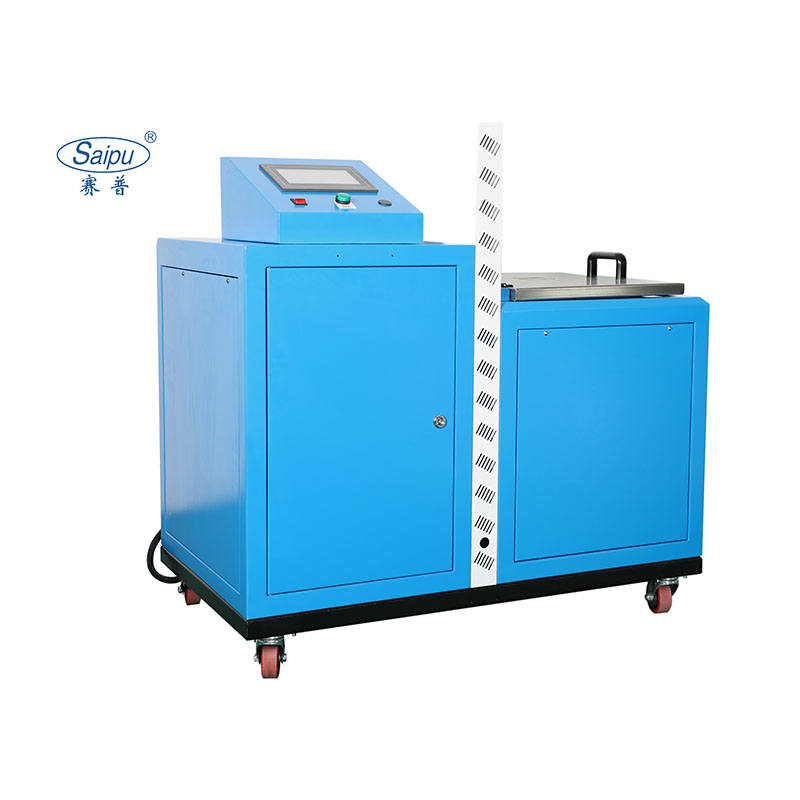
Basic single-station mattress bagging often requires minimal engineering. "Off-the-shelf" standard models serve these simple setups perfectly. A standard dual-hose configuration handles basic top-and-bottom flap sealing. Standard melt grids easily process everyday EVA packaging adhesives. If your operation remains straightforward, standard units deploy quickly and reliably.
However, modern automated facilities frequently demand a custom 60 kg hot melt glue tank. Wide-web mattress roll-packing requires complex multi-hose manifolds. You might need 4, 6, or even 8 simultaneous hose connections to secure wide polyethylene films. Multi-flap automated box erectors also rely on these expanded manifold capabilities.
Consider integrating automated auto-feed systems. Manual loading introduces cold pellets too quickly, shocking the system temperature. Pneumatic pellet feeders pull adhesive automatically from a bulk bin. They maintain consistent tank levels without operator intervention. This steady feeding entirely prevents thermal shock. Furthermore, custom I/O integration links the tank’s Programmable Logic Controller (PLC) to your central line. You gain centralized fault monitoring, giving operators immediate alerts if pressure drops.
Multi-Hose Manifolds for wide-web packaging setups.
Pneumatic Pellet Feeders to eliminate manual loading errors.
Advanced PLC Integration for real-time central fault monitoring.
Continuous high heat acts as the primary enemy of any packaging adhesive. The carbonization threat destroys productivity rapidly. Burnt adhesive flakes travel through the system, clogging hoses and blocking delicate application nozzles. A single clogged nozzle halts the entire mattress production line. You must choose a 60 kg hot melt glue tank designed to fight this exact issue.
Effective design features mitigate carbonization risks directly. Teflon (PTFE) coating remains absolutely essential. Manufacturers coat the interior tank walls to reduce adhesive adhesion. This slick surface expedites regular cleaning routines. More importantly, it dramatically reduces burned material buildup along the heated edges.
Progressive or zoned heating provides another vital engineering safeguard. You cannot blast the entire system with uniform maximum heat. Independent temperature zones allow you to manage thermal loads precisely. You set different temperatures for the tank bottom, the melt grid, the manifold, the hoses, and the application guns. This tiered approach prevents standard EVA or PO hot melts from overheating during multi-shift operations.
System Component | Maintenance Action | Recommended Frequency |
|---|---|---|
In-line Filters | Inspect and replace mesh screens | Monthly |
Tank Interior | Drain, purge, and clean walls | Quarterly |
Application Nozzles | Soak in appropriate solvent | Weekly |
Many facilities ignore factory-recommended cleaning schedules. Operators skip filter changes to save time, leading directly to pump damage. Always use manufacturer-approved system purging agents during extended holiday shutdowns to prevent cold-curing inside the hoses.
Evaluating the hardware only covers half of your procurement decision. Operational reliability depends heavily on the vendor supporting the equipment. Choosing a dependable 60 kg hot melt glue tank supplier ensures you maintain peak production speeds year after year. You must look beyond the basic spec sheet.
Start by evaluating parts interchangeability. Some suppliers use proprietary fittings to trap you into expensive aftermarket purchases. You should always insist on hoses and nozzles compatible with standard industry designs, such as Nordson-style fittings. This flexibility guarantees you can source emergency parts locally if needed.
Review the Service Level Agreements (SLAs) closely. Ask the supplier about replacement part shipping guarantees. You cannot afford packaging bottlenecks while waiting weeks for a proprietary circuit board. Ensure the vendor maintains regional spare parts hubs. Finally, scrutinize compliance and safety records. High-temperature factory environments demand robust safety engineering. Verify the equipment holds recognized industrial certifications like CE, UL, or ISO before finalizing the contract.
Selecting the right adhesive system requires a structured evaluation framework. You must accurately match the machine's melt rate to your specific conveyor speed. Always demand gear pumps over piston designs to guarantee continuous, pulse-free sealing. Furthermore, insist on comprehensive thermal management features, including Teflon coatings and zoned heating, to prevent costly carbonization.
Your procurement and engineering teams should take immediate action. Audit your current kg/hr adhesive usage on the floor today. Document your peak production speeds accurately. Reach out to shortlisted vendors to request a functional prototype test using your specific packaging materials. Demand a data-backed ROI calculation from them before issuing a formal purchase order. This proactive approach ensures your packaging line runs flawlessly.
A: It usually takes 45 to 90 minutes. This depends heavily on heater wattage and ambient factory temperatures. We strongly recommend using integrated standby modes during shift changes. Standby modes maintain safe, lower temperatures to prevent long heat-up delays while protecting the adhesive from burning.
A: Yes, it can process both types smoothly. However, the system must feature accurate, adjustable PID temperature controllers. Metallocene generally requires precise, often lower, operating temperatures. Precision controllers prevent thermal degradation and ensure you get optimal bonding performance on your packaging line.
A: Standard off-the-shelf setups usually range from 2 to 6 hoses. If your application requires more width, custom manifolds can successfully support up to 8 or more connections. You must ensure the total combined adhesive output does not exceed the maximum kg/hr rating of your internal gear pump.


