
close
Choose Your Site
Global
Social Media
Views: 0 Author: Site Editor Publish Time: 2026-09-07 Origin: Site


Production managers face a constant dilemma when upgrading their assembly lines. Off-the-shelf equipment offers faster deployment and lower upfront costs. However, standard configurations often fail to meet highly specific throughput or material requirements. You must treat this decision as a rigorous risk-versus-reward calculation. Customization reliably solves unique production bottlenecks. It adapts easily to non-standard substrates. Yet, it introduces extended lead times, complex validation phases, and higher initial capital expenditure. Getting this choice wrong derails manufacturing schedules. This article provides production managers and procurement engineers a clear, evidence-based framework. We aim to help you decide when a custom build is mathematically and operationally justified. You will learn to identify key operational thresholds. We will explore essential hardware specifications and implementation realities. Ultimately, you will gain the insight needed to make a confident purchasing decision.
Standard machines suffice for 70%+ of standard packaging and assembly lines; customization becomes necessary when dealing with proprietary product shapes, non-standard substrates, or extreme spatial constraints.
A custom automatic hot melt glue machine requires a thorough ROI analysis comparing the upfront engineering premium against projected labor savings and reduced rework.
Key modification areas usually involve dispensing head configurations, PLC integration with existing legacy lines, and specialized melt tank capacities.
Partnering with the right automatic hot melt glue machine supplier hinges on their Factory Acceptance Testing (FAT) protocols and post-installation support structure.
Standard models handle many basic industrial tasks perfectly well. They excel at standard cartoning and basic electronic potting. You can expect predictable speeds and straightforward maintenance routines. Buyers enjoy quick shipping times because inventory sits ready. Operators find standard units easy to learn. When your product geometry remains simple, an automatic hot melt glue machine off the shelf serves as the most logical choice. We recommend establishing a strict baseline before exploring custom options. Standard configurations often provide excellent reliability for flat substrates. They offer straightforward pneumatic valve arrays. They connect easily to standard single-phase power outlets.
Problems arise when manufacturers force standard machines into non-standard workflows. This mismatch inevitably leads to micro-stoppages. Glue application becomes highly inconsistent across complex or curved surfaces. Manual oversight increases because operators must catch continuous errors. Consequently, scrap rates spike. Over time, these daily inefficiencies drain factory profitability. You lose time fixing mechanical jams. You waste expensive polymer materials daily. You dedicate too many labor hours to monitor poorly fitted equipment. Standard units lack the modularity to handle sudden packaging dimension changes. They cannot adjust fluidly to varying assembly line speeds.
A successful custom integration must meet exact criteria. First, it must achieve zero-defect dispensing at target speeds. Second, the equipment needs a seamless digital handshake. It must communicate flawlessly via existing programmable logic controllers (PLCs). Third, the unit must ensure specific footprint compliance. It has to fit your factory floor perfectly. Defining these goals early prevents project scope creep. Buyers must outline their success metrics clearly. You need a machine to reduce cycle times definitively. You want a system requiring minimal human intervention.
Standard nozzles struggle to coat irregular surfaces evenly. Complex electronics and intricate automotive components often demand tailored solutions. You might need custom multi-axis dispensing arms. These arms articulate precisely around proprietary product shapes. Specialized nozzle profiles ensure accurate glue placement inside deep cavities. If your substrates feature unusual textures, standard valves simply cannot adapt. Some plastics repel standard adhesives without specialized application angles. Custom engineering guarantees optimal adhesion. The bespoke approach matches the hardware geometry to the product geometry perfectly.
Standard units frequently fail under extreme continuous load. Heavy-duty production lines cannot afford heating delays. You must evaluate the requirements for a continuous production automatic hot melt glue machine. These customized units often feature dual-tank systems. Dual tanks provide zero downtime during adhesive refills. One tank melts while the other tank dispenses. Upgraded pump capacities push high-viscosity materials faster. These enhancements keep fast-paced packaging lines running flawlessly. They prevent starvation at the dispensing head. You maintain maximum output speeds continuously.
Factory floor space always commands a premium. Standard machine footprints rarely fit tightly packed legacy production lines. You may need to modify the equipment footprint entirely. Some builds require remote melt tanks connected via extra-long heated hoses. This separates the bulk melter from the crowded dispensing zone. Furthermore, you need custom software bridging. This programming synchronizes start and stop signals seamlessly. It perfectly matches application speeds to existing conveyors. Custom integration removes physical bottlenecks. It eliminates digital communication barriers between older and newer machinery.
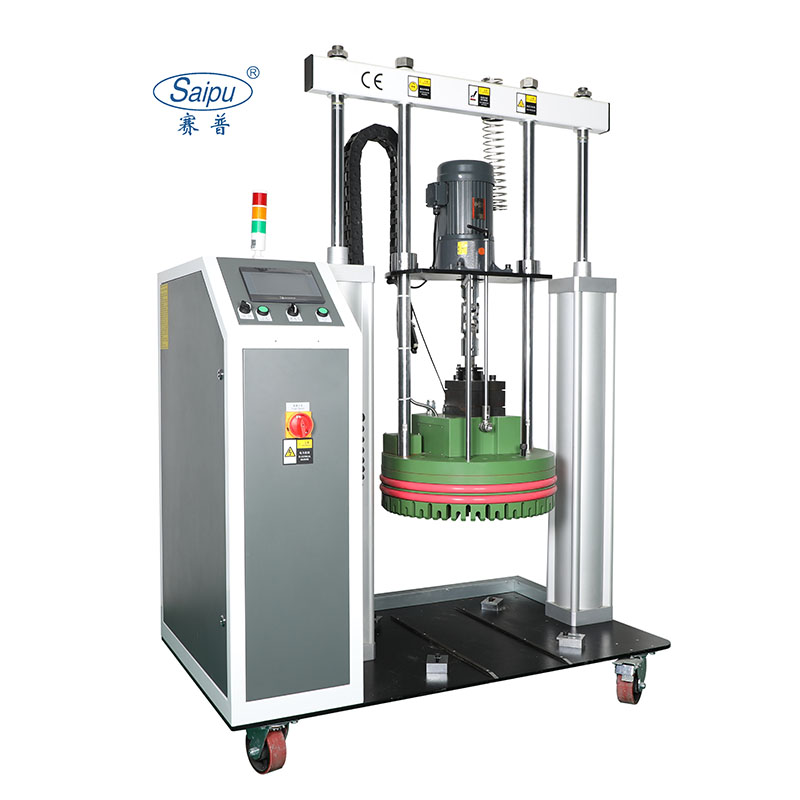
Evaluating your automatic hot melt glue machine specifications prevents major operational failures. You must calculate precise hourly glue consumption accurately. Oversized tanks lead to severe polymer degradation. The adhesive chars and ruins internal filters. Charred debris inevitably clogs fine dispensing nozzles. Conversely, undersized tanks create massive production bottlenecks. Operators must wait for the unit to melt cold adhesive. Custom sizing ensures your tank matches your exact throughput rate. Engineers calculate thermal mass to optimize the melt cycle perfectly.
Accuracy dictates your valve selection entirely. You must assess pneumatic versus piezoelectric valves carefully. Pneumatic systems handle robust packaging tasks well. They offer durability for simple carton sealing. Piezoelectric valves provide exceptional micro-dispensing capabilities. Electronics manufacturing requires absolute dot and line precision. Standard valves often drip or trail adhesive strings. Custom specified valves guarantee clean cutoffs immediately. They protect sensitive circuit boards from stray glue. They apply microscopic dots at incredibly high frequencies.
Modern factories run high-mix, low-volume batches continuously. Standard machines demand tedious manual adjustments during product changeovers. Custom configurations utilize smart quick-change manifolds. Operators can swap dispensing heads in mere minutes. Pre-programmed recipe recalls automatically adjust pump speeds. They calibrate heating temperatures instantly. This digital integration slashes setup times dramatically. You gain hours of productive manufacturing time every single week. Quick-change designs eliminate frustrating mechanical recalibration steps.
Electrical infrastructure upgrades cost thousands of dollars unexpectedly. You can avoid these expenses via smart custom builds. Engineers customize heating element voltages directly. They match the machine to your facility infrastructure. Pneumatic requirements also receive tailoring. This ensures the machine does not drain your existing factory air compressors. Smart power planning simplifies the physical installation phase immensely. You plug the machine into existing utilities. You avoid hiring external electrical contractors for heavy facility upgrades.
Feature Area | Standard Configurations | Custom Configurations |
|---|---|---|
Melt Capacity | Fixed bucket sizes (e.g., 5kg, 10kg, 20kg) | Tailored to exact hourly fluid consumption |
Dispensing Valves | Basic mechanical or pneumatic operation | Piezoelectric or multi-axis robotic integration |
Control System | Standalone internal logic boards | Fully integrated legacy PLC bridging |
Hardware Footprint | Pre-determined geometric dimensions | Modified heavily to fit tight factory spaces |
A bespoke solution always commands a higher price tag. You can expect a custom automatic hot melt glue machine to cost 20% to 50% more upfront. This premium covers essential research and development. Engineers must create detailed CAD models before manufacturing begins. They charge non-recurring engineering (NRE) fees for unique designs. Buyers must weigh these initial costs against long-term labor savings. Rework reduction often pays for the engineering premium quickly. Custom machines eliminate the hidden labor costs of constant manual intervention.
Bespoke automation requires considerable patience. Typical delivery windows span 12 to 20 weeks regularly. This extended timeline includes design approvals. It covers custom fabrication and extensive software testing. You must plan robust interim production strategies carefully. Can you run a temporary manual line safely? Can you outsource a small batch run momentarily? Clear communication between procurement and production prevents costly inventory shortages. You must bridge the gap until the custom unit finally arrives.
Custom machinery introduces unique ongoing maintenance risks. You must avoid relying entirely on proprietary custom parts. If a specialized motor fails, production stops indefinitely. Smart buyers demand off-the-shelf commercial components wherever possible. Specify standard commercial sensors. Request universally available pneumatic cylinders. Furthermore, you must secure a comprehensive spare parts list upon delivery. Insist on full electrical and mechanical schematics. This documentation empowers your internal maintenance team. They can troubleshoot issues without waiting for vendor technicians.
You cannot judge a supplier solely by their standard catalog. You must evaluate their portfolio of similar custom integrations deeply. Ask for specific case studies involving your exact industry. An experienced automatic hot melt glue machine supplier gladly shares past success stories. They explain exactly how they solved unique substrate challenges. They demonstrate their grasp of complex programmable logic controller networking. Proven competence reduces your deployment risk significantly. You want an engineering partner, not just a basic equipment vendor.
Never let the machine leave the supplier floor untested. You must insist on rigorous FAT protocols. Run actual production samples through the new system. Use your exact substrates. Utilize your specific glue formulations. Test the machine at full production speed constantly. Verify the dispensing accuracy under realistic thermal loads. This strict testing phase catches mechanical flaws early. It forces the supplier to correct issues before shipping. A robust FAT ensures the equipment works flawlessly upon factory arrival.
The project continues long after physical delivery. You must define clear Service Level Agreement (SLA) terms upfront. Mandate on-site commissioning by trained factory technicians. Schedule comprehensive operator training sessions immediately. Finally, draft a strict Site Acceptance Testing (SAT) document. This document requires final sign-offs only when the machine performs flawlessly in your facility. Post-installation support guarantees long-term operational success. You need guaranteed response times for unexpected software glitches or hardware maintenance.
Upgrading your production line requires a highly strategic mindset. Standard equipment covers the majority of basic packaging applications adequately. However, bespoke machinery eliminates deep operational bottlenecks permanently. We recommend you choose custom builds carefully. Proceed only when the financial loss of using standard equipment clearly eclipses the cost of customization. High scrap rates justify the engineering premium. Slow production speeds also validate the extra investment. Custom builds transform chaotic assembly lines into streamlined operations.
To move forward successfully, take these actionable steps:
Document your current cycle times and daily scrap rates accurately.
Gather precise facility blueprints to identify strict spatial constraints.
Calculate exact hourly glue consumption data meticulously.
Initiate supplier consultations anchored purely in hard data.
This evidence-based approach ensures your next machinery investment delivers measurable, long-lasting efficiency. You eliminate guesswork and build a truly resilient production floor.
A: A custom unit typically costs 20% to 50% more than a standard off-the-shelf model. This premium is driven directly by engineering complexity. Suppliers must charge for research, detailed CAD modeling, prototyping, and non-recurring engineering (NRE) fees to ensure exact operational fit.
A: You should expect a lead time of 12 to 20 weeks. The process involves several distinct phases. First, teams complete scoping and engineering. Next comes the physical build and assembly. Finally, rigorous Factory Acceptance Testing (FAT) and shipping conclude the timeline.
A: Modularity has strict limitations. While you might easily swap basic nozzles or hoses, foundational specifications remain fixed. You will find it extremely difficult and expensive to retrofit larger pump sizes, expand tank capacities, or overhaul core PLC software frameworks later.
A: Your FAT must include strict pass/fail criteria. Insist on continuous run testing at maximum production speeds. You must validate precise dispensing accuracy using your actual substrates. Finally, mandate comprehensive safety interlock checks to ensure operator protection before shipment.


