
close
Choose Your Site
Global
Social Media
Views: 0 Author: Site Editor Publish Time: 2026-07-31 Origin: Site


Polyurethane (PUR) adhesives present a unique technical challenge on any manufacturing line. These specialized hot melts rely on a moisture-reactive curing process. They achieve extreme bond strength through this chemical reaction. Once the adhesive cross-links, it becomes a permanent solid. You absolutely cannot remelt it. If you select the wrong dispensing equipment, you risk adhesive curing directly inside the machine tank. This oversight leads to charred hoses, severely extended downtime, and entirely scrapped production runs.
To prevent these catastrophic failures, engineering and procurement teams must evaluate hardware carefully. This article provides an objective, engineering-focused breakdown of the core parameters dictating equipment reliability and production yield. You will learn exactly how to navigate technical requirements when specifying a 20 kg PUR drum melter for your facility. We break down pump styles, moisture management, and supplier evaluation criteria.
Pump selection is critical: Gear pumps offer precision for continuous lines (e.g., edge banding), while piston pumps suit intermittent, high-volume extrusion.
Moisture management dictates uptime: Look for high-grade dual O-rings, airtight platen seals, and inert gas (nitrogen) or dry air blanketing systems.
Platen design matters: Teflon-coated platens (flat or finned) reduce charring and dictate the actual melt rate, independent of pump capacity.
Supplier post-sales support is non-negotiable: Evaluating a 20 kg PUR drum melter supplier requires assessing their spare parts availability (especially seals and hoses) and localized technical support.
Procurement teams often confuse a machine's melt rate and pump capacity. We see this error frequently during capital equipment purchases. Evaluating 20 kg PUR drum melter specifications requires separating these two distinct metrics. Mismatched specifications lead directly to pump cavitation. They also cause severe thermal degradation of your adhesive.
Melt rate defines how much solid PUR the platen can liquefy per hour. Most standard 20 kg units provide continuous melt rates between 5 kg and 15 kg per hour. This speed depends heavily on your specific adhesive's viscosity. Base chemistry also alters the melting speed significantly. If your machine melts adhesive slower than your production line consumes it, your line starves.
Pump delivery rate dictates how fast the machine pushes liquid adhesive through the hoses. Manufacturers generally offer two main pump types:
Gear Pumps: These provide high precision. They are essential for continuous adhesive production 20 kg PUR drum melter applications. Industries like textiles and woodworking rely on them. Gear pumps deliver exact volumetric consistency based on motor RPM. However, they do have strict upper viscosity limits.
Piston Pumps: These excel in high-pressure applications. They handle intermittent, large-volume adhesive shots perfectly. You should note they produce a slight pulsation during operation. This pulsation makes them unsuitable for ultra-thin, continuous coating applications.
You must calculate your line's absolute maximum hourly adhesive consumption. Always specify a melt rate 15-20% higher than your maximum consumption. This buffer prevents line starvation. It also ensures you do not leave molten adhesive sitting in the reservoir too long.
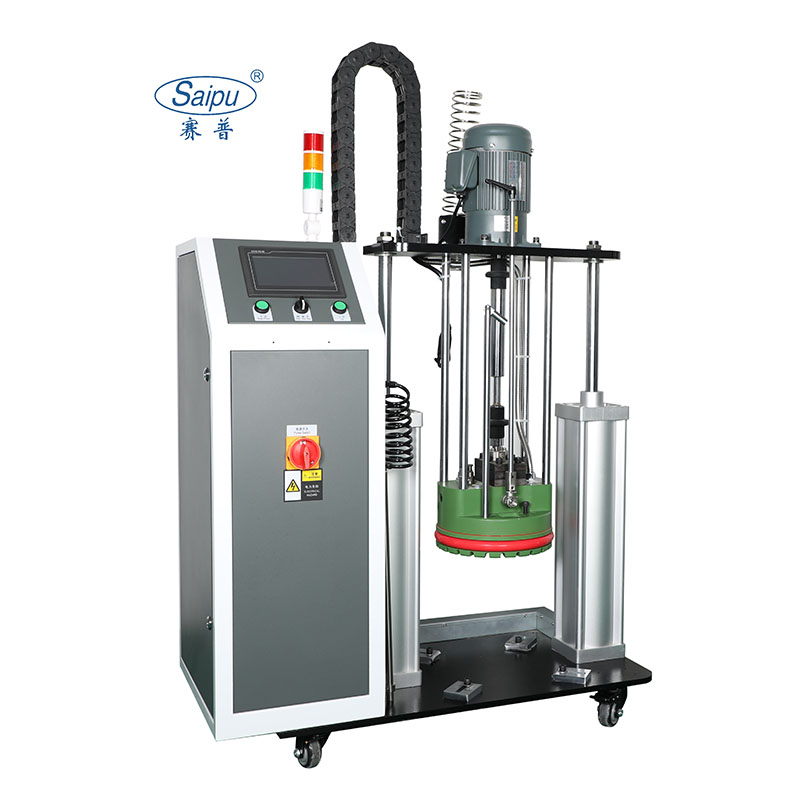
PUR degrades rapidly upon exposure to excessive heat for prolonged periods. The platen acts as your primary line of defense. This heating element presses directly down into the 20 kg drum. It melts only the top layer of solid adhesive.
Engineers typically choose between two primary platen designs:
Flat Platens: These designs are much easier to clean. They work exceptionally well for lower-viscosity PUR adhesives. They handle standard melt rate requirements reliably. Operators prefer them because maintenance routines take less time.
Finned or Grid Platens: These feature raised ridges. They increase the heated surface area significantly. This design melts high-viscosity adhesives much faster. However, finned platens require rigorous maintenance. Residue builds up quickly between the fins.
A Teflon (PTFE) coating remains a strictly non-negotiable specification. High-quality PTFE coating prevents sticky adhesive adherence. It minimizes harmful charring across the heating surface. A premium coating also accelerates drum changeovers drastically. When the drum empties, the platen pulls out cleanly.
You must also verify the equipment includes multi-zone temperature control. Independent PID temperature controllers manage the platen, hoses, and applicator heads separately. This prevents sudden thermal shock. It stops premature cross-linking inside the manifold. If your applicator head runs hotter than your hose, the adhesive degrades before it even reaches your product.
Ambient humidity poses the greatest threat to your machinery. Moisture reacting with exposed PUR causes irreversible curing. This cured solid destroys internal gear pumps entirely. It clogs distribution manifolds permanently. Strong moisture mitigation systems ensure daily reliability.
Platen O-rings provide the physical barrier against ambient air. You should specify high-temperature, wear-resistant seals. Fluoroelastomers like Viton® perform exceptionally well. Look specifically for dual-seal designs. As the platen moves downward, these seals scrape the drum wall completely clean. They keep ambient air strictly outside the melting zone.
Many modern units also feature inert gas blanketing or air dryer systems. These built-in systems flood the tiny space between the platen and the adhesive. They use pure Nitrogen or deeply desiccated air. This serves as a chemical barrier against moisture.
Moisture Mitigation Technologies Compared | |||
Protection Technology | Primary Function | Best Application Scenario | Maintenance Level |
|---|---|---|---|
Standard High-Temp O-Rings | Physical barrier against ambient air | High-volume continuous shifts | Routine replacement every 6 months |
Dual-Seal Fluoroelastomers | Scrapes drum clean, seals tight | Standard woodworking and packaging | Moderate inspection monthly |
Nitrogen Blanketing System | Displaces oxygen and humidity | Low-volume shifts, long standby times | Requires external gas supply checks |
Desiccant Air Dryers | Removes moisture from ambient air | High-humidity tropical facilities | Regular desiccant bead replacement |
Gas blanketing remains a mandatory specification for specific environments. If your facility operates in high-humidity regions, you need it. If you run low-volume shifts where drums sit on the machine for several days, you absolutely must use gas blanketing.
Off-the-shelf units successfully cover 80% of standard woodworking and packaging needs. Standard models handle basic edge banding and box sealing effortlessly. However, complex automated lines often demand highly engineered solutions. Sometimes, a standard machine simply cannot meet production tolerances.
Several key indicators suggest you need a custom 20 kg PUR drum melter. First, you might use non-standard drum or pail dimensions. Not all adhesive suppliers use identical 20L containers. Second, you might require deep integration into legacy PLC systems. Older Allen-Bradley or Siemens controllers often demand specific fieldbus protocols like Profinet or EtherNet/IP. Standard relay logic will not suffice here.
Third, multi-hose manifold requirements frequently drive customization. You might need to run four to six independent robotic applicator heads simultaneously. A single 20kg unit can support this, but the manifold requires custom engineering to balance the fluid pressure.
Evaluating custom equipment requires strict diligence. You must ensure the manufacturer provides fully transparent engineering drawings before production begins. Ask them for custom manifold pressure-drop calculations. These calculations prove the pump can actually feed all your robotic heads simultaneously. Finally, demand clear ROI metrics for the customization upcharge. The custom features must directly reduce your cycle time or eliminate manual labor.
Implementation realities quickly reveal the true quality of your machinery. Long-term operational success depends heavily on reducing maintenance downtime. The initial capital expenditure means very little if the machine constantly breaks down. Choosing the correct 20 kg PUR drum melter supplier guarantees your production line stays active year after year.
You must evaluate suppliers across several critical dimensions:
Parts Availability: Can the manufacturer ship replacement gear pumps rapidly? You need heated hoses and O-rings delivered within 24 hours. Waiting weeks for a simple fluoroelastomer seal shuts down your entire plant.
Training and Documentation: Do they provide comprehensive standard operating procedure (SOP) documentation? Operator error remains the number one cause of PUR melter failure. Weekend shutdowns require specific purge routines. Drum changeovers require exact step-by-step adherence. Strong suppliers provide visual manuals.
Service Access: Evaluate the machine's physical footprint carefully. Look at the maintenance access panels. How easy is it for a line technician to purge the manifold? Can they swap an inline filter in under ten minutes? If technicians struggle to reach internal components, they will inevitably skip routine maintenance.
Thoroughly inspect the supplier's localized technical support footprint. If your plant operates in North America, a supplier with only European service technicians cannot help you during an emergency midnight breakdown. Always verify local technician dispatch times before signing purchase orders.
Selecting the right dispensing equipment requires a strict, objective evaluation process. You must prioritize precise pump selection to guarantee application accuracy. Robust platen seals maintain your adhesive's chemical integrity. Advanced PLC controls drive your overall operational efficiency.
Do not select a unit based solely on the lowest price tag. A slightly higher upfront cost for multi-zone PID controls pays for itself rapidly. Investing in inert gas blanketing prevents catastrophic adhesive curing inside your manifold. One ruined manifold costs more than the premium upgrades combined.
Before finalizing your equipment purchase, follow these next steps:
Calculate your exact hourly adhesive consumption to define your required melt rate.
Audit your facility's ambient humidity levels to determine your nitrogen blanketing needs.
Request custom pressure-drop calculations if you plan to run multiple applicator heads.
Verify local spare parts inventory with your chosen supplier.
A: It depends heavily on the sealing system and inert gas usage. Typically, a drum can safely remain on the machine for up to a week. You must ensure it is properly blanketed with nitrogen and reduced to a lower standby temperature during non-production hours.
A: Gear pumps remain the strict industry standard for edge banding. This application requires a continuous, completely pulsation-free bead of adhesive. Piston pumps introduce slight pressure fluctuations, which cause uneven adhesive application and weak edge bonds.
A: Most industrial units require 3-phase power, such as 220V, 380V, or 480V. This depends on your regional electrical standards and the total number of heated hoses attached. Always ensure your facility has the correct electrical drop before installation.


