
close
Choose Your Site
Global
Social Media
Views: 0 Author: Site Editor Publish Time: 2026-09-15 Origin: Site


Scaling bulk adhesive procurement requires closely matching consumable chemistry to your hardware. This transition is critical for high-speed manufacturing facilities. A subtle mismatch leads to production bottlenecks, adhesive degradation, and unsafe work environments. You cannot simply buy a large tank and expect seamless output. Buyers often fail by focusing only on adhesive properties while ignoring the melting equipment. This crucial oversight causes severe downstream failures on fast-paced assembly lines. Our guide bypasses surface-level marketing claims. We provide a rigorous, engineering-focused framework for evaluating these critical systems. You will discover exactly how to balance melt rates, thermal precision, and pump mechanics. We will help you ensure your next procurement decision holds up perfectly under continuous shift conditions.
System Synergy: The efficiency of bulk hot melt is entirely dependent on the compatibility between the adhesive’s softening point and the melter’s thermal precision.
Capacity vs. Output: A large tank does not guarantee high throughput; melt rate and pump type dictate actual line performance.
Risk Mitigation: Advanced safety features and predictable maintenance schedules are critical components of Total Cost of Ownership (TCO).
Supplier SLA: Vendor selection must prioritize application engineering support, parts availability, and transparent Service Level Agreements.
Avoid buying bulk adhesives before you audit your existing melting hardware. We frequently see operators upgrade glues without checking melter compatibility. The consumable heavily depends on specific hardware capabilities. A high-performance adhesive fails instantly if your machine cannot process its unique thermal profile. You must align the chemical properties directly to the mechanical delivery system. A highly efficient industrial glue melter prevents these widespread issues.
Heating zones must maintain exact temperature windows. If they fail, hot melt degrades rapidly. Overheating causes severe carbonization. The adhesive literally cooks inside the tank. This process creates hard char. Char acts like sand running through your fluid lines. Conversely, under-heating increases viscosity beyond pump limits. The adhesive becomes too thick. It strains the motor and destroys internal seals. Thermal degradation ruins product quality and damages expensive hardware components.
Real-world consequences strike hard when hardware and chemistry misalign. You will experience clogged nozzles mid-shift. Pump cavitation occurs when thick adhesives introduce air pockets into the manifold. These pockets cause erratic dispensing. Your production line suffers excessive downtime. Maintenance teams spend hours flushing ruined adhesive from the system. You lose valuable materials, shift time, and overall operational efficiency.
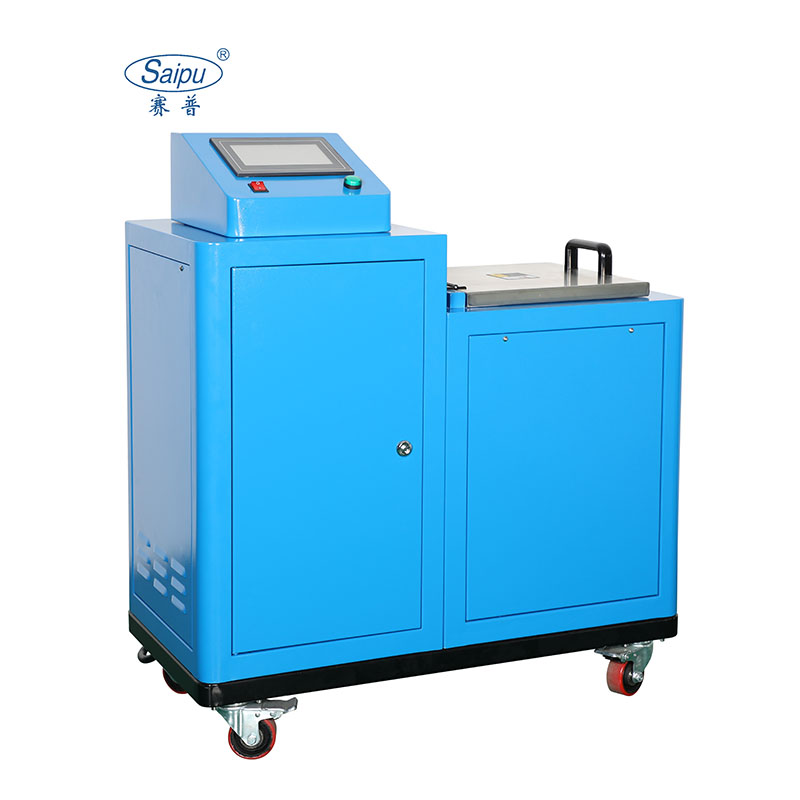
Procuring reliable equipment requires looking past the outer casing. You must analyze exact industrial glue melter specifications to guarantee line performance.
A massive tank means nothing if the melt rate falls short. You must calculate actual pounds-per-hour requirements. Use this simple formula: hourly melt rate equals adhesive weight per product multiplied by products per minute, multiplied by 60. This number dictates your true baseline requirement. Do not guess this metric.
Over-sizing a tank simply to compensate for a slow melt rate causes major problems. The adhesive sits inside the reservoir too long. Prolonged heat exposure leads directly to adhesive charring. On the other hand, under-sizing your unit causes "cold shock." The machine cannot melt incoming solid adhesive fast enough. The overall tank temperature drops rapidly. This thermal crash causes immediate line stoppages and weak product bonds.
Pump selection defines how adhesive travels from the tank to the substrate. Each mechanism serves distinct production styles. Make your choice based on flow consistency and material thickness.
Evaluation Metric | Gear Pumps | Piston Pumps |
|---|---|---|
Flow Consistency | Continuous, highly precise output. | Intermittent output, slight pulsation. |
Viscosity Handling | Excellent for high-viscosity adhesives. | Better suited for standard viscosities. |
Application Type | Continuous bead, slot die coating. | High-volume, rapid intermittent dotting. |
Maintenance Profile | Requires precise tolerance checks. | Easier seal replacement, durable. |
Gear pumps offer superior precision. They deliver a continuous, smooth flow. They handle high-viscosity adhesives easily. You need them for precise slot-die coating or continuous line applications. Piston pumps fit intermittent applications perfectly. They handle high-volume dotting very well. They often carry a more aggressive price point. However, you must accept a slight tradeoff in overall flow consistency.
Basic mechanical thermostats no longer meet modern manufacturing standards. Demand precision PID (Proportional-Integral-Derivative) controllers. PID logic actively anticipates temperature drops. It prevents overshoot during the heating phase. You need precise multi-zone temperature management. The tank, hoses, and applicator heads require different thermal setpoints. A PID controller synchronizes these zones seamlessly. This precision keeps your adhesive perfectly conditioned from tank to nozzle.
Standalone machines isolate your data. A modern assembly lines industrial glue melter must communicate fluently across your factory floor.
Assess how the melter communicates across your network. It must interface smoothly with existing PLCs (Programmable Logic Controllers). It needs to send data to centralized HMIs (Human-Machine Interfaces). Look for standard industrial protocols. Modbus and EtherNet/IP provide robust communication channels. Seamless integration allows operators to monitor tank levels remotely. It lets automated systems adjust pump speeds based on main conveyor velocity.
You must match hose counts and applicator heads to your specific layout. Product assembly requires carefully mapped dispensing points. Packaging lines often need multi-bead extrusion.
Spray Heads: Use these for wide area coverage and delicate substrates.
Bead Applicators: Best for structural bonding and standard carton sealing.
Slot Die: Necessary for continuous film lamination and label backing.
Ensure the melter manifold supports the exact number of hoses required. Do not split hoses excessively. Splitting causes uneven pressure drops across your applicator heads.
Off-the-shelf units handle standard packaging operations well. However, complex manufacturing environments often break standard equipment. Recognizing these limits prevents catastrophic line failures. You may need a custom industrial glue melter to maintain production stability.
Extreme Footprint Constraints: Tight machinery layouts demand custom tank orientations and remote manifolds.
Non-Standard Voltage Environments: Facilities operating outside standard grid parameters require custom internal transformers and customized heating elements.
Highly Specialized Structural Adhesives: Corrosive or ultra-high-temp polyamides dictate specialized tank metallurgy and custom pump seals.
Unique Output Volumes: Applications requiring massive instantaneous adhesive dumping need custom reservoir staging.
A custom engineering premium initially looks steep. However, trying to force standard hardware into extreme applications guarantees failure. Custom builds ensure perfect physical and operational integration.
Industrial melting equipment operates at extreme temperatures. High pressure moves hot liquids across the factory floor. Mitigating these inherent physical risks must guide your procurement process.
Mandate features protecting your frontline operators. Standardize on cool-to-touch exterior enclosures. This simple feature prevents severe skin burns during normal operation. Require automated pressure relief valves on all manifolds. These valves prevent dangerous hose blowouts if a nozzle clogs completely. Integrate strict low-level alarms. These alarms notify operators before the tank empties. Running a gear pump dry destroys the internal mechanics rapidly. Incorporate mechanical lock-out/tag-out (LOTO) points. Maintenance teams need total energy isolation before replacing heated components.
Routine cleaning dictates equipment uptime. Look for easily accessible fluid manifolds. Mechanics should not dismantle the entire cabinet to reach a clogged port. Demand standardized inline filters across the entire system. Filters catch charred debris before it reaches delicate applicator nozzles. Non-stick tank coatings drastically reduce cleaning labor. Teflon-coated internal walls prevent oxidized adhesive from permanently bonding to the metal. Mechanics can peel cooled adhesive away quickly. Streamlined maintenance keeps your equipment running steadily across multiple demanding shifts.
Your relationship with the equipment manufacturer begins after delivery. Selecting a dedicated industrial glue melter supplier guarantees long-term operational success.
Never buy based on a brochure. Ask if the supplier offers rigorous pilot testing. Can they run your specific adhesive chemistry through their demo units? Request a thorough line audit before purchase. Good suppliers visit your facility. They analyze conveyor speeds, environmental temperatures, and substrate materials. Demand lab validation. They should provide physical proof showing their machine achieves your required bond strength consistently.
Evaluate guaranteed response times for technical support. Machine downtime halts shipping schedules immediately. You need clear Service Level Agreements (SLAs). Define exactly how quickly field service technicians will arrive onsite. Clarify whether they offer remote troubleshooting via network connections. A reliable partner provides 24/7 hotline access for urgent off-shift breakdowns.
Global supply chains remain highly unpredictable. Ensure the supplier maintains domestic or easily accessible inventory. You cannot wait four weeks for a replacement gear pump. Verify they stock critical wear parts nearby. This list includes heated hoses, pump seals, inline filters, and heater cartridges. Localized inventory prevents catastrophic supply chain delays from ruining your production quotas.
Upgrading your bulk adhesive processes demands rigorous engineering scrutiny. Hardware evaluation must be as strict as the chemical evaluation of the adhesive itself. A large tank cannot hide a weak pump. A cheap thermostat will ruin premium hot melt chemistry. True efficiency requires matching melt rates, precise thermal controls, and factory integration capabilities. Take immediate action to protect your production lines. Compile your required line speeds, substrate materials, and environmental constraints. Present this data to potential suppliers. Request a comprehensive technical system audit rather than a simple price quote. Careful planning ensures your new melting equipment performs flawlessly.
A: You must determine your hourly adhesive consumption. Multiply the exact adhesive weight required per product by the number of products passing per minute. Multiply that result by 60 minutes. This gives you the hourly melt rate requirement. Always size your equipment slightly above this strict baseline.
A: We generally advise against frequent chemistry changes. Running different adhesives risks severe cross-contamination. Mixing incompatible chemicals often causes the adhesive to gel or cure inside the tank. If you must switch, you need a thorough system flush using approved purging compounds.
A: You can expect 7 to 10+ years of reliable service. This lifespan is entirely contingent on strict adherence to maintenance schedules. You must replace inline filters regularly and avoid thermal abuse. Overheating the tank routinely will degrade internal seals and shorten the machine's life significantly.


