
close
Choose Your Site
Global
Social Media
Views: 0 Author: Site Editor Publish Time: 2026-08-30 Origin: Site


Installation delays cause severe headaches for production managers everywhere. Receiving defective equipment ruins tight integration schedules immediately. Pre-shipment inspections stop these problems at the source. We often call this process Factory Acceptance Testing (FAT). It acts as your final risk-mitigation checkpoint. You must catch errors before assuming liability for the machinery. A thorough check prevents major headaches later. We will outline a clear methodology for your team. You will learn to verify mechanical integrity step by step. You will understand how to confirm thermal accuracy thoroughly. You will also review critical safety compliance standards. Do all of this before the crate seals. A proactive approach saves countless hours on the factory floor.
Visual and structural inspections prevent integration bottlenecks on fast-paced packaging lines.
Verifying thermal mapping and sensor calibration ensures the unit meets specific operational specifications.
Confirming standard purging and winterization protocols protects the manifold and pumps during transit.
Securing detailed FAT documentation from the supplier establishes a baseline for warranty and preventative maintenance.
Skipping a pre-shipment inspection might seem like a time-saver initially. Factory teams often feel rushed to meet aggressive delivery targets. However, minor assembly deviations compound quickly into severe downtime. Integrating a new packaging lines hot melt glue tank demands absolute precision. Small errors create massive integration bottlenecks. Imagine receiving a unit requiring 480V power when your facility only supports 240V. These mismatched specifications halt production entirely. You lose valuable operational hours trying to retrofit the equipment on-site.
Theoretical specs often differ wildly from physical build execution. Engineers draft perfect CAD models in the office. Assembly floor technicians face real-world physical constraints. Incorrect pneumatic fitting sizes happen frequently during assembly. Mounting holes might misalign by a fraction of an inch. These discrepancies force your maintenance team to modify the machine upon arrival. Field modifications introduce unnecessary risks and void warranties. You must catch these discrepancies while the unit remains at the manufacturer facility.
What makes a system truly ready to ship? You need physical proof of operation. Never rely on verbal confirmations over the phone. A completely validated system meets several strict criteria.
The manufacturer has fully purged all test adhesives from the lines.
Engineers have functionally tested all pneumatic and gear pumps.
The supplier provides transparent performance data from a continuous dry run.
All electrical panels conform to your local safety codes (e.g., UL or CE marks).
Meeting these success criteria eliminates unpleasant surprises during delivery. You secure peace of mind knowing the equipment works perfectly. This validation process keeps your installation schedule firmly on track.
Auditing the physical unit requires intense diligence and focus. You must compare the finished machine directly against approved engineering drawings. Review the hot melt glue tank specifications closely during the FAT. Start by verifying capacity and output capabilities. Does the physical melt rate match your expected throughput requirements? Different adhesives behave distinctly under heat. EVA, PUR, and metallocene adhesives have unique melting curves. High-viscosity PUR adhesives require specialized pump configurations. Ensure the installed motor drives can handle your specific adhesive viscosity.
Custom builds need extra scrutiny during this phase. A custom hot melt glue tank might feature highly bespoke modifications. Check specialized manifold configurations for correct port spacing. Measure the non-standard footprint dimensions yourself using calibrated tools. Many modern facilities request specific IIoT (Industrial Internet of Things) detection ports. Test these data ports to ensure they communicate with your PLCs correctly. Verify every modification functions exactly as promised.
Physical Unit Specification Audit Checklist
Component Group | Evaluation Dimension | Validation Method | Expected Outcome |
|---|---|---|---|
Tank Reservoir | Volumetric Capacity | Fill test or internal dimensional measurement | Matches exact liter/gallon spec on drawings |
Drive Systems | Pump Output Rate | Timed catch-test during dry run | Meets required grams per minute (g/min) |
Manifold | Port Threading & Layout | Physical gauge check and visual count | Aligns with hose configuration requirements |
Control Panel | Voltage & Frequency | Multimeter reading on main breaker | Matches plant electrical supply identically |
Always document every measurement taken during this phase. If you find a discrepancy, flag it immediately. It takes minutes to change a fitting at the factory. It takes days to order and replace that same fitting on-site. Thorough cross-checking guarantees a seamless mechanical installation.
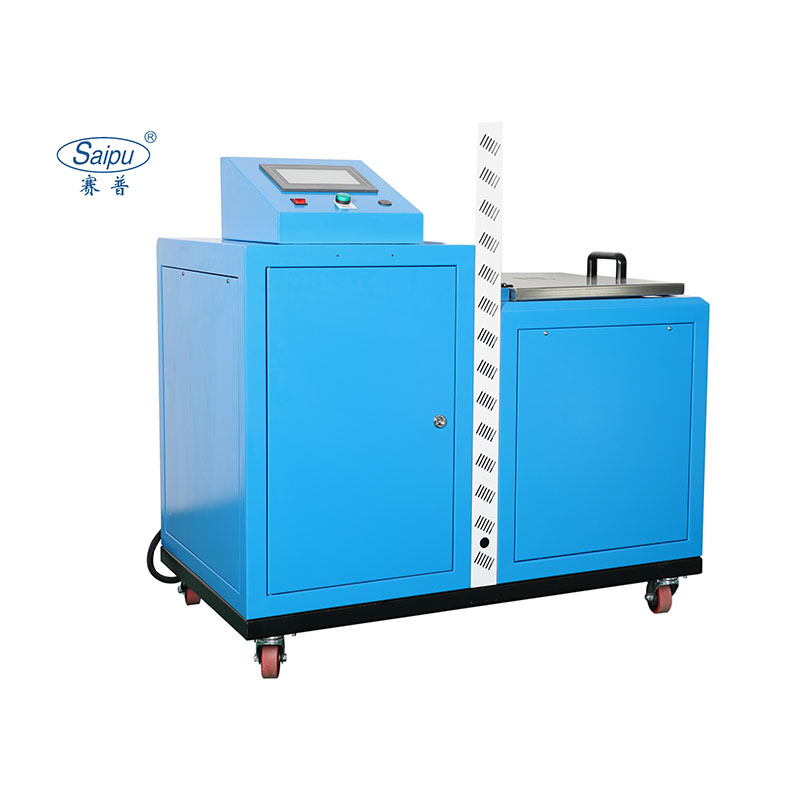
Temperature consistency dictates your final adhesive performance. Uneven heating causes rapid adhesive charring inside the reservoir. Charred debris clogs inline filters and ruins applicator nozzles. Conversely, cold spots restrict fluid flow entirely. You must verify how heating elements distribute temperature across the grid. Request a thermal mapping exercise during the dry run. Use handheld thermal imaging cameras to inspect the exterior walls. Look for uniform color gradients across the entire melt grid. A high-quality hot melt glue tank maintains tight thermal tolerances.
Check sensor calibration rigorously before signing any acceptance forms. RTD (Resistance Temperature Detector) sensors need exact validation. Test their responsiveness by inducing deliberate temperature shifts. Drop the setpoint and watch how quickly the controller reacts. Inspect all internal wiring integrity leading to these sensors. Vibration during transit can loosen poorly crimped wires. Loose wires cause intermittent faults during production. You want evidence-oriented proof of calibration. Ask the technicians for the recent calibration certificates of their testing multimeters.
Safety compliance requires non-negotiable, strict inspections. Industrial environments present inherent burn and pressure hazards. Evaluate the primary pressure relief valves (PRVs) on the manifold. Ask the operator to dead-head the pump momentarily. Ensure the PRV opens at the specified over-pressure limit. Test the high-temperature limit switches manually. If the primary controller fails, this switch cuts power to the heaters. Verify proper grounding of the main chassis. Check the continuity between the metal frame and the earth ground terminal. Protect your operators from electrical shocks. Demand these redundancies function perfectly before packing begins.
Transit vulnerabilities threaten equipment health drastically. Shipping environments expose sensitive machinery to extreme conditions. Freezing temperatures damage internal O-rings if fluids remain inside. High humidity corrodes bare metal surfaces rapidly. You must ensure technicians prep the machine correctly for transport. Environmental factors ruin perfect builds if ignored.
Residual adhesives pose severe risks to the system. Factory testing often uses generic EVA glues for convenience. Your facility might run moisture-curing PUR adhesives exclusively. A clean system requires full purging. Flush the reservoir, gear pumps, and manifolds entirely. Leftover adhesive cures and hardens during transit. This cross-contamination ruins your initial production runs. It causes severe gel formation inside the hoses. Define the standard for a clean system clearly. Demand visual inspection of the filter screens after the final purge.
Follow strict sealing protocols to protect the equipment. We recommend the following transit preparation steps:
Flush the entire system using a manufacturer-approved purging fluid or winterizing oil.
Cap all hydraulic ports securely using threaded steel or heavy-duty plastic plugs.
Cover all sensitive electrical connections using waterproof, anti-static tape.
Lock and seal the main lid tightly to prevent foreign debris ingress.
Wrap the control panel and HMI screens in protective foam and stretch wrap.
Verify that packaging meets industrial shipping standards. International freight requires special attention. Ensure crates use ISPM 15 certified wood. Use Volatile Corrosion Inhibitor (VCI) bags for ocean freight. Place industrial desiccant packs inside the electrical cabinet. These steps absorb trapped humidity and prevent rust. Proper preparation guarantees the machine arrives exactly as it left the testing floor.
You need strict documentation before signing the release form. Do not accept incomplete paperwork or verbal promises. Establish a firm logic for your next steps. Demand accountability from your hot melt glue tank supplier. This documentation forms the foundation of your equipment lifecycle management.
Request the complete Factory Acceptance Test logs immediately. These logs must include comprehensive dry run results. Review the pressure hold test data carefully. A pressure hold test confirms pneumatic and hydraulic integrity. Ask for the thermal calibration certificates for all installed RTDs. Check that these certificates trace back to recognized national standards. Keep digital copies of everything for your maintenance files.
Establish maintenance baselines before the machine ships out. The supplier must provide accurate, as-built electrical schematics. Do not accept generic manuals. Ask for a localized preventive maintenance schedule tailored to your application. Clarify the warranty activation protocol clearly. Know exactly when the warranty clock starts ticking. Does it start upon shipment, delivery, or successful installation? Clarifying this prevents disputes later.
Set an actionable next step for the Site Acceptance Test (SAT). Open the communication loop for delivery coordination. Define who handles installation support on your factory floor. Will the manufacturer send a technician? Will they provide remote video support? Establishing these expectations ensures a smooth handover. It transitions the project smoothly from procurement to operations.
A rigorous pre-shipment inspection secures long-term equipment reliability. It represents a vital investment in your manufacturing uptime. Catching a simple wiring error at the factory saves thousands of dollars in lost production later. Reputable manufacturers welcome this level of scrutiny. It aligns perfectly with shared operational success.
When you conduct these inspections properly, you reduce post-sale support friction significantly. Demand comprehensive FAT documentation before approving any shipment. Verify all thermal and mechanical specifications visually and functionally. Enforce strict purging and winterization rules to protect your investment during transit. Finally, plan your SAT thoroughly before the crate ever arrives at your loading dock. These proactive steps guarantee a seamless integration into your packaging line.
A: No. While manufacturers test systems with real adhesive, they must perform a complete purge afterward. Residual adhesive can cross-contaminate your specific glue formulation or cure completely during transit. Always demand a fully flushed and winterized system before shipment to prevent clogged pumps and hoses.
A: A pressure hold test verifies hydraulic and pneumatic integrity. Technicians pressurize the system to its maximum operating limit (often between 600 to 1000 psi for adhesives) and monitor it for a set duration. The pressure gauge should not drop. This confirms seals, O-rings, and fittings lack leaks.
A: Extreme temperature fluctuations cause significant condensation inside empty metal reservoirs. Freezing temperatures can shrink rubber O-rings, leading to microscopic leaks. Proper environmental sealing, desiccant packs, and winterizing fluids protect sensitive internal components from rust and thermal contraction during unpredictable freight journeys.
A: Yes. Video-based FATs are highly acceptable if conducted rigorously. You must direct the camera operator to show specific gauge readings, thermal imaging screens, and internal wiring. While you cannot physically touch the machine, live video allows you to verify performance metrics and request immediate real-time adjustments.


