
close
Choose Your Site
Global
Social Media
Views: 0 Author: Site Editor Publish Time: 2026-11-24 Origin: Site


Dealing with PUR hot melt adhesive defects like stringing and bubbling presents a formidable challenge for modern manufacturing lines. These specific application issues do more than just ruin the aesthetic finish of assembled products. They fundamentally compromise the structural integrity of the bond. Over time, defective adhesive applications lead to product delamination, surface bulging, and reduced weather resistance.
Recent industry analyses highlight a massive structural shift in global manufacturing. Sectors ranging from automotive interiors to flat-pack furniture are rapidly migrating away from traditional adhesives toward reactive polyurethanes. This transition is driven by the demand for superior thermal stability and unmatched durability. However, this rapid adoption has exposed a critical skills gap on the factory floor. Operators are now forced to manage the highly nuanced, moisture-reactive nature of these advanced polymers without proper equipment or training.
If operators are constantly pausing production schedules to clean up erratic glue trails or rework defective components, the root cause typically traces back to a few specific culprits. These include improper application parameters, uncontrolled environmental factors, or the operational limitations of the dispensing equipment itself. In this comprehensive technical guide, we will analyze the precise mechanical and chemical reasons behind these defects. Furthermore, we will outline actionable, evidence-based troubleshooting steps to optimize your equipment for stable, continuous, and defect-free production.
Key Takeaways
Temperature Control is Critical: Incorrect operating temperatures within the melting tank or hoses are the primary catalysts for both stringing caused by low temperatures and bubbling caused by excessive heat.
Moisture is the Enemy Before Application: PUR adhesive relies on a moisture-reactive curing process. Any ambient humidity entering the system prematurely triggers cross-linking, trapping carbon dioxide gas as bubbles.
Machine Maintenance Prevents Defects: Systematic cleaning protocols prevent adhesive charring and internal build-up, which directly contribute to nozzle blockages and inconsistent extrusion rates.
Equipment Quality Matters: Upgrading to an advanced, hermetically sealed system stabilizes adhesive flow and heavily mitigates common application defects.
To effectively troubleshoot application defects, it is necessary to first understand the specific chemical and physical properties of Polyurethane adhesives. Unlike traditional thermoplastic adhesives, PUR requires highly specialized handling procedures to maintain its integrity from the melting tank to the substrate.
Standard hot melt adhesives, such as Ethylene Vinyl Acetate, cure simply by cooling down and solidifying. They undergo a purely physical change. PUR hot melt adhesive, however, undergoes a complex two-stage curing process. The first stage is the physical cooling that provides initial tack and green strength to hold the parts together. The second stage is an irreversible chemical reaction known as cross-linking. The isocyanate groups within the PUR formulation react with ambient moisture in the air and the substrates. This chemical reaction forms a thermoset polymer network. As a result, PUR gains its superior tensile strength, high heat resistance, and exceptional weatherability. Because it is a reactive polymer, its viscosity and flow characteristics remain highly sensitive to external variables.
The very mechanism that gives PUR its strength is also its greatest vulnerability during the melting and dispensing phases. Because PUR depends on moisture to cure, exposing the adhesive to ambient factory air while it is still inside the delivery hoses causes premature cross-linking. When the adhesive begins to cure internally, its viscosity increases unpredictably. This leads to uneven flow, clogged filters, and the formation of solid cured blocks. Consequently, a specialized PUR hot melt glue machine must feature a hermetically sealed tank. High-end systems utilize a dry air or inert nitrogen gas blanket to completely isolate the molten adhesive from atmospheric humidity until the exact moment of extrusion.
Stringing, often referred to in the industry as angel hair or the spider web effect, occurs when the adhesive fails to break cleanly after the dispensing valve closes. Instead of a sharp cut-off, a thin, sticky thread of glue trails behind the nozzle. This contaminates the product surface and gums up the surrounding machinery.
Adhesive rheology dictates that as thermal energy decreases, viscosity increases. If the temperature zones in your equipment drop below the manufacturer recommended parameters, the PUR adhesive becomes excessively thick. When the nozzle attempts to shut off, this high-viscosity material resists separation. The highly entangled polymer chains stretch into long strings as the robotic arm or conveyor moves away from the application point.
The physical gap between the dispensing nozzle and the target substrate plays a critical role in fluid dynamics. Imagine a high-speed edge-banding line. If the nozzle is positioned even a fraction of a millimeter too far from the medium-density fiberboard panel, the adhesive bead must travel through the ambient air. In that split second, it cools slightly and loses its initial tack. Instead of anchoring firmly, it stretches into frustrating webs. This excessive distance prevents the adhesive from transferring cleanly onto the material.
Precision application requires perfect synchronization between the kinematics of the production line and the volumetric extrusion rate. If you are operating the system at a pump pressure that exceeds the required volume for the line speed, excess adhesive is forced out. Conversely, if the machine moves faster than the pump can deliver, the bead is stretched thin. In both scenarios, the residual kinetic energy and unbalanced pressure cause trailing glue when the valve snaps shut.
Mechanical wear on dispensing components is a frequent, yet overlooked, cause of stringing. Over time, the abrasive nature of impurities can wear down the internal needle valve and the nozzle tip. If the orifice is damaged, scratched, or simply too large for the specific application, the internal valve cannot create a perfect seal. This microscopic leak prevents the immediate cessation of glue flow, causing the adhesive to drag continuously.
Cause of Stringing | Primary Indicator | Immediate Action Required |
|---|---|---|
Low Temperature | Thick, sluggish adhesive flow; heavy beads | Verify actual RTD sensor temps against TDS specs |
Excessive Nozzle Gap | Glue stretches mid-air before contact | Adjust Z-axis to maintain a 2mm to 5mm gap |
Pressure Mismatch | Glue pooling at the end of beads | Calibrate gear pump RPM to motor line speed |
Worn Nozzle | Constant dripping when valve is closed | Inspect needle valve seating; replace nozzle tip |
The presence of bubbles within the adhesive bead is not merely a cosmetic flaw. It represents a severe structural defect. Bubbles act as physical voids, drastically reducing the total contact area between the adhesive and the substrate. Ultimately, this creates weak points highly susceptible to mechanical stress and moisture ingress.
The most pervasive cause of bubbling is premature moisture exposure. When the isocyanate in PUR reacts with water vapor from humid factory air or poorly filtered compressed air lines, the chemical byproduct of this cross-linking process is polyurea and carbon dioxide gas. Because the adhesive is in a viscous, molten state, the carbon dioxide gas cannot escape. It becomes trapped internally, extruding onto the substrate as visible, disruptive bubbles.
In contrast to stringing, which is triggered by low heat, excessively high temperatures cause bubbling through thermal degradation. Every PUR formulation has a maximum sustained temperature threshold, typically around 150 to 170 degrees Celsius. If the adhesive is heated beyond this limit, the polymer backbone begins to break down and boil. This degradation releases volatile organic compounds. Furthermore, overheated adhesive eventually carbonizes into char. Char build-up acts as a thermal insulator, disrupting temperature sensors and causing localized hot spots that continuously boil the surrounding glue.
Operational errors during routine material replenishment frequently introduce air pockets into the system. When loading a new solid PUR slug or executing a 200-liter drum changeout, improper venting procedures can trap ambient air beneath the melting platen. As the pump cycles, these air pockets are compressed and forced down through the heated hoses, eventually sputtering out of the dispensing gun as massive voids.
Occasionally, the bubbling originates from the material being bonded rather than the mechanical equipment. If hot PUR is applied to a damp substrate like unseasoned wood, damp fiberboard, or porous textiles stored in high humidity, the intense thermal energy instantly vaporizes the surface moisture. This creates a flash of steam that pushes up against the curing adhesive, forming a layer of bubbles directly at the bond interface.
Addressing these defects demands a systematic approach to calibrating and maintaining the application equipment. By following structured procedures, operators can rapidly stabilize the dispensing process.
The foundational step in resolving either stringing or bubbling is thermal calibration. Operators must consult the technical data sheet provided by the adhesive manufacturer to determine the exact viscosity-to-temperature curve. Use an external, calibrated pyrometer to verify that the digital readouts on the human-machine interface match the actual temperature of the molten glue at the nozzle tip. Ensure that the heat gradually steps up from the tank to the nozzle. For instance, set the tank at 120 degrees, the hose at 125 degrees, and the gun at 130 degrees Celsius. Utilizing an Automatic 200KG PUR Hot Melt Glue Machine with advanced PID controller settings strictly prevents these dangerous temperature overshoots.
To eliminate stringing entirely, the mechanical termination of the glue bead must be optimized. Modern pneumatic and electric applicators feature a suck-back or snuff-back mechanism. Locate the pneumatic solenoid valve controlling the dispensing module and adjust the negative pressure setting. This function briefly reverses the pressure inside the nozzle cavity the exact millisecond the dispensing cycle ends, pulling the molten adhesive slightly back up into the orifice. Fine-tuning this timing cleanly shears the adhesive bead. However, be cautious. If the suck-back is too aggressive, it will draw ambient air into the nozzle, causing a bubble on the subsequent cycle.
After any drum change, maintenance shutdown, or suspected moisture contamination, the system must be meticulously bled. Open the manual bleed valves located near the melting platen or gear pump. Run the machine slowly until a steady, continuous, and bubble-free stream of adhesive flows into a waste receptacle. Listen closely. Popping sounds indicate trapped moisture or gas that still needs to be evacuated.
Preventative maintenance is the most effective long-term strategy for ensuring application consistency and avoiding the variables that trigger production defects.
Charred adhesive is detrimental to the entire hydraulic system. Flakes of hard, carbonized glue can break off from the tank walls, traveling through the heated hoses and lodging inside fine mesh filters or the nozzle orifice. This restricts flow, alters pressure dynamics, and inevitably leads to erratic dispensing patterns. Moreover, because char acts as an insulator, it forces the machine heaters to overwork, perpetuating a destructive cycle of continuous degradation.
Facilities must implement strict, documented cleaning protocols to mitigate cross-linking inside the system. Daily tasks should include wiping down external nozzle tips with non-abrasive tools and appropriate solvents while they are still warm to prevent exterior build-up and bead deflection. Weekly routines must involve inspecting and emptying the inline filters to remove early-stage gel particles before they reach the precision gear pump. Monthly checks should focus on the integrity of O-rings and seals on the melting platen to ensure the system remains hermetically sealed against atmospheric humidity.
Because PUR reacts with moisture to form an infusible plastic, standard cleaning methods fail once the adhesive cures. Before any prolonged shutdown, the system must be evacuated. Operators should flush the internal pathways using a specialized, non-reactive PUR purge compound. These thermoplastic materials displace the reactive PUR, ensuring that no cross-linking can occur inside the hoses, keeping the machine pristine for the next production run.
While rigorous maintenance and parameter adjustments are necessary, the fundamental design of the dispensing equipment dictates the baseline stability of your process. Legacy machinery or standard tanks retrofitted for PUR often lack the necessary environmental controls.
Entry-level equipment often relies on basic pneumatic piston pumps, which inherently cause pulsations in the adhesive flow, leading to inconsistent bead widths and trailing strings. Advanced equipment utilizes high-precision, motor-driven gear pumps. These pumps provide exact volumetric dispensing, ensuring the volume of adhesive extruded remains perfectly consistent regardless of minor viscosity fluctuations. Additionally, industrial-grade machines feature robust, Teflon-coated sealed tanks with advanced O-ring designs that completely neutralize the threat of moisture-induced bubbling.
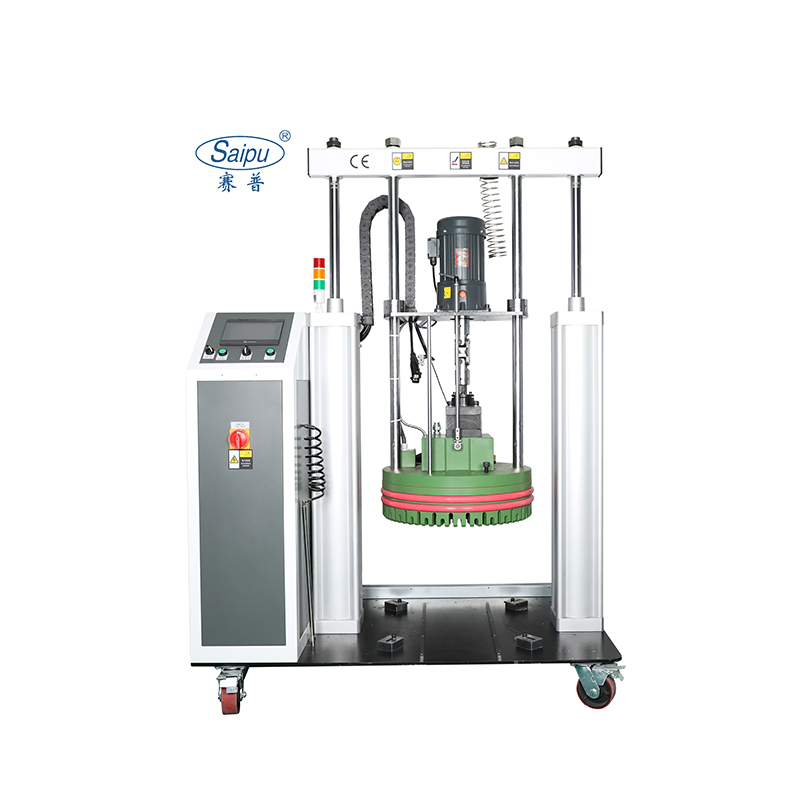
For manufacturing facilities experiencing high defect rates due to outdated hardware, upgrading the system is often the most cost-effective long-term solution. Manual interventions and frequent drum changes are major sources of trapped air and temperature drops. Transitioning to industrial-grade automation eliminates these variables. Specifically, investing in a reliable PUR hot melt glue machine designed for 200KG bulk drums ensures continuous, high-volume production without the frequent interruptions caused by air exposure. These automated systems maintain strict environmental control over the adhesive from the drum straight to the substrate.
Resolving mechanical issues directly translates to superior product quality and longevity in the field. The ultimate goal of eliminating stringing and bubbling is to guarantee structural integrity.
When bubbles are successfully eliminated from the application process, the adhesive bead compresses into a perfectly flat, uniform bond line. This uniformity prevents localized pressure pockets. In applications like flat lamination or edge banding, trapped gas bubbles expand and contract with environmental temperature changes, exerting outward pressure that causes visible surface bulging and eventual delamination. A solid, void-free bond line distributes structural stresses evenly, mitigating this risk entirely.
The exceptional weather resistance of PUR adhesive relies heavily on the formation of a dense, uninterrupted polymer network. A string-free and bubble-free application guarantees that the maximum volume of adhesive is in direct contact with the substrate. This optimal contact area allows the chemical cross-linking process to proceed efficiently. Once fully cured, this continuous layer of PUR provides an impenetrable barrier against moisture ingress, ensuring the final product meets stringent industrial durability standards even in harsh climates.
While PUR adhesive offers unparalleled bonding strength and durability, it demands precise handling to prevent severe application defects. Stringing and bubbling are not inevitable. They are entirely preventable symptoms of mechanical misalignment or environmental contamination. By strictly controlling temperature zones, meticulously managing ambient moisture, and adhering to rigorous preventative maintenance schedules, operators can virtually eliminate these issues.
However, the foundation of a flawless application lies in the hardware itself. Outdated or poorly sealed equipment will constantly fight against the reactive nature of polyurethane. We highly encourage production managers to evaluate their current dispensing systems. Upgrading to a professional Automatic 200KG PUR Hot Melt Glue Machine from Saipu Machine will not only eradicate messy glue trails and weak bonds but will significantly boost overall production efficiency and final product quality.
While it depends on the specific adhesive formulation, most PUR adhesives operate optimally between 120 and 150 degrees Celsius. Always consult your adhesive technical data sheet and use an external pyrometer to ensure your equipment is calibrated accurately across all heating zones.
Yes. PUR is highly moisture-reactive. If your dispensing equipment is not hermetically sealed, ambient humidity can enter the melting tank or hoses. The water vapor reacts with the isocyanate in the glue, creating carbon dioxide gas that becomes trapped as bubbles in the extruded bead.
External nozzles should be wiped daily while warm to prevent buildup. Inline filters should be checked weekly. Most importantly, a full system flush using a compatible non-reactive PUR purge compound must be performed before any prolonged shutdown to prevent the adhesive from curing and charring internally.
Bulging and poor weather resistance are often the direct result of trapped air bubbles or uneven application caused by stringing. These defects create microscopic voids and weak spots in the bond line, allowing moisture and temperature fluctuations to penetrate, warp the materials, and cause the layers to separate.
The suck-back feature utilizes a pneumatic solenoid to briefly reverse the pressure inside the dispensing nozzle at the exact end of a cycle. This momentary vacuum pulls the molten adhesive slightly back into the nozzle cavity, cleanly shearing the glue bead and completely eliminating trailing strings.
PUR adhesive reaches its initial handling strength, known as green strength, within seconds to minutes after cooling. However, the full chemical cross-linking process requires ambient moisture and typically takes anywhere from 24 to 48 hours to achieve maximum structural and thermal resistance.
Using PUR in a standard open-tank EVA machine is highly discouraged. Because standard tanks expose the adhesive to atmospheric moisture, the PUR will begin curing prematurely, leading to severe bubbling, clogged lines, and hardened glue blocks. A specialized, hermetically sealed melting system is required for stable PUR application.


