
close
Choose Your Site
Global
Social Media
Views: 0 Author: Site Editor Publish Time: 2026-11-24 Origin: Site


Polyurethane Reactive hot melt, widely known as PUR, transformed industrial bonding forever. It offers unmatched strength, flexibility, and environmental resistance. However, this formidable adhesive remains notoriously unforgiving. Atmospheric moisture acts as the primary catalyst for curing. Therefore, a simple mishandling error can ruin expensive manufacturing equipment within hours. Think about a bustling textile lamination floor suddenly grinding to a halt because a melt tank solidified overnight. This is the harsh reality of improper adhesive management.
How do we harness this powerful material without destroying our machinery? In this comprehensive guide, we explore essential operational strategies from an engineering perspective. Furthermore, we will delve into why transitioning to dedicated dispensing equipment is an absolute requirement to ensure long-term production success.
Moisture is the Primary Catalyst: The adhesive cures through exposure to ambient humidity. Strict storage and environmental handling protocols are absolute operational requirements.
Specialized Dispensing Equipment is Mandatory: Standard open-tank melters cannot process reactive adhesives. Utilizing a closed-system unit is critical to prevent premature cross-linking and catastrophic equipment failure.
Precision Temperature Parameters: Maintaining accurate pre-heating and operating temperatures ensures appropriate viscosity while preventing thermal degradation and charring.
Strict Purging Routines Prevent Downtime: Failing to flush the fluid passages with a chemically appropriate, non-reactive purging agent before shutdown will result in permanent internal clogs.
Occupational Safety is Critical: Due to the presence of reactive isocyanates, proper local exhaust ventilation and personal protective equipment must be implemented to safeguard operators.
To handle this advanced material effectively, we must examine the underlying chemical mechanics. Polyurethane Reactive hot melt is engineered for high-stress, high-durability applications. It effectively bridges the gap between standard thermoplastic glues and structural thermosetting adhesives.
Traditional hot melt adhesives function through a simple physical phase change. They are heated to a flowable liquid state, applied to a substrate, and solidify as they cool to create a mechanical bond. If reheated, they will simply melt again.
In contrast, reactive polyurethane undergoes a complex, two-stage curing process. Initially, it is dispensed as a heated liquid. Upon contact with the substrate, it cools and solidifies rapidly. This provides immediate green strength so production lines can continue moving without requiring extensive clamping times. Subsequently, the reactive components within the adhesive—specifically isocyanates—begin to react with moisture present in the ambient air and the substrates themselves. This chemical reaction forms urethane linkages, creating a highly cross-linked polymer network. Once this thermosetting process concludes, the adhesive cannot be remelted. The result is an infusible, highly resilient structural bond.
Understanding the operational differences helps justify the stricter handling requirements of advanced systems. Below is a technical comparison highlighting why modern manufacturing floors are making the switch.
Performance Metric | Traditional Ethylene-Vinyl Acetate | Polyurethane Reactive |
|---|---|---|
Curing Mechanism | Physical cooling only | Physical cooling followed by chemical cross-linking |
Heat Resistance | Remelts upon exposure to high heat | Forms an infusible thermosetting bond; will not remelt |
Flexibility | Can become brittle over time | Retains exceptional flexibility and soft hand feel |
Chemical & Wash Resistance | Poor to moderate | Excellent resistance to solvents, moisture, and industrial laundering |
The global manufacturing landscape is currently experiencing a massive shift. Facilities are moving away from solvent-based adhesives toward more sustainable, low Volatile Organic Compound alternatives. Market analysis indicates a steep upward trajectory in the adoption of reactive technologies, particularly within the automotive, nonwovens, and technical textile sectors. This surge is largely driven by consumer demand for durable, washable, and eco-friendly products.
In textile lamination, for example, manufacturers are under immense pressure. They must produce breathable yet completely waterproof activewear and medical garments that can withstand rigorous industrial laundering. Traditional adhesives simply delaminate under these harsh conditions. Consequently, upgrading to a high-capacity PUR Hot Melt Glue Machine for nonwoven and textile lamination is no longer just a minor operational tweak. It has become a strategic necessity for facilities looking to remain competitive and compliant with modern environmental standards.
The primary advantage of this adhesive—its moisture-curing capability—ironically serves as its greatest operational vulnerability. Exposing the material to humidity before it is applied to the target substrate will initiate the cross-linking process prematurely. This renders the compound completely unusable.
Maintaining the integrity of your inventory begins the moment it arrives at your facility. It must be kept in a climate-controlled, dry environment. The material is typically shipped in hermetically sealed aluminum foil pouches, moisture-proof cartridges, or tightly sealed bulk steel drums. Operators should never puncture or open the packaging until the exact moment they are ready to load the material into the melter.
Additionally, implement a strict First-In, First-Out inventory management system. These adhesives possess a finite shelf life, usually ranging from six to twelve months in unopened packaging. Utilizing expired material often leads to inconsistent melting profiles, poor structural bonding, and severe equipment clogs.
Once the protective packaging is breached, the adhesive must be immediately safeguarded within the melting equipment. High-quality dispensing systems employ specific mechanical barriers to keep ambient air away from the molten liquid. Advanced systems utilize inert gas blanketing, such as dry nitrogen, or precision vacuum seals. By displacing the oxygen and moisture-laden air inside the melting reservoir, the equipment ensures the material remains in its thermoplastic state until it exits the extrusion nozzle.
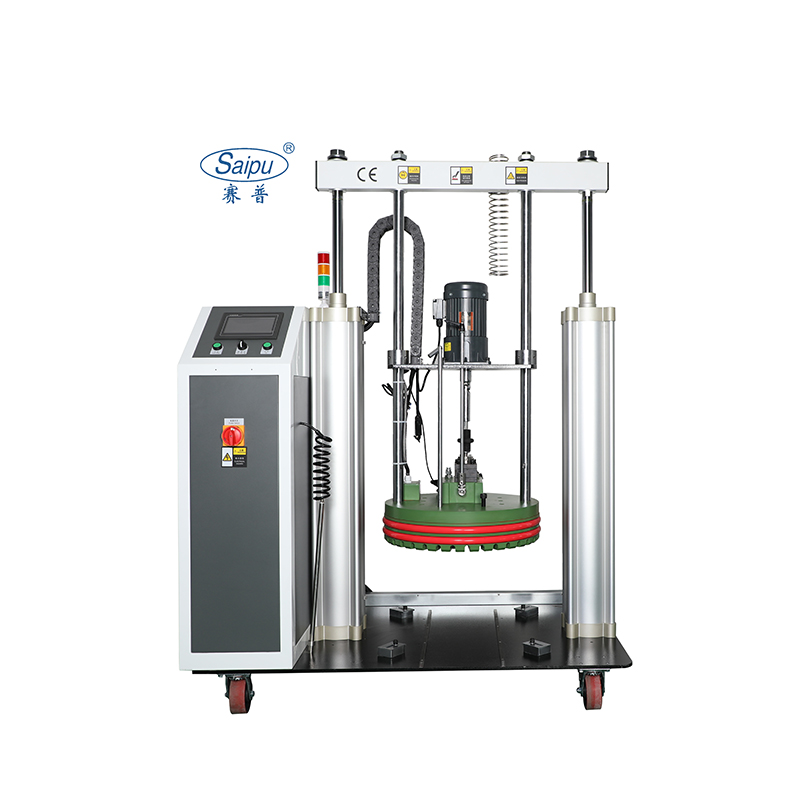
Attempting to process reactive polyurethanes through standard adhesive equipment is a frequent, yet devastating, operational error. The unique chemical properties of this thermosetting plastic demand specialized, closed-loop systems.
Conventional machines feature open tanks or loosely fitted lids. They are engineered specifically for adhesives that do not react with atmospheric conditions. If a reactive compound is introduced into an open-tank melter, the ambient humidity will immediately begin reacting with the heated surface layer. As the material cross-links inside the reservoir, it transforms from a flowable liquid into a solid, un-meltable rock. This irreversible process destroys internal components. Gear pumps will seize, heated hoses will become permanently blocked, and dispensing nozzles will be ruined. The result is massive replacement costs and extended downtime.
To process these advanced adhesives safely and efficiently, manufacturing facilities must utilize a dedicated PUR Hot Melt Glue Machine. These specialized units are built with airtight melting reservoirs and Teflon-coated internal components to prevent aggressive adhesion to the tank walls.
For high-volume bulk applications, such as textile lamination, 55-gallon drum unloaders utilize advanced heated platen technology. A finned aluminum platen melts only the top layer of the adhesive in the 200-liter drum. This leaves the remaining volume solid and unexposed to heat or air until actively required by the production line. Furthermore, dual O-ring seals prevent moisture ingress, while high-tolerance gear pumps ensure exact volumetric dispensing regardless of viscosity shifts.
Temperature management represents a critical variable when working with reactive adhesives. Incorrect thermal settings can drastically alter viscosity, negatively affect the open time, and ultimately compromise the structural integrity of the final product.
Reactive hot melts generally operate at lower temperature thresholds compared to traditional formulas. While traditional glues might require temperatures exceeding 175 degrees Celsius, polyurethanes typically operate within a strict window of 120 degrees Celsius to 140 degrees Celsius. A premium dispensing machine provides independent Proportional-Integral-Derivative temperature control across multiple zones. This includes the melting platen, the heated hoses, and the application nozzles, ensuring the fluid maintains optimal viscosity throughout its journey.
While heat is necessary for flow, excessive temperatures or prolonged thermal exposure will cause severe degradation. If a machine is left idle at full operating temperature for extended periods, the adhesive will begin to break down and char. Charred particulate matter will eventually detach from the tank walls, travel through the fluid passages, and obstruct the fine orifices of the dispensing heads. To prevent this, operators must actively utilize the standby or setback mode on their control panels during idle periods to drop the temperature to a safe holding level.
Because the material cures into an infusible solid, rigorous maintenance and cleaning protocols are non-negotiable. The single most important maintenance procedure for any facility utilizing this technology is the purging process.
A purging agent, frequently referred to as a flushing compound, is a non-reactive, thermoplastic material specifically formulated to displace active adhesive within your dispensing system. These cleaners are designed to possess a similar viscosity to the adhesive at operating temperatures. This ensures that as the agent is pumped through the system, it effectively encapsulates and pushes the reactive polyurethane out of the melting tank, gear pumps, hoses, and nozzles without bypassing it.
Implementing a strict Standard Operating Procedure for purging minimizes the risk of catastrophic equipment failure. A highly effective approach includes the following steps.
First, dispense as much of the active adhesive from the system as practically possible into a waste receptacle. This reduces the volume that needs to be chemically displaced. Next, consult the technical data sheet of your specific purging agent to adjust the system temperatures accordingly. Introduce the dyed purging compound into the system. Engage the gear pumps and flush the material into a designated container until the output transitions completely from the amber color of the adhesive to the solid color of the purging agent. Finally, while the applicator nozzles are still warm, carefully wipe away any residual buildup using a lint-free cloth and an appropriate, non-reactive cleaning solvent.
Industrial adhesives inherently require strict safety protocols. However, reactive hot melts introduce specific chemical hazards that necessitate elevated workspace precautions. The primary health consideration is the presence of isocyanates.
Isocyanates are the reactive chemical compounds responsible for the cross-linking cure mechanism. At room temperature in their solid state, they pose minimal risk. However, when the adhesive is heated to its operating temperature, it can emit isocyanate vapors. According to industrial hygiene standards, inhalation of these vapors acts as a severe respiratory irritant. Prolonged exposure without adequate protection can lead to respiratory sensitization and occupational asthma.
To align with industrial safety best practices, operators must work in a heavily ventilated environment. General ambient ventilation is rarely sufficient. Facilities should install Local Exhaust Ventilation systems, such as articulated extraction arms, positioned directly above the dispensing heads and the drum unloader to capture vapors at the source.
Furthermore, operators are handling machinery and materials exceeding 120 degrees Celsius. Therefore, heat-resistant leather or specialized synthetic gauntlets are mandatory. Standard cotton gloves are unsafe, as molten liquid can penetrate the fabric and cause severe thermal burns. Safety goggles with side shields and long-sleeved industrial aprons complete the necessary protective ensemble.
Selecting the correct dispensing equipment is the most consequential decision a manufacturer will make when integrating polyurethane into their production line. Buyers must evaluate their production volume, application method, and specific industry requirements to select an appropriate closed-loop system.
Dispensing systems are generally categorized by their volumetric capacity and delivery mechanisms. Cartridge systems are designed for low-volume, precision applications such as custom woodworking. For medium-volume manufacturing, 20-liter pail unloaders utilize a heated platen that descends directly into the pail, balancing footprint size with continuous output.
For continuous, high-volume industrial production, 200-liter drum unloaders are the gold standard. These robust systems utilize large, finned platens to maximize the melt rate and high-precision gear pumps to deliver a consistent flow.
Different industries impose unique demands on dispensing machinery. In technical textile lamination, the adhesive must be applied in wide, continuous webs at highly specific coat weights. This provides a breathable yet waterproof barrier. Any fluctuation in pump pressure or temperature can result in uneven lamination or visual defects in the final fabric. For these massive production lines, sourcing a specialized 55-gallon PUR adhesive dispensing system ensures that the high-viscosity material is processed efficiently, safely, and with exact volumetric precision.
Mastering reactive adhesives requires a fundamental shift in how your facility approaches material handling and machine maintenance. Proper moisture control is essential. Strict temperature management prevents degradation. Routine purging keeps your fluid passages running without catastrophic clogs. Most importantly, always prioritize worker safety through proper exhaust ventilation and protective equipment.
While this technology demands a steeper learning curve and stricter protocols than traditional glues, the resulting structural bond strength, flexibility, and environmental resistance are unmatched. We highly encourage manufacturers to evaluate their current production lines. By upgrading to a premium industrial PUR Hot Melt Glue Machine from Saipu Machine, you guarantee your lamination and bonding applications remain efficient, safe, and highly profitable for years to come.
No. Using a standard open-tank melter will expose the reactive adhesive to moisture in the ambient air. This causes it to cure inside the reservoir and permanently ruin the equipment. Standard melters lack the necessary airtight seals and inert gas blanketing required for protection. You must use a dedicated closed-system machine specifically engineered for these applications to prevent the material from solidifying into an infusible rock.
The curing process occurs in two distinct phases. Initially, as the adhesive cools from its operating temperature to room temperature, it provides handling strength within a few minutes. However, the secondary chemical cross-linking process, which relies on ambient moisture, takes significantly longer. Depending on the relative humidity and ambient temperature of your facility, achieving a full chemical cure typically takes anywhere from 24 to 48 hours.
If the material is left in the machine, hoses, or nozzles and exposed to air during an extended shutdown, it will chemically cross-link and cure into an infusible solid. Because cured polyurethane is a thermosetting plastic, it cannot be melted down again by turning on the heaters. You will likely have to replace the heated hoses, buy new nozzles, and potentially rebuild the gear pump. This results in massive repair costs and prolonged production downtime.
Once the adhesive has fully cross-linked and cured inside the equipment, it cannot be dissolved by standard industrial solvents or remelted with heat. Cleaning cured material usually requires aggressive mechanical removal, specialized highly-caustic chemical strippers, or complete component replacement. This highlights exactly why preventative purging with a thermoplastic flushing compound is the only viable maintenance strategy.
It is vastly superior for textiles because it creates a highly flexible, durable bond that withstands extreme conditions. Unlike traditional adhesives that melt in hot water or become brittle, cross-linked polyurethane resists industrial laundering, dry cleaning solvents, and high heat. Additionally, it can be applied in microscopic dot patterns, allowing performance fabrics to remain fully breathable while achieving a 100 percent waterproof barrier.
Yes. Once the adhesive has fully completed its chemical cross-linking process, the resulting urethane bonds are highly resistant to water, humidity, and extreme weather conditions. This inherent structural stability makes it an excellent choice for demanding outdoor applications, marine environments, and washable textiles that must endure rigorous industrial laundering without delaminating.
In its original, unopened, and moisture-sealed packaging, it typically has a shelf life ranging from six to twelve months. This depends on the manufacturer's specific formulation. However, once the packaging is opened and the material is exposed to ambient air, the curing process begins immediately. It must be used quickly or strictly protected by the dry-air or nitrogen blanketing system of your dispensing equipment to prevent premature degradation.


