
close
Choose Your Site
Global
Social Media
Views: 88 Author: Site Editor Publish Time: 2026-04-21 Origin: Site


In furniture manufacturing, edge banding quality is often judged by one simple result: whether the edge remains clean, tight, and durable over time. That is why pur vs eva hot melt adhesive remains a high-interest topic for cabinet makers, panel processors, and furniture factories. When manufacturers compare pur vs eva hot melt adhesive, they are usually looking at more than adhesive chemistry. They are evaluating bond strength, moisture resistance, heat resistance, processing stability, cleaning difficulty, and total production cost.
The discussion around pur vs eva hot melt adhesivebecomes especially important in edge banding because this process directly affects both appearance and product lifespan. A weak adhesive choice can lead to edge lifting, visible seams, poor panel finish, or later complaints after installation. A strong adhesive strategy, by contrast, supports cleaner seams and more stable performance in real use conditions.
● PUR vs EVA hot melt adhesive is mainly a choice between easier processing and higher long-term performance.
● EVA is often preferred for standard furniture production with lower cost and simpler operation.
● PUR is often chosen for stronger bonding, better heat resistance, and better moisture resistance.
● In pur vs eva hot melt adhesive selection, edge material, substrate, factory conditions, and machine setup all affect the final result.
● For premium furniture and moisture-prone applications, pur vs eva hot melt adhesive comparisons often favor PUR.
● For cost-sensitive, high-volume production, EVA remains a practical option.
In most pur vs eva hot melt adhesive discussions, EVA is defined as a thermoplastic adhesive that bonds mainly through melting and cooling. Once applied in the edge banding process, it forms a bond as the glue solidifies along the panel edge. This makes EVA familiar and easy to use in many standard production environments.
Another reason EVA remains important in pur vs eva hot melt adhesive comparison is processing simplicity. It is usually easier to start up, run, and clean in daily factory operations. For many manufacturers producing regular indoor furniture, that simplicity is still highly attractive.
The weakness of EVA in pur vs eva hot melt adhesive analysis appears when long-term resistance becomes more important than routine efficiency. EVA performs well in many standard applications, but its resistance to moisture and heat is lower than PUR in more demanding service conditions.
In pur vs eva hot melt adhesive comparison, PUR is different because it is both a hot melt adhesive and a reactive adhesive. It first bonds through heat application and then continues curing through reaction with moisture in the air. That second stage gives PUR a stronger final bond and better durability.
This is why pur vs eva hot melt adhesive becomes highly relevant in premium furniture and advanced edge banding lines. PUR is often preferred when boards need stronger seam stability, better resistance to environmental change, and longer service life. The adhesive choice then becomes part of product quality strategy.
PUR also changes the machine side of pur vs eva hot melt adhesive decisions. A reactive adhesive needs controlled heating, sealed handling, and more disciplined cleaning. The adhesive may offer stronger performance, but it also requires a more suitable processing system.
When reviewing pur vs eva hot melt adhesive, the most important question is how each adhesive performs after the board leaves the factory. Initial bonding speed is useful, but final bond strength and long-term edge stability matter more in finished furniture.
Factor | EVA Hot Melt Adhesive | PUR Hot Melt Adhesive |
Initial bonding speed | Fast | Fast |
Final bond strength | Moderate to strong | Stronger |
Heat resistance | Moderate | High |
Moisture resistance | Moderate | High |
Long-term seam stability | Good in standard interiors | Better in demanding conditions |
Processing simplicity | Easier | More demanding |
In many pur vs eva hot melt adhesive decisions, EVA remains suitable for standard indoor furniture with stable use conditions. PUR becomes more attractive when edge banding must remain secure under moisture, heat, or longer service stress.
Material cost is always part of pur vs eva hot melt adhesive planning, but total production cost goes beyond adhesive price. Cleaning, maintenance, downtime, rework, and complaint risk all influence the real result. A lower glue price does not automatically mean a lower total cost.
Production Factor | EVA Hot Melt Adhesive | PUR Hot Melt Adhesive |
Adhesive material cost | Lower | Higher |
Cleaning complexity | Lower | Higher |
Process control requirement | Lower | Higher |
Premium furniture suitability | Moderate | High |
Risk in humid or hot environments | Higher | Lower |
Long-term performance level | Standard | Higher |
In practical pur vs eva hot melt adhesive selection, EVA is often preferred when a factory focuses on production efficiency and cost control. PUR is often justified when product durability and seam reliability are more important than easier operation.
In standard furniture production, pur vs eva hot melt adhesive is not always a one-sided answer. EVA remains widely used because many shelves, cabinets, and office panels are placed in stable indoor environments. In those conditions, EVA can provide adequate bonding with a simpler workflow.
The strength of EVA in pur vs eva hot melt adhesive selection lies in routine efficiency. Factories producing large batches of conventional boards often value familiar operation, easier maintenance, and lower adhesive cost. If the product category does not demand elevated resistance, EVA can still be the better production fit.
At the same time, pur vs eva hot melt adhesive decisions are changing in some factories. Even for regular interior products, some manufacturers move to PUR because they want stronger edge reliability and a more premium quality image.
When furniture is intended for kitchens, bathrooms, or environments with changing temperature and humidity, pur vs eva hot melt adhesive usually shifts toward PUR. Moisture and heat are common reasons for edge failure, especially when laminated boards face long-term environmental stress.
This is where pur vs eva hot melt adhesive becomes a risk-control issue rather than only a cost issue. If a seam opens after installation, the visual defect is immediate and the product value drops quickly. In such cases, PUR usually offers a stronger solution.
Manufacturers targeting higher-value cabinetry often review pur vs eva hot melt adhesive for this exact reason. They are protecting edge integrity, appearance, and long-term product performance at the same time.
Premium furniture is judged not only by the board surface but also by edge detail. In pur vs eva hot melt adhesive comparison, seam appearance is closely linked to long-term bonding stability. If the edge line becomes visible or starts to separate, the product immediately looks less refined.
PUR often performs better in pur vs eva hot melt adhesive decisions related to premium finish requirements because the seam tends to remain more stable over time. A cleaner and more reliable edge supports the overall visual quality of higher-end furniture.
This is especially relevant when manufacturers work with decorative surfaces, laminated panels, and stricter quality inspection standards. In that context, pur vs eva hot melt adhesive becomes part of final product positioning.
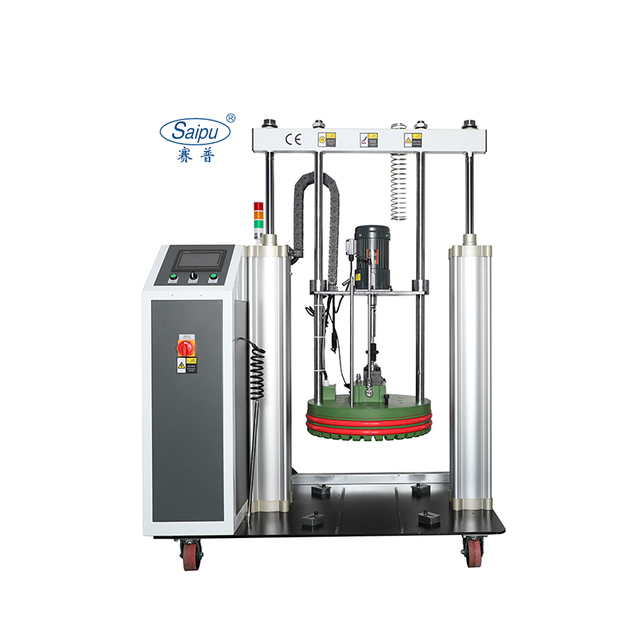
In edge banding, pur vs eva hot melt adhesive cannot be separated from machine performance. Both adhesives need proper melting and application conditions, but PUR usually demands tighter temperature stability because curing-sensitive performance depends on controlled processing.
EVA is often more forgiving in daily pur vs eva hot melt adhesive production scenarios. That is one reason it remains common in standard furniture lines. Still, even EVA can produce unstable results if temperature control is poor.
PUR requires a more suitable system in pur vs eva hot melt adhesive processing. Saipu’s 20 KG PUR Hot Melt Adhesive Drum is designed around progressive heating, controlled output, and reduced air exposure, which reflects how closely machine design and PUR performance are connected.
One major difference in pur vs eva hot melt adhesive processing is adhesive handling. EVA is generally easier to manage in conventional hot melt systems, while PUR benefits more from controlled air isolation and stable output. Poor management of a reactive adhesive can reduce process consistency.
Output control is also essential in pur vs eva hot melt adhesive evaluation. Too much glue can affect edge appearance, while too little glue can weaken bonding and create future seam problems. Glue supply precision therefore affects both quality and waste.
This is why equipment should be part of any serious pur vs eva hot melt adhesive article. Dongguan Saipu Electromechanical Device Co., Ltd. positions its business around hot melt glue spraying machinery, PUR systems, and related industrial applications, which fits the real processing demands behind edge banding production.
In many pur vs eva hot melt adhesive decisions, EVA is the better option when production is cost-sensitive, use conditions are stable, and the factory prioritizes simpler daily operation. Standard indoor furniture and high-volume production lines often fit this profile.
Another advantage of EVA in pur vs eva hot melt adhesive comparison is processing familiarity. Teams already working with standard hot melt systems may prefer EVA because it keeps startup, cleaning, and maintenance routines straightforward.
If the board does not require strong resistance to moisture and heat, EVA can still be the right production choice. In such cases, lower complexity and lower material cost remain persuasive.
PUR becomes the stronger option in pur vs eva hot melt adhesive comparison when the finished furniture needs better durability under difficult service conditions. Kitchen cabinets, bathroom furniture, and premium panel products often benefit from stronger resistance and longer seam stability.
PUR is also favored in pur vs eva hot melt adhesive decisions when manufacturers are targeting higher-value product categories. If finish quality, seam integrity, and long-term durability are central to product positioning, PUR is often more aligned with that goal.
Factories upgrading from standard bonding performance to more demanding edge banding standards often revisit pur vs eva hot melt adhesive as part of a broader production improvement plan. In that transition, the adhesive and the machine system should be evaluated together.
The most accurate answer to pur vs eva hot melt adhesive in edge banding is not that one is always better than the other. EVA remains a strong choice for standard furniture production where easier operation, lower material cost, and stable indoor use are the main priorities. PUR becomes the stronger option when the goal is premium edge quality, stronger moisture and heat resistance, and better long-term seam durability.
A reliable pur vs eva hot melt adhesive decision should therefore consider board type, edge material, use environment, quality target, and machine capability as one system. For manufacturers reviewing PUR equipment for woodworking, edge sealing, and laminated panel applications, Dongguan Saipu Electromechanical Device Co., Ltd. provides a relevant direction through its PUR hot melt glue machine range and related production solutions.
In pur vs eva hot melt adhesive comparison, PUR is generally better when stronger durability, moisture resistance, and heat resistance are required. EVA remains practical for standard indoor furniture and less demanding use conditions. The final choice depends on the quality level expected from the finished product.
PUR is usually more expensive because it is a reactive adhesive and often requires tighter process control. In pur vs eva hot melt adhesive planning, the added cost is often linked to better long-term performance and lower failure risk in demanding applications.
Yes, EVA is still suitable for many furniture applications. In pur vs eva hot melt adhesive selection, EVA remains a common option for standard interior furniture, especially where cost control and simpler processing are important.
In many cases, yes. Pur vs eva hot melt adhesive processing often leads to different machine requirements because PUR benefits from controlled heating, stable output, and reduced air exposure during operation.
For kitchens and bathrooms, pur vs eva hot melt adhesive comparison usually favors PUR. Those products face more moisture and temperature variation, and PUR is generally better suited for maintaining edge stability over time.


