
close
Choose Your Site
Global
Social Media
Views: 0 Author: Site Editor Publish Time: 2026-03-09 Origin: Site


Manufacturing lines cannot wait long for adhesive to set. That is why a hot melt system is widely used for fast, clean, and controlled bonding. In this article, you will learn what a hot melt system is, how it works, where it is used, and what to consider before choosing one for industrial production.
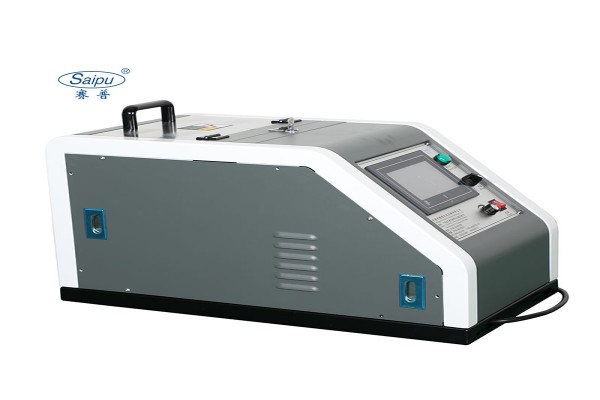
A hot melt system is an industrial adhesive application setup designed to turn solid hot melt adhesive into a controlled, usable liquid and deliver it precisely where bonding is needed. In practical terms, the system heats adhesive forms such as pellets, pillows, or blocks, keeps the material within a stable temperature range, and moves it through a connected delivery path to the application point. That path often includes a melter, heated hoses, and an applicator head, all working together so the adhesive stays fluid until it reaches the substrate.
What makes this system distinct is not just the adhesive itself, but the way the entire process is managed for industrial use. The adhesive is applied while molten and forms a bond as it cools and solidifies, which makes the system well suited to production environments where the same bonding action must happen again and again with minimal variation. Rather than being a simple glue dispenser, a hot melt system is part of a controlled manufacturing process built for repeatable output, steady material flow, and integration with production equipment.
Manufacturers use hot melt systems because they help keep production moving. Since the adhesive bonds during cooling instead of waiting for water or solvents to evaporate, the process supports faster handling and shorter transition time between application and the next production step. This makes the system especially valuable on lines where speed, clean application, and timing consistency affect throughput.
Another reason these systems are useful is operational control. A properly configured hot melt system can deliver adhesive in a stable pattern, whether the requirement is a bead, spray, or slot coating. That control helps reduce excess adhesive use, improves glue-line consistency, and supports cleaner operation on continuous lines. In many factories, those process advantages matter as much as bond strength itself because they influence waste, downtime, and product uniformity.
Production concern | How a hot melt system helps |
Line speed | Supports fast adhesive setting and continuous processing |
Application consistency | Delivers controlled patterns and more uniform bond lines |
Clean operation | Reduces mess associated with uncontrolled adhesive handling |
Process stability | Maintains adhesive temperature and flow during production |
Hot melt systems are typically selected when manufacturers need precise adhesive placement rather than manual, inconsistent application. They are also common when a process calls for repeated bonding over long runs, such as packaging, assembly, laminating, or product fixing. In these cases, the requirement is not simply strong adhesion, but a combination of controlled output, repeatable bond quality, and equipment compatibility.
This is also why hot melt systems are often paired with automated or semi-automated workflows. When a factory needs adhesive application to match machine rhythm, maintain stable output across shifts, and adapt to different application patterns, a hot melt system becomes a practical production tool rather than just an adhesive option.
A hot melt system works as a connected adhesive delivery process rather than a single machine. Its first essential part is the melter or tank, where solid adhesive is introduced and gradually heated until it reaches a usable liquid state. Depending on the system design, this chamber may be sized for light, medium, or continuous industrial output, and its job is not only to melt adhesive but to keep enough material ready for steady application.
The second key element is the temperature control unit, which regulates heating across the system. This control function is critical because hot melt adhesive must stay within a narrow processing range to flow properly. If the temperature drifts too low, the adhesive may become too thick to dispense accurately. If it runs too high, the material can degrade, char, or lose consistency over time. The system therefore relies on coordinated heating rather than simple warming.
Once melted, the adhesive moves through heated hoses that keep it fluid on the way to the application point. These hoses are insulated and heated so the material does not cool prematurely during transfer. At the end of the path, applicator heads or nozzles dispense the adhesive in the required pattern. This final stage determines how the adhesive meets the substrate, which is why nozzle choice matters just as much as the melter itself.
Component | Primary role in the system |
Melter or tank | Heats solid adhesive into a pumpable liquid |
Temperature control unit | Maintains stable processing temperature |
Heated hoses | Transfers adhesive while preventing cooling and thickening |
Applicator heads or nozzles | Dispenses adhesive in a defined pattern onto the substrate |
The operating sequence starts when solid adhesive, often in the form of pellets, pillows, or blocks, is loaded into the system. Inside the melter, heat gradually transforms the adhesive from a solid mass into a uniform molten material. Once the target temperature is reached, the adhesive is pushed through heated hoses toward the applicator. This transfer stage must remain thermally stable so the adhesive arrives at the nozzle with the intended viscosity and flow behavior.
At the point of application, the system deposits the adhesive onto one substrate in a controlled line, spray, or coating path. The bonded parts are then brought together while the adhesive is still workable. As the material cools, it returns to a solid state and creates the bond. In this process, the bond is formed through cooling and solidification, so the full sequence depends on controlled heating first and controlled cooling immediately after application.
Industrial hot melt application depends on consistency. Stable heating keeps the adhesive at the right viscosity, while output control ensures the correct amount is delivered at the correct rate. If either factor varies too much, the result may be uneven application, poor bond formation, stringing, clogging, or adhesive waste. This is why system design often varies by hopper size, melt rate, control method, and hose-line support, including in equipment such as Saipu hot melt systems, which are configured for different production demands.
Hot melt systems can apply adhesive in several patterns depending on how the material must be placed on the substrate. Common formats include:
● Bead, used when a narrow and controlled adhesive line is needed
● Spray or swirl, used when wider coverage or lower adhesive concentration is required
● Slot or coating patterns, used when the adhesive must cover a broader surface in a more continuous layer
The pattern is chosen according to the bonding task, surface geometry, and required adhesive coverage. In other words, the application style is determined by how the adhesive must function on the material, not simply by the machine category itself.
One of the most established uses of a hot melt system is packaging. In this setting, the equipment is commonly used for carton sealing, case closing, tray forming, and similar packaging operations where adhesive must be applied quickly and in a consistent pattern. Packaging lines often run at high speed, so the adhesive application stage cannot become a bottleneck. A hot melt system fits this environment because it supports repeatable placement from one package to the next, whether the adhesive is applied as a narrow bead or another controlled pattern.
This type of system is also well suited to packaging because many packaged goods require stable bonding across long production runs. Beverage packaging, gift boxes, tea boxes, and general carton-based packaging all depend on adhesive points being placed in the right location with minimal variation. In practice, manufacturers choose hot melt equipment for these lines when the production target is not only bond formation, but also line rhythm, neat adhesive placement, and dependable throughput.
Beyond packaging, hot melt systems are widely used in product assembly. In furniture manufacturing, they appear in edge banding, lamination, and general bonding tasks where adhesive needs to be applied repeatedly across panels, surfaces, or structural parts. These applications often require controlled placement rather than broad manual spreading, especially when the finished product must maintain a clean appearance.
In electronics production, hot melt systems are used for component fixing as well as wire and cable bonding. These tasks typically involve small or defined bonding areas where adhesive placement must stay consistent over repeated cycles. Selected automotive uses also fall into this category, including interior sealing, lamp assembly, and other assembly points where the adhesive process is built into production rather than treated as a separate manual step. What connects these industries is the need for a system that supports repeatable bonding in an organized manufacturing workflow.
Industry area | Typical uses of a hot melt system |
Packaging | Carton sealing, case closing, tray forming, box-related packaging |
Furniture | Edge banding, lamination, assembly bonding |
Electronics | Component fixing, wire and cable bonding |
Automotive | Interior sealing, lamp assembly, selected bonding tasks |
Hot melt systems are also used in nonwoven, hygiene, textile, and print-related production where adhesive application happens repeatedly over a steady manufacturing flow. Examples include disposable hygiene products, masks, surgical gowns, garment bonding, footwear production, and bookbinding. In these settings, the adhesive is part of a continuous process rather than an occasional joining step, so manufacturers need equipment that can keep up with repeated application demands across extended runs.
These scenarios show why hot melt systems are especially relevant in industries built around continuous output. When the same bonding action must be repeated across large volumes of products, production value depends on maintaining placement accuracy and process continuity from one unit to the next.
Choosing a hot melt system starts with production reality rather than product labels. The first question is how much adhesive the line must process within a given period. A low-volume or intermittent operation may only need a compact unit with modest hopper capacity, while a larger production line running for extended shifts will need greater adhesive reserve and a higher melt rate to avoid interruption. This is where output specifications become meaningful: system size should reflect how quickly adhesive must be melted and supplied, not simply how large the machine appears.
Run time matters just as much as hourly output. A line that operates continuously places different demands on the melter than one used for short batches. If the melt rate cannot keep pace with adhesive consumption, temperature recovery and supply stability may suffer during production. By contrast, selecting a system with far more capacity than required can create its own issues, including excess adhesive dwell time and less efficient operation. For that reason, buyers should evaluate production volume, shift pattern, adhesive consumption, and future expansion together rather than treating capacity as a standalone number.
Selection factor | What to evaluate |
Production volume | How much adhesive is consumed per hour or per shift |
Run time | Whether the line runs intermittently, in batches, or continuously |
Melt rate | Whether the system can keep up with actual adhesive demand |
Hopper capacity | How much adhesive reserve is needed to support stable operation |
The next step is to assess how the system will fit into the production setup. Some operations only require basic manual control, while others need semi-automatic or fully automatic operation to match line speed and reduce operator involvement. In more controlled environments, PLC-based adjustment may be important because it allows processing parameters to be set more precisely and integrated more easily into existing equipment logic. This becomes especially relevant when adhesive application must remain consistent across product changes or long production runs.
Hose configuration is another practical decision point. The number of hose lines required depends on how many application positions the line uses and whether the system must feed several heads at once. This is also where equipment layout becomes relevant, since the chosen system needs to fit available space and connect cleanly with upstream and downstream machinery. A configuration such as the SP-3002G hot melt system is useful as a reference point because it shows how buyers often compare control method, compact structure, and hose-line support when evaluating industrial equipment, rather than focusing on one specification alone.
A suitable system should also be judged by how well it maintains stable performance over time. Temperature consistency is one of the most important criteria because adhesive behavior changes quickly when heating becomes uneven. Buyers should also consider clogging risk, especially in the hose and nozzle path, because poor flow stability can affect application quality and increase stoppages. Systems that are easier to monitor and clean are usually better suited to long production runs, where minor buildup can gradually become a larger process issue.
Cleaning frequency and long-run reliability should be treated as evaluation standards, not afterthoughts. A machine that performs well in short tests may create extra downtime if adhesive residues accumulate too quickly or if the control system struggles to maintain a stable working range over repeated cycles. For this reason, system selection should include practical review points such as thermal stability, ease of maintenance access, and whether the design supports consistent operation across normal production conditions.
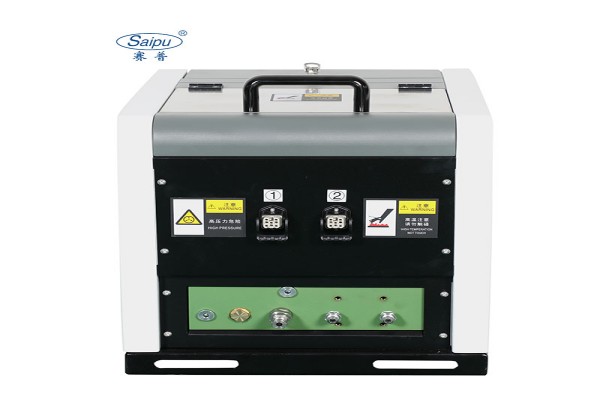
A hot melt system provides precise, repeatable adhesive melting and application for industrial production. Understanding how it works, where it is used, and how to choose one helps manufacturers make better equipment decisions. Dongguan Saipu Electromechanical Device Co., Ltd. offers hot melt systems with stable control, flexible configurations, and practical support, helping improve bonding consistency and production efficiency.
A: A hot melt system melts solid adhesive, controls temperature, and applies it accurately in industrial production.
A: A hot melt system heats adhesive, transfers it through heated hoses, and dispenses it through applicators or nozzles.
A: A hot melt system is commonly used in packaging, furniture assembly, electronics, automotive parts, and nonwoven production.
A: Choose a hot melt system based on melt rate, control mode, hose configuration, and production scale.


