
close
Choose Your Site
Global
Social Media
Views: 0 Author: Site Editor Publish Time: 2026-03-07 Origin: Site


Not all hot melt adhesives work the same way. Some are made for speed, while PUR hot melt is often chosen for stronger, longer-lasting bonds. In this article, you will learn the main types of hot melt, the difference between traditional hot melt and PUR hot melt, where each one is used, and how to choose the right option.
Hot melt adhesives are not a single material category. In practice, they are divided by polymer chemistry, because that is what determines how the adhesive behaves during application and after bonding. For most buyers, the market can be understood in three groups: traditional hot melt, PUR hot melt, and several specialty formulations used when standard performance is not enough.
Category | Representative Types | Best Fit |
Traditional hot melt adhesives | EVA, polyolefin, metallocene | Fast packaging, paper converting, general assembly |
PUR hot melt adhesives | Moisture-curing polyurethane reactive hot melts | Stronger structural bonding, wood, laminates, mixed materials |
Specialty hot melt adhesives | APAO, polyamide, pressure-sensitive hot melts | Flexible assembly, chemical resistance, tacky or removable bonding |
Traditional hot melt is the most widely used category because it is efficient, easy to process, and suitable for large-volume production. It is common in packaging, carton sealing, paper converting, and general assembly where fast set speed matters more than maximum long-term resistance. Within this group, EVA is often treated as the standard option because it offers a practical balance of cost, adhesion, and processing stability. Polyolefin and metallocene grades are also frequently used, especially when manufacturers need cleaner running, lower odor, or better thermal stability on faster production lines. For many routine industrial tasks, traditional hot melt remains the first option because it supports high throughput without adding unnecessary process complexity.
PUR hot melt differs from conventional systems because it is reactive rather than purely thermoplastic. After application, it first sets as it cools, then continues curing by reacting with moisture in the air. This second stage creates a stronger and more durable bond than traditional hot melt can usually provide. As a result, PUR is often chosen for wood components, laminated panels, furniture parts, textiles, and mixed-substrate bonding where heat resistance, moisture resistance, and bond durability are more important. It is especially valuable in applications where the adhesive joint must hold under changing temperatures or longer service life requirements, rather than simply delivering a fast initial bond.
Some hot melt adhesives are selected for narrower performance targets instead of broad industrial use. Common examples include:
● APAO for flexibility and longer open time
● Polyamide for higher resistance to heat, oil, and chemicals
● Pressure-sensitive hot melts for labels, tapes, and bonds that need instant tack
These types are usually chosen when the application depends on one specific property, such as softness, aggressive tack, or resistance to demanding operating conditions.
Choosing between traditional hot melt and PUR hot melt is not simply a matter of picking a stronger adhesive. The real difference lies in how each one forms a bond, how that bond performs over time, and what kind of production setup is needed to apply it well. For manufacturers comparing options for packaging, woodworking, laminating, or assembly, these differences directly affect both product quality and process efficiency.
The most basic distinction is the way the bond develops after application. Traditional hot melt works as a thermoplastic adhesive: it is heated until it becomes fluid, applied to the substrate, and then forms a bond mainly by cooling and solidifying. This makes it ideal for fast-moving production lines because the bond sets quickly and supports immediate handling. In many packaging and paper-converting applications, that fast physical set is exactly what the process requires.
PUR hot melt, by contrast, has a two-stage bonding mechanism. Like traditional hot melt, it first develops an initial bond as it cools. However, it does not stop there. It also reacts with moisture in the surrounding air and continues curing after application, creating a stronger and more permanent network. This secondary curing step is what gives PUR its reputation for higher durability, especially in demanding industrial bonding tasks.
Because the curing mechanisms are different, performance levels are different as well. The table below shows the most practical comparison points for buyers evaluating these two adhesive categories.
Factor | Traditional Hot Melt | PUR Hot Melt |
Bond formation | Physical set by cooling | Cooling plus moisture curing |
Bond strength | Suitable for routine bonding | Higher final bond strength |
Heat resistance | Moderate | Higher |
Moisture and humidity resistance | Limited to moderate | Better long-term resistance |
Chemical resistance | Standard industrial level | Better for demanding use |
Best fit | Packaging, labeling, general assembly | Woodworking, laminates, automotive interiors, mixed materials |
In practical terms, PUR hot melt is usually selected when the bonded part must handle stress, heat, humidity, or a longer service life. Traditional hot melt is still effective for many standard uses, but PUR is often the better option when bond failure would create higher product or process risk.
Processing requirements also separate these two systems. Traditional hot melt is generally simpler to run and more economical for routine production. It is easier to store, easier to handle, and well suited to operations where speed and cost control are the main priorities. That makes it a common choice for high-volume lines with straightforward bonding needs.
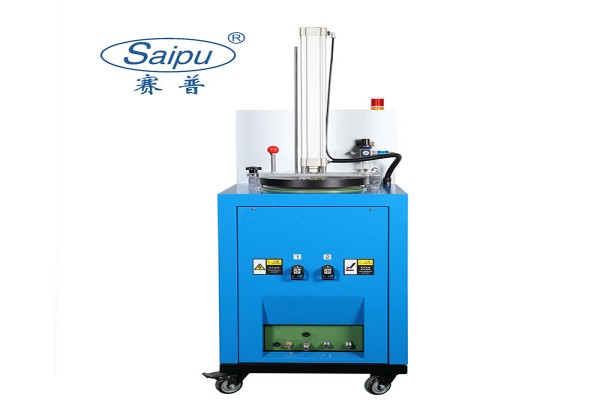
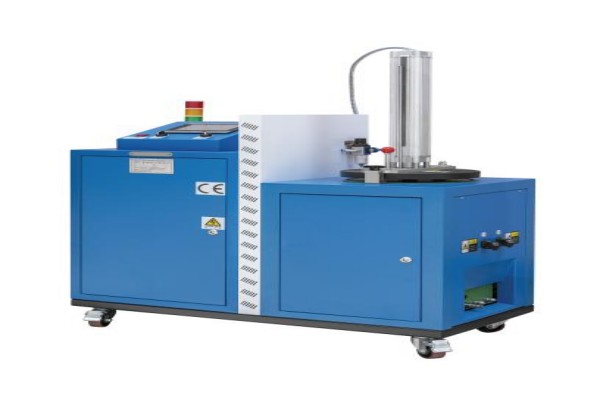
PUR hot melt requires more controlled handling because the adhesive reacts with moisture. Once exposed, its processing window and storage conditions become more critical. For that reason, manufacturers often use sealed or better-managed application setups, including compatible systems such as PUR hot melt glue machines. While PUR usually comes with higher material and equipment demands, that added control supports the stronger, more durable performance expected in higher-value assembly and laminating applications.
In most cases, the better hot melt is not the one with the highest performance on paper, but the one that matches the actual production task. Some applications need speed, simple processing, and low adhesive cost. Others need a bond that can hold under heat, humidity, stress, or contact between different materials. That is why the choice between traditional hot melt and PUR hot melt usually comes down to application demands rather than chemistry alone.
Application Need | Better Choice |
Carton sealing and case packing | Traditional hot melt |
Labeling and paper converting | Traditional hot melt |
High-speed, cost-sensitive production | Traditional hot melt |
Wood components and laminated panels | PUR hot melt |
Automotive interiors and textiles | PUR hot melt |
Mixed-material bonding with higher durability demands | PUR hot melt |
Traditional hot melt is usually the practical choice for packaging, carton sealing, labeling, paper converting, and other fast-running operations. In these settings, manufacturers often need a bond that sets quickly, runs cleanly enough for continuous production, and does not add unnecessary material or equipment cost. The goal is not maximum structural strength, but reliable everyday bonding that supports line speed and stable output. That is why EVA, polyolefin, and similar conventional systems remain widely used across routine industrial processes.
A few factors make traditional hot melt especially suitable here:
● Lower material cost for large-volume use
● Simpler handling and easier process control
● Fast setting that supports high-throughput production
PUR hot melt becomes the better option when the bonded product must perform under more demanding conditions. This is common in woodworking, laminated panels, automotive interiors, textiles, and mixed-material assembly, where the adhesive may need to bond porous and non-porous surfaces in the same product. In these applications, a basic physical bond is often not enough. The adhesive must resist heat, moisture, and long-term stress without losing strength, which is why PUR is often selected.
Because PUR hot melt continues curing after application, it can deliver a stronger final bond and better environmental resistance than conventional hot melts. That added performance is particularly valuable in furniture parts, coated boards, fabric laminations, and vehicle interiors, where bond durability matters as much as initial adhesion.
Selecting the right hot melt adhesive starts with application fit, not with product category alone. A hot melt that works well in carton sealing may fail in laminated panels, while an adhesive designed for demanding assembly may be unnecessarily costly for routine packaging. In practice, the decision usually comes down to three factors: the materials being bonded, the way the adhesive will be applied, and the total performance expected over the product’s service life.
Selection Factor | What to Evaluate | Likely Direction |
Substrate and environment | Porous or non-porous materials, heat, humidity, chemicals, long-term stress | More demanding combinations often favor PUR hot melt |
Production process | Line speed, open time, dispensing method, automation level | Faster, simpler lines often favor traditional hot melt |
Total value | Adhesive consumption, downtime, maintenance, bond reliability | The lowest unit price is not always the lowest operating cost |
The first question is what the adhesive must bond and what the finished product must endure. Paper, corrugated board, wood, foam, plastic, fabric, metal, and mixed-material assemblies all place different demands on adhesive performance. Porous, lightweight substrates in controlled indoor conditions often work well with traditional hot melt, especially when the bond only needs to hold through handling and transport. However, when the product must resist heat, moisture, changing temperatures, or a combination of porous and non-porous materials, PUR hot melt is often the better fit because it develops a more durable final bond.
The second step is to make sure the adhesive suits the way it will be used on the line. High-speed production usually favors adhesives with predictable flow, fast set speed, and simpler handling. Open time also matters: shorter open time supports rapid packaging and sealing, while longer working time can be more useful for laminating or larger bonding areas. Dispensing setup is equally important. Some operations rely on simple application systems, while others require tighter control over melt condition and output, especially when reactive adhesives are involved. The right choice should support both bond performance and stable day-to-day processing.
Adhesive price alone rarely gives a complete picture. A lower-cost material may increase total expense if it uses more adhesive, creates more maintenance, or leads to inconsistent bonds. Buyers should look at:
● adhesive usage per unit
● downtime risk from char, clogging, or handling issues
● bond reliability over the product’s expected service life
This is why selection should be based on overall process value rather than on material cost alone.
The different types of hot melt are best judged by real application needs. Traditional hot melt suits fast, cost-effective bonding, while PUR hot melt delivers stronger and longer-lasting performance. The right choice depends on the material, environment, and production process. Dongguan Saipu Electromechanical Device Co., Ltd. adds value with reliable PUR hot melt glue machines designed for stable output, precise control, and efficient industrial bonding.
A: PUR hot melt cures with moisture, creating stronger, more durable bonds than traditional hot melt.
A: Choose PUR hot melt for wood, laminates, textiles, or mixed materials needing heat and moisture resistance.
A: Main types include EVA, polyolefin, metallocene, PUR hot melt, APAO, polyamide, and pressure-sensitive hot melts.
A: Traditional hot melt is usually enough for high-speed packaging where cost and process simplicity matter most.


