
close
Choose Your Site
Global
Social Media
Views: 0 Author: Site Editor Publish Time: 2026-03-02 Origin: Site


Need a bond that lasts beyond ordinary hot melt? Many buyers ask what a pur hot melt system is when strength, moisture resistance, and the right equipment all matter. In this article, you will learn how it works, where it fits best, and what to evaluate before choosing systems such as SP-PUR hot melt glue machines.
A PUR hot melt system is not just the adhesive itself. It is a complete application setup built around a moisture-reactive polyurethane adhesive, controlled heating, sealed delivery, and dispensing parts that keep the material stable until it reaches the substrate. Unlike standard hot melt, PUR cannot be left exposed to ambient air for long because moisture starts the curing reaction too early. That is why the system usually includes a heated tank or drum unit, a melt chamber, hoses or transfer paths, and an applicator designed to limit air contact while maintaining accurate temperature and flow control. This equipment logic is essential because PUR needs both thermal handling and moisture protection to perform correctly in production.
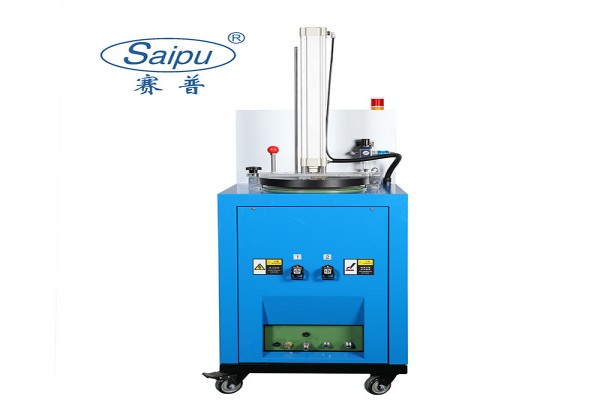
In practice, the system combines four functions: melting, protecting, delivering, and applying. The adhesive is heated into a workable state, but only under controlled conditions. Sealed feeding or air-isolated melting helps prevent premature cross-linking, while the applicator ensures the adhesive reaches the surface in the right amount and pattern. This is why dedicated PUR equipment is commonly used instead of ordinary hot melt guns or open adhesive tanks.
● Reactive PUR adhesive
● Controlled heating unit
● Sealed or air-isolated delivery path
● Application head or nozzle for precise dispensing
PUR bonding happens in two distinct stages. First, the adhesive is applied in molten form and quickly cools, giving the assembly initial handling strength. This early “green strength” is important in manufacturing because parts can often be moved or positioned without waiting for full cure. After that, a second process begins: the adhesive reacts with moisture from the air or substrate and forms a chemically cross-linked structure. That reaction transforms the bond from a thermoplastic-like state into a far more permanent network that will not simply remelt under later heat exposure.
Stage | What happens | Production value |
Physical setting | Molten PUR cools and solidifies after application | Provides early handling strength and supports faster workflow |
Chemical curing | Moisture triggers cross-linking inside the adhesive | Creates a durable bond with stronger heat and moisture resistance |
This dual mechanism matters because it links process speed with long-term performance. A manufacturer can gain fast initial set for assembly efficiency, while still achieving the higher final bond strength associated with reactive curing. That makes PUR attractive in laminating, woodworking, automotive interiors, electronics assembly, and other industrial uses where products may face humidity, temperature changes, or long service periods. In those settings, the value of a PUR hot melt system is not just that it bonds quickly, but that it keeps bonding reliably after production is finished.
Choosing a PUR hot melt system instead of conventional hot melt usually comes down to one practical question: does the bond need to keep performing after the product leaves the production line? Traditional hot melt adhesives mainly rely on cooling to create adhesion, so the bond remains thermoplastic and can soften again when exposed to heat. A PUR system behaves differently. After application, it sets quickly for handling, then continues reacting with moisture to form a more permanent cross-linked structure. That change gives manufacturers a stronger and more stable bond, which is why PUR is often selected when product quality, durability, or service life cannot depend on a bond that may weaken under stress.
The biggest difference is not only how the adhesive is applied, but how it performs over time. In conventional hot melt bonding, strength comes mainly from physical cooling. In a PUR hot melt adhesive system, physical setting is only the first step; chemical curing is what gives the bond its long-term integrity. That makes PUR especially valuable in assemblies where failure could affect appearance, structural reliability, or repeated-use performance. For manufacturers working with wood composites, mixed materials, laminates, or precision assemblies, this stronger cured structure often makes PUR the safer process choice.
PUR systems are also chosen because the cured bond generally holds up better under changing environmental conditions. Products used in kitchens, vehicle interiors, electronic assemblies, and laminated furniture surfaces may all face humidity, heat buildup, seasonal temperature shifts, or ongoing vibration. In those cases, the appeal of PUR is not just high bond strength at the moment of assembly, but the ability to maintain adhesion after exposure to real operating conditions. This is especially important in industries where appearance and long-term performance matter at the same time.
Factor | Conventional hot melt | PUR hot melt system |
Bond structure | Thermoplastic, heat-reversible | Moisture-cured, cross-linked |
Heat and moisture resistance | More limited in demanding environments | Better suited to harsh service conditions |
Long-term durability | More dependent on stable conditions | Better for products under ongoing stress |
Beyond bond performance, PUR systems offer production advantages that matter in daily operations. Manufacturers often value the fast initial set, cleaner application, and solvent-free or low-VOC processing profile. At the equipment level, stable temperature control and sealed melting are important because PUR must be protected from premature moisture exposure while still flowing consistently through the system. That combination supports more predictable adhesive output, cleaner application, and better compatibility with automated manufacturing lines where process consistency is just as important as bond strength.
A PUR hot melt system is commonly used in production environments where bonding has to do more than hold parts together for a short time. Manufacturers choose it when the finished product must look clean, stay stable under changing conditions, and maintain adhesion across a long service life. Because PUR adhesive combines fast initial set with moisture-curing final strength, it fits applications that involve decorative finishes, repeated handling, heat exposure, or mixed-material assembly. That is why its use extends well beyond simple sealing and into sectors where both process control and bond performance matter.
In woodworking and furniture manufacturing, PUR hot melt systems are widely used for edge banding, cabinet assembly, decorative surface lamination, wood coating, and panel bonding. These applications often require a bond line that remains visually neat while also resisting moisture, heat, and long-term stress. For example, furniture components may be exposed to kitchen humidity, bathroom moisture, or seasonal temperature changes, so the adhesive must support both appearance and durability. PUR is especially useful when manufacturers want strong holding power without relying heavily on visible fasteners or bulky bond lines.
Bookbinding is another well-established use case because PUR can create flexible yet durable spines that allow books to open more naturally while improving long-term page retention. The adhesive supports repeated bending better than many more rigid bonding methods, which is important for books expected to be handled frequently. In packaging and printed products, PUR may also be used for cartons, gift boxes, labels, and related converting applications, but its value is clearest where the bond must stay reliable under storage, transport, or variable environmental conditions rather than simply close a package once.
Application area | Typical uses | Why PUR is chosen |
Woodworking and furniture | Edge banding, cabinets, decorative panels, lamination | Clean appearance, moisture resistance, durable hold |
Bookbinding and print | Book spines, printed assemblies | Flexible spine performance and stronger page retention |
Packaging | Cartons, gift boxes, specialty printed products | More reliable bonding where durability matters |
Automotive and electronics | Interior parts, lamps, screens, cables, components | Strength, flexibility, and compatibility with mixed substrates |
In automotive, electronics, and general product assembly, PUR hot melt systems are valued because they can bond different materials while still supporting efficient automated production. Typical uses include interior trim, lamp manufacturing, wire and cable bonding, screens, textiles, and precision components. These assemblies often combine plastics, metals, coated surfaces, foam, or fabric, so manufacturers need an adhesive that offers both strong final adhesion and enough flexibility to absorb movement, vibration, or thermal change. In this context, controlled application equipment becomes especially important, which is why production setups may use dedicated PUR hot melt systems, including equipment from Dongguan Saipu Electromechanical Device Co., Ltd., to maintain stable heating, sealed melting, and repeatable glue output.
PUR may be the better option when the assembly involves substrates that are hard to bond, materials with different expansion behavior, or applications that need elasticity together with strong final adhesion. It is often considered for combinations such as wood with coated film, textile with foam, or plastic with metal, where both flexibility and resistance are important. Some low-surface-energy materials, including certain untreated polyolefins, may still require surface treatment or a more tailored formulation, but PUR remains a strong candidate when standard hot melt does not provide enough durability or environmental resistance.
Selecting a PUR hot melt system starts with application fit, not with a broad claim about adhesive strength. PUR can perform extremely well, but only when the adhesive, dispensing setup, and production conditions are aligned with the actual job. Material type, surface condition, expected flexibility, and service environment all shape the choice. A bond for decorative panel lamination, for example, may prioritize appearance, moisture resistance, and heat stability, while an electronics or textile application may need a different balance of elasticity, low-temperature processing, or controlled bead size. That is why selection should be driven by end-use performance requirements rather than by generic product positioning alone.
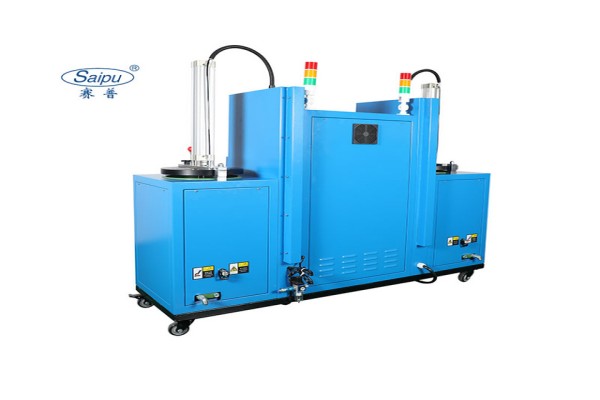
Substrate compatibility is one of the first issues to evaluate because PUR does not behave the same way on every surface. Wood, paper, fabric, metal, glass, plastics, and coated materials can all respond differently depending on surface energy, porosity, and environmental exposure after bonding. Some assemblies require a rigid final bond, while others need elasticity to absorb movement, bending, or thermal expansion. The service environment matters just as much: indoor furniture, vehicle interiors, printed products, and mixed-material industrial components do not place the same demands on the adhesive. Choosing correctly means looking at the real use case and asking how the bond must perform over time, not just whether it sticks well in an initial sample test.
Process fit is equally important because the right PUR hot melt system must support the production rhythm rather than slow it down. Open time affects how long parts can be positioned after adhesive application, while set time determines when handling strength becomes available. Full cure takes longer because PUR continues reacting with moisture after the parts leave the application point, so manufacturers need realistic expectations for downstream handling and final performance. Application temperature and glue output also matter: too much heat can damage sensitive substrates or affect adhesive stability, while insufficient output can interrupt line speed or produce inconsistent bond lines. These process variables should be matched to the equipment and workflow from the start.
Selection factor | Why it matters | What to check |
Substrate and surface | Affects wetting, adhesion, and long-term bond stability | Porosity, coating, surface energy, material combination |
Process timing | Determines whether the adhesive fits the line speed | Open time, set time, cure expectations, handling window |
Application conditions | Influences flow, bond quality, and consistency | Temperature range, output rate, bead or coating method |
Equipment and storage | Protects PUR from premature reaction and process loss | Sealed delivery, temperature control, storage conditions, cleaning routine |
Because PUR is moisture-reactive, equipment design and daily handling are not minor details. Sealed applicators, controlled heating, and protected delivery paths are needed to prevent the adhesive from curing before it reaches the substrate. Storage also requires care, since exposure to moisture can shorten usable life and reduce consistency. Maintenance matters for the same reason: operators usually need purge or cleaning routines to prevent cured residue from building up inside nozzles, hoses, or melting areas. If these steps are ignored, the result may be clogged equipment, unstable adhesive flow, wasted material, and unplanned downtime.
Several avoidable mistakes can reduce performance even when the adhesive itself is suitable. Common problems include selecting the wrong viscosity for the application method, underestimating cure conditions, skipping substrate testing, and assuming that any standard hot melt applicator can handle PUR. Another frequent issue is focusing only on bond strength while overlooking maintenance demands and storage discipline. Before selecting a PUR hot melt glue machine or full adhesive system, manufacturers should validate the setup under real production conditions, including actual materials, temperatures, application patterns, and post-bond service requirements.
A PUR hot melt system is a complete bonding solution, not just an adhesive. It offers fast setting, strong final bonding, and reliable performance in demanding applications. For buyers who need long-term bond strength and stable equipment support, Dongguan Saipu Electromechanical Device Co., Ltd. provides practical value through PUR hot melt systems built for efficient, controlled industrial production.
A: A pur hot melt system combines reactive adhesive, heated equipment, and sealed delivery for moisture-curing industrial bonding.
A: A pur hot melt system sets when cooled, then chemically cures for stronger, more permanent bonding.
A: A pur hot melt system is used in furniture, bookbinding, automotive interiors, electronics, and panel lamination.
A: A pur hot melt system should match substrate type, cure time, temperature range, and production speed.


