
close
Choose Your Site
Global
Social Media
Views: 0 Author: Site Editor Publish Time: 2025-11-13 Origin: Site


In modern manufacturing, the choice of bonding method plays a critical role in product quality, production efficiency, and overall operational costs. Selecting the right adhesive solution is not only about sticking materials together—it directly impacts durability, manufacturing speed, operational safety, and long-term cost-effectiveness. Adhesive performance is often the determining factor in whether a product meets stringent quality standards or fails under stress, temperature changes, or exposure to moisture.
Among various bonding technologies, hot melt adhesive machines have emerged as a preferred choice across multiple industries due to their fast curing times, strong adhesion, high repeatability, and versatility. These machines enable manufacturers to maintain high production speeds while ensuring a durable and uniform bond across a wide range of materials.
While there are many alternative bonding methods, such as solvent-based adhesives, epoxy, UV adhesives, and mechanical fasteners, understanding the strengths, limitations, and operational requirements of each method is essential for manufacturers. This article provides a detailed comparison between hot melt adhesive machines and other bonding methods, highlighting critical differences in performance, efficiency, cost, and applicability, helping manufacturers make informed decisions for their production lines.
A hot melt adhesive machine is an industrial device designed to melt solid adhesive pellets, sticks, or blocks, heat them to a precise temperature, and apply the molten adhesive uniformly onto a substrate for bonding. Once applied, the adhesive cools and solidifies rapidly, forming a strong, flexible, and durable bond. Unlike traditional adhesives that may require hours or days to cure, hot melt adhesives bond almost instantly, making them ideal for high-speed production lines and automated assembly operations.
Hot melt adhesive machines are not limited to a single industry or material. They are widely used in furniture manufacturing, packaging, automotive interiors, textiles, electronics, and filtration systems. Their flexibility in handling various materials and thicknesses allows manufacturers to adapt production processes without significant downtime or equipment modifications.
Hot melt adhesive machines are designed to optimize efficiency, precision, and bond quality. Key features include:
Rapid Curing: Adhesive bonds set within seconds to a few minutes, depending on material and adhesive type. This allows continuous production without waiting for prolonged curing times.
Versatility: Compatible with diverse materials, including wood, MDF, paper, cardboard, plastics, metals, and textiles. Some machines are also suitable for composite materials or laminated products.
Automation and Control: Machines range from manual glue guns to semi-automatic, fully automatic, and continuous systems, allowing manufacturers to match equipment with production volume and complexity.
Precision Application: Adjustable temperature settings and flow control mechanisms ensure consistent adhesive application, reducing waste and preventing defects.
Durability and Safety: High-quality machines include features such as anti-clogging systems, automatic temperature regulation, and protective components to ensure safe operation over extended periods.
Manual Machines: Suitable for small-scale operations or applications requiring detailed, precise control. Operators can adjust the glue flow and temperature to suit the specific material.
Semi-Automatic Machines: Offer faster production while maintaining some level of manual operation, making them ideal for medium-scale industrial processes.
Fully Automatic Machines: Designed for high-volume production, fully automated machines provide consistent adhesive application with minimal human intervention, improving efficiency and reducing error rates.
Continuous Systems: Ideal for large-scale industrial lines requiring uninterrupted operation. These systems maintain a continuous flow of molten adhesive for uniform application over long production runs, ensuring consistent bond strength and minimal downtime.
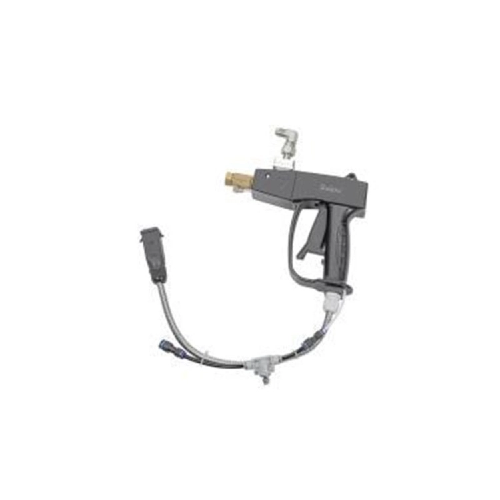
While hot melt adhesive machines offer numerous advantages, other bonding methods remain in use depending on industry requirements, material types, and cost constraints.
Composed of adhesives dissolved in volatile organic solvents.
Advantages: Provide strong adhesion for specific materials such as certain plastics and metals; initial cost is relatively low.
Limitations: Require longer curing times, generate VOC emissions, and necessitate proper ventilation and environmental compliance. Handling these adhesives also demands additional safety precautions.
Two-part adhesives that cure through a chemical reaction between a resin and a hardener.
Advantages: Offer extremely strong, durable, and heat-resistant bonds; suitable for applications where structural integrity is critical.
Limitations: Require careful mixing and precise application; curing time can range from several hours to a full day, slowing production. Material compatibility is more limited than hot melt adhesives.
Adhesives that cure when exposed to ultraviolet light.
Advantages: Cure almost instantly under UV light, provide strong, transparent bonds, and allow precise application.
Limitations: Only suitable for UV-transparent materials; penetration depth is limited, and equipment cost is higher. Careful calibration is required to avoid uneven curing.
Include adhesive tapes, screws, rivets, and other mechanical joining methods.
Advantages: Allow quick assembly and immediate handling without heating; simple to use.
Limitations: Provide limited bond strength; not suitable for heavy-duty applications or complex shapes; bond durability may be affected by temperature, moisture, or material fatigue.
A comprehensive comparison across various factors highlights why hot melt adhesive machines are increasingly preferred in industrial applications.
Hot melt adhesives create strong, flexible bonds capable of withstanding vibration, temperature fluctuations, and exposure to moisture. Epoxy adhesives offer higher structural strength but require longer curing times. Solvent-based adhesives have moderate durability, while mechanical fasteners provide load-bearing capacity but may not ensure uniform bonding.
Hot melt adhesive machines cure rapidly, often in seconds, allowing high-speed production. Solvent-based and epoxy adhesives require longer periods to reach full strength, limiting production throughput. UV adhesives also cure quickly but are restricted to certain materials, reducing versatility.
Hot melt adhesives are highly versatile, bonding wood, paper, plastics, metals, and textiles effectively. Solvent-based and UV adhesives are more substrate-specific, while epoxy adhesives require careful matching of resin and substrate. Mechanical fasteners are limited by design constraints and may require additional preparation or reinforcement.
Feature | Hot Melt Adhesive Machine | Solvent-Based Adhesive | Epoxy Adhesive | UV Adhesive | Mechanical Fasteners |
Bond Strength | High | Medium | Very High | High | Variable |
Curing Time | Seconds to minutes | Minutes to hours | Hours | Seconds | Immediate |
Material Compatibility | Wide range | Limited | Specific | Limited | Depends on design |
Production Speed | High | Medium | Low | High | Medium |
Environmental Safety | Solvent-free, safe | VOC emissions | Generally safe | Safe | Safe |
Cost | Moderate to high | Low to moderate | Moderate-high | High | Low-medium |
Hot melt adhesive machines are generally solvent-free, reducing harmful emissions and improving workplace safety. Solvent-based adhesives generate VOCs, requiring ventilation and handling precautions. Epoxy and UV adhesives have minimal emissions but require careful chemical handling. Mechanical fasteners pose minimal environmental hazards but may produce scrap materials.
Hot melt adhesive machines are ideal for edge banding, panel lamination, and assembly.
High-speed, fully automated systems improve efficiency while ensuring consistent adhesion across wood, MDF, and composite materials.
Effective for carton sealing, paperboard assembly, and packaging lines requiring rapid adhesive application.
Adjustable glue flow prevents material waste and ensures precision on various packaging sizes.
Suitable for seats, dashboards, door panels, and trim components.
Provide heat-resistant, flexible bonds capable of enduring vibration and long-term wear.
Bond fabrics, laminates, and shoe components with precision.
Rapid curing and controlled adhesive flow prevent material damage and maintain aesthetic quality.
Ideal for delicate bonding of small components or filter media.
Ensures uniform adhesive distribution without overheating sensitive materials.
Faster Curing and Production Efficiency: Reduces cycle times significantly.
Strong and Flexible Bonds: Resistant to stress, moisture, and temperature variations.
Material Versatility: Bonds wood, paper, plastics, metals, and textiles reliably.
Environmental and Workplace Safety: Solvent-free operation and low emissions.
Automation and Consistency: Supports large-scale industrial operations with minimal human error.
Reduced Material Waste: Precise application minimizes excess adhesive and costs.
Choosing the right bonding method is crucial for efficient, cost-effective, and high-quality manufacturing. Hot melt adhesive machines offer a unique combination of rapid curing, strong and flexible bonding, wide material compatibility, and automation capabilities, making them an ideal choice for modern production lines. While alternatives like solvent-based adhesives, epoxy, UV adhesives, and mechanical fasteners have their specific uses, hot melt adhesive machines stand out for high-volume, consistent, and reliable operations.
For manufacturers seeking advanced solutions, Dongguan Saipu Electromechanical Device Co., Ltd. provides a range of high-performance hot melt adhesive machines tailored to diverse industrial applications. Their equipment combines precision, durability, and efficiency, ensuring optimal bonding results while reducing waste and operational costs. Whether upgrading production lines or implementing new bonding processes, Saipu’s team can offer professional guidance and support to help businesses select the most suitable machinery for their specific needs.
To explore the capabilities of their hot melt adhesive machines and discover how they can enhance production efficiency and product quality, manufacturers are encouraged to contact Dongguan Saipu Electromechanical Device Co., Ltd. for detailed consultation and personalized solutions.
1. What makes hot melt adhesive machines different from solvent-based adhesives?
Hot melt adhesive machines melt solid adhesives that solidify quickly without VOC emissions, providing faster production and stronger, flexible bonds.
2. Are hot melt adhesive machines suitable for all types of materials?
Yes, they bond wood, paper, plastics, metals, and textiles, though temperature-sensitive materials may require specific adhesive formulations.
3. How do curing times compare between hot melt adhesive machines and epoxy adhesives?
Hot melt adhesives set in seconds to minutes, while epoxy adhesives can take several hours to fully cure.
4. Which industries benefit most from hot melt adhesive machines?
Furniture, packaging, automotive interiors, textiles, footwear, electronics, and filtration industries benefit from their speed, efficiency, and versatility.
5. What are the main limitations of hot melt adhesive machines?
Limitations include higher initial cost, maintenance requirements, and the need for temperature-specific adhesives for certain materials.


